

Best LED Fog Light Upgrades for Trucks

Table of Contents
- Why LED Fog Light Upgrades Matter for Truck Owners
- Understanding Color Temperature and Kelvin Scale
- Beam Pattern Types: Fog vs. Driving Lights Explained
- Street Legal LED Fog Lights: Regulations and Compliance
- LED Fog Light Installation Guide for Trucks
- Best LED Bulb Conversion Kits for Truck Fog Lights
- Common Mistakes to Avoid When Upgrading Fog Lights
- Conclusion
Last Updated: August 29, 2026
Why LED Fog Light Upgrades Matter for Truck Owners
Factory halogen fog lights scatter light inefficiently, leaving blind spots in heavy rain, snow, and fog. LED fog light upgrades deliver concentrated beam patterns that cut through poor visibility while consuming less power and lasting significantly longer than traditional bulbs.
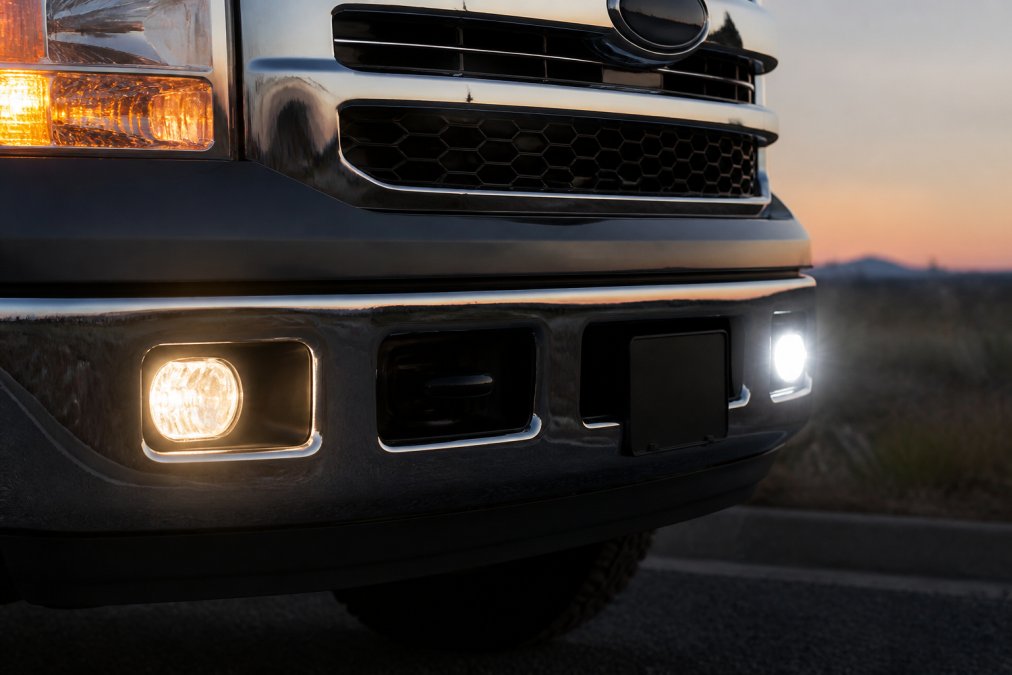
Modern LED fog lights offer superior color temperature consistency, better heat management, and beam patterns engineered specifically for fog penetration. LED fog lights eliminate frequent bulb replacements, reduce electrical draw on your truck's charging system, and integrate seamlessly with modern vehicle electronics when you choose canbus-compatible designs.

Understanding Color Temperature and Kelvin Scale
Color temperature, measured in Kelvin (K), determines how warm or cool your fog light appears and directly affects visibility in different weather conditions. For fog light applications, 6500K cool white is the industry standard, providing optimal contrast against wet road surfaces and fog particles.
Fog particles scatter shorter wavelengths (blue light) more aggressively than longer wavelengths (red/yellow light). However, modern LED designs at 6500K have largely solved this problem through advanced optics and beam pattern engineering, making cool white the better choice for general truck driving. RMS Lighting LLC offers LED fog lights at 6500K, which balances visibility with the modern aesthetic most truck owners prefer.
Beam Pattern Types: Fog vs. Driving Lights Explained
Beam pattern determines where your light goes and how it spreads. Fog lights and driving lights serve fundamentally different purposes, and confusing them leads to poor visibility and potential legal issues.
Fog lights produce a wide, flat beam that spreads horizontally across the road surface while staying low to avoid reflecting off fog particles. The beam typically peaks at a low angle, around 10-15 degrees below horizontal, and spreads 120-150 degrees wide (sae.org).
Driving lights create a tighter, more concentrated beam aimed higher into the distance, peaking at angles closer to 5-10 degrees above horizontal. Using driving lights in fog conditions actually reduces visibility, the concentrated beam reflects back off fog particles, creating glare. Quality LED fog light designs maintain proper beam patterns through precision optics and housing geometry.
Street Legal LED Fog Lights: Regulations and Compliance
LED fog light legality in the United States is governed by the Federal Motor Vehicle Safety Standards (FMVSS), specifically FMVSS 108, which establishes requirements for lamps and reflective devices.
Legal fog lights must meet these requirements: color temperature between 2000K-2800K (amber/yellow) or 6000K-6500K (white), maximum brightness limits that vary by vehicle class, and beam patterns that don't exceed specified angles (nhtsa.gov). Many aftermarket LED upgrades fail compliance because they exceed brightness limits or use incorrect color temperatures like 8000K or 10000K.
HID (high-intensity discharge) conversions in factory halogen housings are almost universally illegal for fog lights because the housings lack proper optics to control the beam pattern. LED conversions are legal when they maintain proper beam patterns and color temperatures. RMS Lighting LLC designs products with FMVSS 108 compliance as a baseline requirement.
LED Fog Light Installation Guide for Trucks
Installing LED fog light upgrades ranges from simple plug-and-play bulb swaps to more involved wiring harness installations, depending on your truck model and the upgrade type.
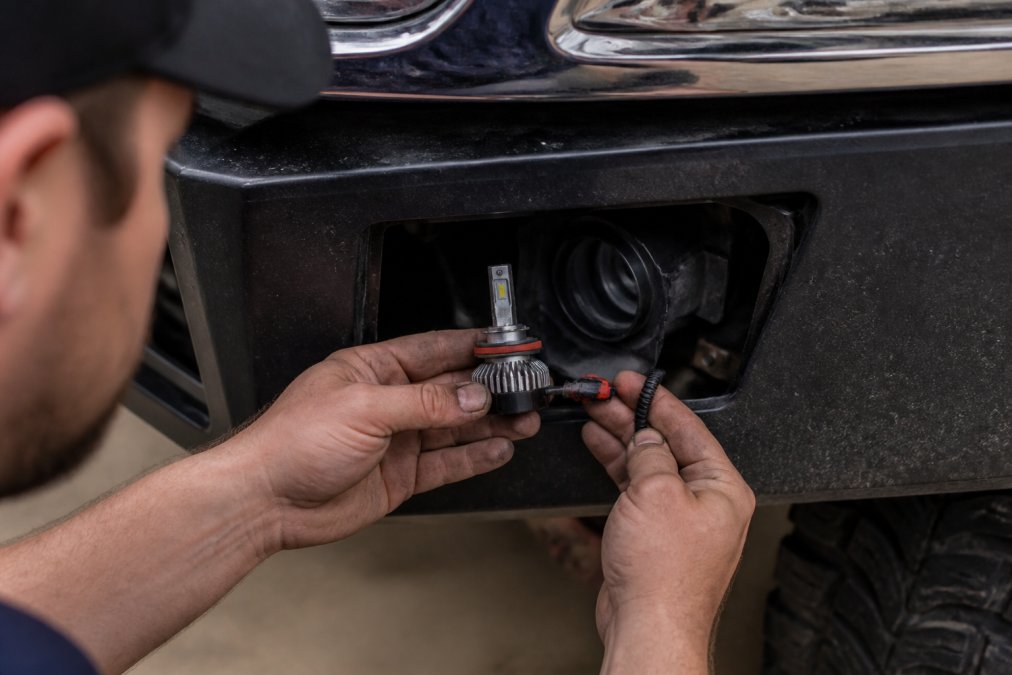
Basic bulb replacement takes 15-30 minutes per side. Most modern trucks allow access to fog light housings from underneath the front bumper or through wheel wells. You'll need a screwdriver or trim removal tool to access the housing, disconnect the factory bulb connector, remove the old bulb, and insert the new LED bulb. Ensure the LED bulb sits fully in the socket; incomplete seating causes flickering and potential damage.
Wiring harness installations apply when upgrading to high-output LED options or adding canbus modules. These require running new wiring from the battery or fuse box through the engine bay into the fog light housings, taking 1-2 hours. The critical step in any installation is testing for voltage compatibility. Most truck electrical systems run 12V, but some newer models use 24V systems. Installing a 12V LED bulb in a 24V system causes immediate failure.
Canbus and Flicker Issues: What You Need to Know
Modern trucks increasingly use canbus (Controller Area Network) electrical systems that monitor every electrical component for faults. When you install a standard LED bulb in a canbus-equipped truck, the system detects the lower electrical resistance of the LED compared to the original halogen bulb and triggers error codes, manifesting as dashboard warning lights or hyper-flashing.
Canbus-compatible LED bulbs solve this through built-in resistors or capacitors that mimic the electrical load of halogen bulbs. The RMS Lighting LLC RMSH11S130 130W canbus LED bulbs include premium canbus design with customized CSP3570 LED chips and operating voltage compatibility from 9-32V DC, covering virtually all truck electrical systems. Testing for canbus issues is straightforward: install the LED bulbs, start the truck, and check for dashboard warning lights or abnormal flashing patterns.
Thermal Management and Heat Sink Design
LED bulbs generate heat, and that heat must dissipate or the bulb fails prematurely. Aluminum alloy heat sinks with active cooling fans represent the best thermal management, forcing air across heat sink fins to dramatically improve heat transfer compared to passive designs.
Operating temperature range matters too. Look for LED bulbs rated to -40°C to +85°C minimum, covering everything from frozen mountain passes to desert heat. When installing LED fog lights, ensure the housing allows adequate airflow around the heat sink.
Best LED Bulb Conversion Kits for Truck Fog Lights
Selecting the right LED fog light upgrade depends on your truck's electrical system, desired brightness level, and installation preferences.
| LED Fog Light Option | Output | Power | Color Temp | Best For | Price |
|---|---|---|---|---|---|
| RMS 60W 10K Lumens (H8/H9/H11) | 10,000 LM | 60W | 6500K | Standard upgrades, most truck models | $50 |
| RMS 60W 10K Lumens (880/881) | 10,000 LM | 60W | 6500K | Specific socket types, plug-and-play | $50 |
| RMS 60W 10K Lumens (5202) | 10,000 LM | 60W | 6500K | Dedicated fog light sockets | $50 |
| RMS Non-Canbus H11B | 8,000 LM | 60W | 6500K | Older trucks without canbus | $25 |
| RMS 130W Canbus (H8/H9/H11) | 30,000 LM | 130W (pair) | 6500K | High-output, modern trucks | $109 |
High-Output Options: 60W and 130W Specifications
60W LED fog lights deliver 10,000 lumens per bulb, providing a substantial upgrade from factory halogen while maintaining compatibility with most truck electrical systems. The 60W options are available in multiple socket types (H8/H9/H11, 880/881, 5202) to fit different truck models. At $50 per bulb, they represent the entry point for serious LED upgrades.

130W LED fog lights (65W per bulb in a pair) produce 30,000 lumens total output, nearly triple the brightness of 60W options. These high-output bulbs require canbus compatibility to avoid error codes in modern trucks. The choice between 60W and 130W depends on your truck's electrical capacity and your visibility needs.
Waterproof Ratings and Weather Resistance
LED fog lights must withstand water immersion, salt spray, and temperature cycling without failure. An IP68 rating means the bulb is completely dust-proof and can withstand immersion in water beyond 1 meter depth (iec.ch). The RMS Lighting LLC 60W and 130W options include IP68 waterproof ratings with aluminum alloy housings that resist corrosion. The active cooling fans prevent moisture buildup inside the housing by maintaining slight positive pressure around the LED chips.
Plug-and-Play vs. Custom Wiring Harness
Plug-and-play LED bulbs replace factory bulbs directly without additional wiring. This approach works when the LED bulb's electrical characteristics match the factory bulb closely enough that the truck's electrical system doesn't detect a difference. Plug-and-play works best with canbus-compatible LED bulbs in modern trucks.
Custom wiring harness installations become necessary when upgrading to very high-output LEDs or adding external components like resistor modules. These installations involve running dedicated wiring from the battery or fuse box directly to the fog light housing, taking 1-2 hours but offering advantages: cleaner power delivery, independent brightness control, and prevention of electrical conflicts.
For most truck owners, canbus-compatible plug-and-play options like RMS Lighting LLC's 60W bulbs offer the best balance of ease and reliability.
Common Mistakes to Avoid When Upgrading Fog Lights
Truck owners frequently make preventable errors when upgrading to LED fog lights.
Choosing brightness over beam pattern: A common mistake is assuming more lumens always means better visibility. A 15,000 lumen LED with a poor beam pattern will create glare and reduce visibility compared to a 10,000 lumen LED with proper fog light optics.
Installing non-compliant color temperatures: LEDs marketed at 8000K, 10000K, or higher are illegal for fog lights under FMVSS 108 and reduce visibility in fog by scattering light inefficiently.
Ignoring canbus requirements: Installing a non-canbus LED in a canbus-equipped truck causes dashboard error lights and potential electrical problems.
Neglecting heat management: Cheap LED fog lights with minimal heat sinks fail within months. Always verify that your chosen upgrade includes active cooling or substantial passive heat sink design.
Mixing socket types: Different trucks use different fog light socket types (H8, H9, H11, 880, 881, 5202, H2, etc.). Verify your truck's exact socket type before ordering.

Skipping the voltage check: Installing a 12V LED in a 24V truck system causes immediate failure.
Poor installation seating: LED bulbs must seat fully in their sockets. Incomplete seating causes flickering and intermittent failures.
Conclusion
LED fog light upgrades transform truck visibility in poor weather while reducing electrical strain and eliminating frequent bulb replacements. The best upgrades balance proper beam patterns, legal color temperatures, canbus compatibility, and thermal management.
RMS Lighting LLC specializes in rigorously tested LED fog light solutions engineered for reliability across temperature extremes and weather conditions. Our 60W and 130W options include IP68 waterproof ratings, active cooling fans, and canbus compatibility where needed. Whether you're upgrading a modern truck with complex electrical systems or restoring a classic model, our product range covers the socket types and specifications you need. Learn more about our LED fog light upgrades and experience the difference precision-engineered lighting makes for your driving safety.
Frequently Asked Questions
Are LED fog light upgrades street legal for trucks?
Street legality depends on your state and the specific LED fog light kit. Most states allow LED fog lights if they meet DOT (Department of Transportation) standards and produce the correct beam pattern, flood beam for fog lights, not spot beam. The color temperature must typically fall between 4,000K and 6,500K for legal compliance. Before purchasing, verify your state's specific regulations and confirm that your chosen kit complies with SAE (Society of Automotive Engineers) standards. RMS Lighting products are engineered to meet these requirements, but always check local laws before installation.
What's the difference between LED fog light upgrades and driving lights?
Fog lights use a flood beam pattern that spreads light wide and low to cut through fog, rain, and snow without creating glare. Driving lights use a spot beam pattern that projects light farther down the road for better visibility during normal nighttime driving. Fog lights are positioned lower on the truck and help illuminate the road surface close to the vehicle. Driving lights are mounted higher and focus on distance visibility. Some trucks benefit from both: fog lights for poor-visibility conditions and driving lights for extended nighttime range.
Will LED fog light kits cause dashboard error codes or flicker on my truck?
Older trucks with CAN-bus systems can experience error codes or flicker if you install non-CAN-bus compatible LED bulbs. The vehicle's computer detects the resistance difference between halogen and LED bulbs and triggers warnings. To avoid this, choose CAN-bus compatible LED bulbs like the RMSH11S130, which operates on 9-32V DC and includes a built-in driver designed to prevent flicker and dashboard errors. If your truck has a standard 12V system without advanced electronics, non-CAN-bus options like the RMSH11B work reliably. Always verify your truck's electrical system before selecting a kit.
How do I know if an LED fog light kit will fit my truck?
LED fog light compatibility depends on your truck's model year, make, and the specific socket type (H8, H9, H11, 880, 881, 5202, or H2). Check your truck's manual or the fog light housing to identify the correct socket. RMS Lighting offers kits for multiple socket types, for example, the RMSH8/H9/H11M2S works for H8, H9, and H11 applications. Before purchasing, confirm your truck uses one of these standard sockets. Some classic or heavily modified trucks may require custom mounting brackets or wiring, but most modern trucks accept plug-and-play LED replacements without modification.
This article was written using GrandRanker