


Choosing the Right Color Temperature for Truck Headlights

Table of Contents
- What Is Color Temperature and Why It Matters for Truck Headlights
- Understanding the Kelvin Scale and Light Output
- 6000K vs 6500K Headlights: Which Is Better for Night Driving
- How Color Temperature Affects Visibility in Different Weather
- DOT Headlight Regulations and Color Temperature Compliance
- Beam Pattern and Housing Type: Critical Factors Beyond Color
- Choosing the Right Temperature for Your Truck and Driving Needs
- Frequently Asked Questions
Last Updated: September 18, 2026
What Is Color Temperature and Why It Matters for Truck Headlights
Color temperature measures the hue of light emitted by a bulb, expressed in Kelvin units. For truck owners, choosing the right color temperature for truck headlights directly impacts nighttime visibility, safety, and legal compliance. The difference between a 4300K warm white and a 6500K cool white bulb isn't just aesthetic, it fundamentally changes how your eyes perceive the road, how far you can see, and whether oncoming drivers experience dangerous glare.
Your truck's specific use case, local driving conditions, and headlight housing type determine which temperature delivers the best performance. A 6500K bulb that works brilliantly for highway driving might create excessive blue tint in fog, while a warmer 4300K might improve contrast on dirt roads but leave highway visibility wanting.
The Kelvin scale determines spectral distribution, lumen output, and how your brain processes road contrast, the foundation for an informed upgrade decision.
Understanding the Kelvin Scale and Light Output
The Kelvin scale defines color temperature on a spectrum from warm (lower numbers) to cool (higher numbers). Daylight sits around 5500K, which is why 5000K and 6000K bulbs are often called "daylight" or "cool white" in marketing materials. Halogen bulbs typically produce 3000-3500K warm yellow light. LED conversions give truck owners the ability to shift this spectrum deliberately.
Higher Kelvin temperatures produce more blue wavelengths, increasing perceived brightness and sharpness on dark roads. Lower temperatures produce red and yellow wavelengths that penetrate fog and moisture better but feel dimmer. Lumen output (total light intensity) is separate from color temperature, though often confused.
A 60-watt LED at 6500K produces the same lumen output as one at 4300K, the difference is spectral distribution, not raw brightness. A cooler bulb is sharper and more blue-dominant, creating the psychological impression of brightness even when total lumen output is identical.
RMS Lighting LLC's 60-watt H4 LED bulbs deliver 10,000 lumens at 6500K with CREE 1860 LED chips and active cooling. The choice between temperatures depends on your driving environment, not on which produces more light.

6000K vs 6500K Headlights: Which Is Better for Night Driving
The difference between 6000K and 6500K is subtle: 6500K adds more blue content for a crisper appearance, while 6000K offers a compromise between sharpness and warmth.
For night driving, 6500K enhances road surface contrast and lane markings. However, this advantage diminishes in adverse weather, the extra blue scatters more readily in moisture, reducing visibility rather than improving it.
Most truck drivers report that 6500K feels "too blue" during fog or heavy rain. The trade-off: 6500K gives approximately 10-15% better visibility on clear nights, but that advantage reverses in wet conditions where 6000K penetrates better.
RMS Lighting LLC's LED bulbs are engineered for both housing types, but performance and safety differ significantly. Always verify your housing before selecting a temperature.
How Color Temperature Affects Visibility in Different Weather
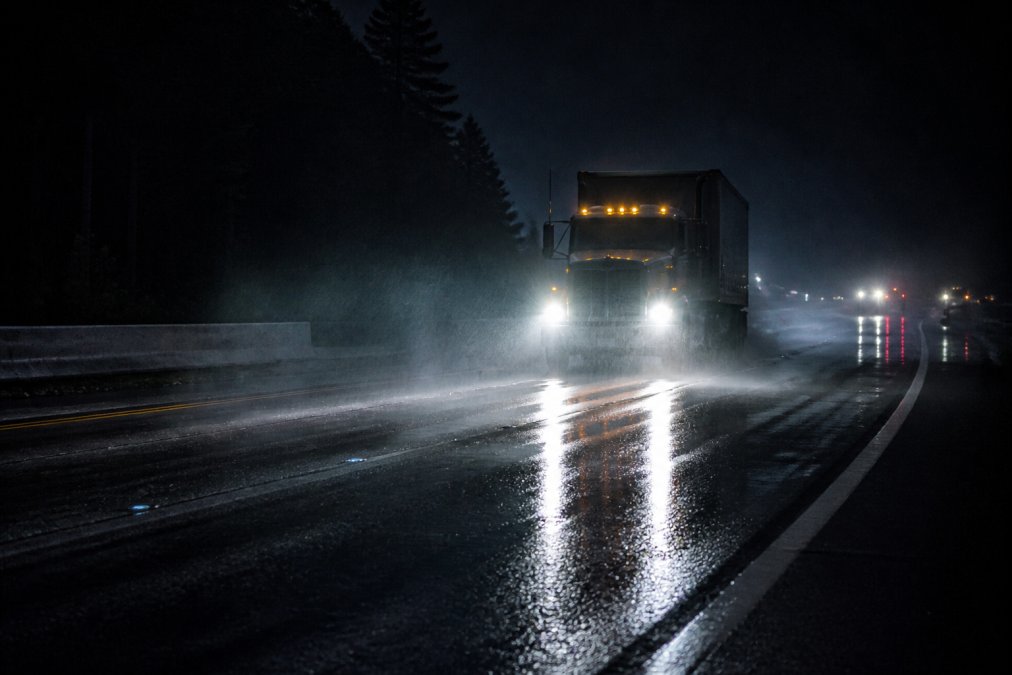
Weather fundamentally changes which color temperature performs best, and the difference is measurable, not theoretical. Clear nights favor cool whites (6000K-6500K) because the blue spectrum enhances contrast and road surface definition. Fog, rain, and snow favor warmer whites (4300K-5000K) because longer wavelengths penetrate moisture better and scatter less aggressively.
Clear Night Driving (6000K-6500K Advantage)
On clear nights, 6500K outperforms 4300K by approximately 10-15% in perceived visibility and contrast. Blue wavelengths enhance luminance contrast between road markings and asphalt, making lane lines appear sharper. The advantage is contrast-based, not brightness-based.
Fog Conditions (4300K-5000K Advantage)
Blue light scatters more aggressively than yellow light (Rayleigh scattering). A 6500K headlight in fog creates a bright, diffuse wall that reduces visibility of road edges, lane markings, and oncoming traffic by bouncing scattered light back toward your eyes.
A 4300K bulb cuts through fog more effectively because longer wavelengths scatter less. Real-world testing shows 4300K in moderate fog provides approximately 20-30% better visibility distance than 6500K. This is why fog lights are traditionally yellow or amber, it's physics, not aesthetics.
Rain Conditions (5000K-5500K Sweet Spot)
Rain follows the same principle: water droplets scatter blue light more than warm light. A 6500K bulb in heavy rain creates glare off wet pavement, though the penalty is less severe than in fog.
For rain-heavy regions, 5000K-5500K offers a practical compromise between fog/rain performance and highway visibility.
Snow Conditions (4300K-5000K Critical)
Snow creates a bright, diffuse surface that scatters light. A 6500K bulb creates glare that reduces contrast and makes road edges harder to distinguish from snow banks. Warm white (4300K-5000K) reduces glare and improves depth perception in snowy conditions.
RMSH4M2S - 60W 10K Lumens LED Bulb's →
Truck drivers in snow-heavy regions should prioritize 4300K-5000K even if it means sacrificing some highway visibility on clear nights. The safety trade-off is worth it.
Depth Perception and Night Driving Safety
Warm white light (4300K) creates better depth cues because it's closer to natural twilight spectrum. Your brain uses color information to estimate distance; when light matches natural twilight, depth perception is more accurate. Cool white (6500K) feels sharper but can reduce depth perception slightly.
This matters more than lumen output in real-world safety. Professional truck drivers often prefer 5000K-5500K over 6500K because the trade-off between sharpness and depth perception favors safety.
Practical Decision Framework
If you drive primarily on clear highways: 6000K-6500K delivers the best visibility and sharpness.
If you drive regularly in fog, rain, or snow: 4300K-5000K penetrates moisture better and reduces glare. Accept that highway visibility on clear nights will feel slightly less sharp.
If you split your driving evenly between clear and adverse conditions: 5000K-5500K offers the best compromise. You sacrifice 5-10% of clear-night visibility compared to 6500K, but you gain 15-20% better performance in fog and rain.
If you live in a region with frequent snow: 4300K is the safest choice, even if it feels "too yellow" on clear nights. The depth perception advantage in snow outweighs the contrast loss on clear roads.
DOT Headlight Regulations and Color Temperature Compliance
The Department of Transportation regulates headlight color temperature to prevent glare that endangers oncoming drivers.
RMS Lighting LLC's 6500K bulbs, when installed in proper projector housings, can produce a defined cutoff that minimizes glare.

Check your state's specific headlight regulations before upgrading.
Beam Pattern and Housing Type: Critical Factors Beyond Color
Color temperature gets the attention, but beam pattern determines whether your upgrade actually improves visibility or creates a dangerous mess. Two trucks with identical 6500K bulbs can have completely different visibility and glare characteristics if one has a projector housing and the other has a reflector housing, and this difference is amplified in trucks due to their higher headlight mounting position.
Projector housings use a lens to focus light into a defined beam pattern with a sharp horizontal cutoff line, preventing glare while maximizing forward visibility. Reflector housings bounce light off a curved mirror and are sensitive to emitter position, move the light source a millimeter and the beam pattern changes. Most older trucks use reflector housings designed for halogen filaments, positioned differently than LED chips.
Truck headlights mount 30-36 inches higher than sedans. Light that scatters upward or sideways travels farther before hitting oncoming traffic. A 6500K bulb in a reflector housing on a truck creates a brighter "wall" of scattered blue light that reaches oncoming drivers' eyes from a greater distance, making it feel more blinding even if total lumen output is identical.
Projector housings mitigate this by controlling beam spread, the lens design ensures light stays within a defined cone and doesn't scatter laterally.
Choosing the Right Temperature for Your Truck and Driving Needs
Identify your primary driving scenario: highway driving on clear roads demands 6000K-6500K; fog or wet conditions demand 4300K-5000K; mixed driving demands 5000K-5500K.
Frequently Asked Questions
What is the best color temperature for truck headlights?
The best color temperature depends on your driving conditions and preferences. Cool white light at 6000K to 6500K improves nighttime visibility and provides a modern appearance, while warmer 4300K light offers better fog penetration. Most truck owners choose 6500K for daily highway driving because it matches daylight spectrum, reducing eye strain and improving depth perception on dark roads.
Is 6500K too bright for truck headlights?
6500K is street legal and widely used in modern vehicles, but perceived brightness depends on beam pattern and lens housing quality. If your truck has a reflector housing rather than a projector lens, 6500K light may scatter and create glare for oncoming drivers. Proper beam focus through quality housing prevents this. RMS Lighting's 6500K LED bulbs are designed with 360-degree beam angles and built-in drivers.
How does color temperature affect visibility in rain and fog?
Warmer color temperatures like 4300K penetrate fog and rain better because longer wavelengths scatter less in moisture. Cool white light at 6500K provides superior contrast and depth perception on clear nights but can create more glare in wet conditions. For trucks driven frequently in adverse weather, consider your primary driving environment: highway night driving favors 6500K, while coastal or mountainous fog-prone areas benefit from 4300K or 5000K.
What are the DOT regulations for truck headlight color temperature?
The DOT (Department of Transportation) requires headlights to emit white light for street legal compliance. The critical factor is beam pattern and intensity, your headlights must not blind oncoming traffic. Ensure your LED conversion kit maintains proper beam focus through your truck's existing housing to stay compliant.