

Best Diode Dynamics Alternatives for Automotive LED Lighting

Table of Contents
- Why Drivers Switch From Diode Dynamics to Alternatives
- Automotive LED Lighting Standards: DOT Compliance and SAE Requirements
- Morimoto vs Diode Dynamics: Key Differences in Optical Design and Beam Patterns
- How to Choose Automotive LED Bulbs: Beam Spread, Color Temperature, and Vehicle Fit
- Top Diode Dynamics Alternatives: Baja Designs, Morimoto, and RMS Lighting
- Flickering, Error Codes, and Installation Reliability
- Price-to-Performance Comparison and Warranty Coverage
- Conclusion: Finding the Right LED Upgrade for Your Vehicle
Last Updated: August 7, 2026
Why Drivers Switch From Diode Dynamics to Alternatives
Diode Dynamics has built a strong reputation in the automotive LED lighting market, but an increasing number of drivers are exploring alternatives. Some seek better performance for specific applications, others want more aggressive styling options, and many discover that comparable products deliver superior value without the premium price tag. The automotive LED lighting market has matured significantly, creating space for specialized players to outperform established names in specific niches: off-road performance, precision optics, thermal management, and vehicle-specific compatibility.
Below, we'll examine the key alternatives, how they compare on performance metrics that actually matter, and how to choose the right solution for your specific vehicle and use case.
Automotive LED Lighting Standards: DOT Compliance and SAE Requirements
Automotive LED lighting in the United States must meet specific regulatory standards to be street-legal. The Department of Transportation (DOT) enforces Federal Motor Vehicle Safety Standards (FMVSS), while the Society of Automotive Engineers (SAE) publishes the technical specifications that manufacturers follow.
The primary standard for headlights is FMVSS 108, which defines beam patterns, color temperature limits, and photometric performance. Headlights must produce a specific cutoff line to avoid blinding oncoming traffic. SAE J1383 specifies performance requirements for sealed-beam headlights, while SAE J2030 covers LED headlamp modules. Color temperature is capped at 6500K for DOT compliance. Fog lights and auxiliary lighting have different requirements under FMVSS 108 and SAE J583. Off-road lighting exists in a gray area: lights used exclusively off-road don't need DOT certification, but street-driven vehicles require compliance.
The real-world implication: not all bright LED bulbs are street-legal. A bulb with 30,000 lumens might be impressive in isolation, but if it produces an uncontrolled beam pattern, it's illegal to use on public roads. This is why established manufacturers invest heavily in optical design rather than just raw lumen output.

Morimoto vs Diode Dynamics: Key Differences in Optical Design and Beam Patterns
Comparing Morimoto and Diode Dynamics reveals the fundamental trade-off between aggressive styling and precision optics.
Morimoto is known for its XB LED series, which offers complete housing overhauls with aggressive projector optics. Their designs prioritize aesthetic impact: sharp lines, dramatic styling, and high-intensity light output. The 4Banger HXB LED pod lights feature dual-projector optics that create a distinctive appearance while maintaining a focused beam. Morimoto products are engineered for impact and visual transformation.
Diode Dynamics takes a more conservative approach, focusing on plug-and-play compatibility and reliability. Their products are designed to integrate seamlessly with factory housings, often requiring minimal modification. This philosophy appeals to drivers who want improved visibility without a complete aesthetic overhaul.
The optical difference matters in practice. Morimoto's precision-engineered projectors create sharper cutoff lines and more controlled beam patterns. Diode Dynamics' bulb-replacement approach relies on factory lens geometry, which varies significantly across vehicle models. For street driving, Morimoto's precision optics generally deliver superior visibility and less glare. For vehicles where factory housings are already well-optimized, Diode Dynamics' simplicity wins.
SAE J2030 LED headlamp technical specifications
How to Choose Automotive LED Bulbs: Beam Spread, Color Temperature, and Vehicle Fit
Selecting the right LED bulb requires evaluating three independent variables: beam spread, color temperature, and vehicle-specific compatibility.
Beam Spread defines how the light distributes across the road. Narrow beam spreads (15-30 degrees) create intense, focused light ideal for long-distance visibility on highways. Wide beam spreads (60-90 degrees) cover more area but with less intensity, better for city driving. Most factory headlights use a medium spread (40-60 degrees) designed for balanced performance. Match the spread to your driving environment.
Color Temperature is measured in Kelvin (K). Factory halogen bulbs operate at 3000K, producing warm yellow light. LED upgrades typically range from 4000K (neutral white) to 6500K (cool white). The legal ceiling for street-legal headlights is 6500K. Higher color temperatures improve visibility in fog and rain because shorter wavelengths scatter less, but they also increase perceived glare. Most drivers find 5500-6000K optimal for visibility without excessive glare.
Vehicle-Specific Fit is the most commonly overlooked factor and the primary cause of installation failures. Bulb fitment varies dramatically across manufacturers and model years. An H7 bulb from one vehicle may not fit the same socket in another due to subtle differences in connector geometry, heat sink design, or housing clearance. Verify fitment before purchasing, this single step prevents the majority of installation headaches.
| Factor | What It Controls | Typical Range | Street Legal Limit |
|---|---|---|---|
| Beam Spread | Coverage area and intensity distribution | 15-90 degrees | Varies by housing design |
| Color Temperature | Light color and visibility in weather | 3000-6500K | 6500K maximum |
| Lumen Output | Overall brightness | 1500-30000 LM | No legal limit, but optics must control it |
| Vehicle Fit | Installation compatibility | Model-specific | Must match OEM socket |
Top Diode Dynamics Alternatives: Baja Designs, Morimoto, and RMS Lighting
Three manufacturers have emerged as the strongest alternatives to Diode Dynamics, each excelling in different areas.
Baja Designs: Off-Road Performance and Thermal Management
Baja Designs specializes in high-intensity LED lighting engineered for extreme off-road conditions. Their products use Cree high-output LED diodes rated for 50,000+ hours of operation, paired with multi-layered thermal management systems that maintain consistent performance in dust, mud, and high-temperature environments. The LP4 Automotive LED Off-Road Lights exemplify their approach: strong construction, proven durability in professional racing applications, and beam patterns optimized for terrain visibility.
The thermal management difference is significant. Off-road lighting generates substantial heat, and poor heat dissipation causes rapid LED degradation. Baja Designs incorporates aluminum heat sinks, active cooling designs, and thermal monitoring to maintain consistent lumen output over extended use. A Baja Designs light that's been running for six hours will deliver the same brightness as when it started.
Baja Designs products are manufactured in the USA and backed by a limited lifetime warranty plus a 30-day satisfaction guarantee. Their vehicle-specific light kits are available for trucks, Jeeps, and UTVs, ensuring proper mounting and integration with factory wiring.
The trade-off: Baja Designs is purpose-built for off-road use. Their products aren't optimized for street-legal compliance. If your vehicle is primarily street-driven with occasional off-road use, Baja Designs is overkill. If you're serious about off-road performance, it's the right choice.
Morimoto Lighting: Aggressive Styling and Precision Optics
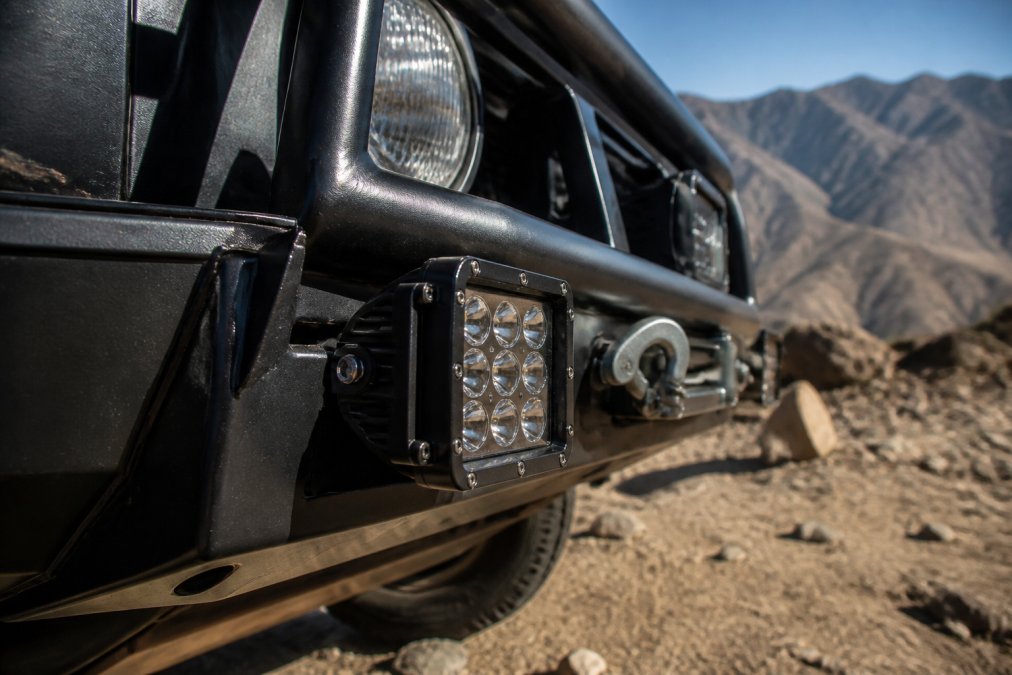
Morimoto has built a reputation for aggressive, precision-engineered LED lighting that transforms vehicle appearance while delivering superior optical performance. Their XB LED series features dual projector optics that create distinctive styling while maintaining focused beam patterns. The 4Banger HXB LED pods, priced around $300-400 per pair, exemplify their engineering philosophy: complete optical redesign rather than bulb replacement.
What separates Morimoto from competitors is their commitment to precision optics. Each projector is engineered to produce a sharp cutoff line, reducing glare while maximizing useful light on the road surface. The result is visibly superior beam control compared to factory halogen setups and many competing LED upgrades.
Morimoto offers both LED and HID technologies, allowing customers to choose based on their vehicle's electrical system and preferences. LED systems are more efficient and generate less heat; HID systems produce higher lumen output but require ballast modules.
The downside is complexity and cost. Morimoto products often require housing modifications, ballast installation, and professional wiring. A complete Morimoto upgrade can cost $800-1200 for parts and labor. For drivers prioritizing both aesthetics and performance, Morimoto delivers measurable results.
RMS Lighting: High-Output CANBUS LED Bulbs and Vehicle-Specific Kits
RMS Lighting LLC offers high-output LED bulbs engineered for direct compatibility with factory housings, paired with CANBUS technology that eliminates flickering and error codes. Their 130-watt CANBUS LED bulbs (available in H4, H7, H11, H13, 9004, 9005, 9006, and 9007 sizes) deliver 30,000 lumens per pair at 6500K color temperature, priced at $109 per pair.
The CANBUS feature addresses a critical pain point that many drivers encounter with aftermarket LED upgrades: dashboard error codes and hyper-flashing. Traditional LED bulbs draw significantly less current than factory halogen bulbs, which causes some vehicle electrical systems to register a "bulb out" error. CANBUS-equipped bulbs include resistor modules that mimic the electrical load of halogen bulbs, preventing error codes entirely.
RMS Lighting has researched and tested their products to the highest standards, with lamps featuring correct LHD lens patterns and original-style conversion kits designed for easy installation. Their team provides expert guidance on vehicle-specific compatibility, ensuring customers select the right bulb size and kit for their exact model year.
The value proposition is clear: proven reliability, plug-and-play installation, CANBUS compatibility, and competitive pricing. For drivers upgrading classic cars and trucks while maintaining a factory appearance, RMS Lighting delivers measurable improvements without the complexity of complete housing overhauls.
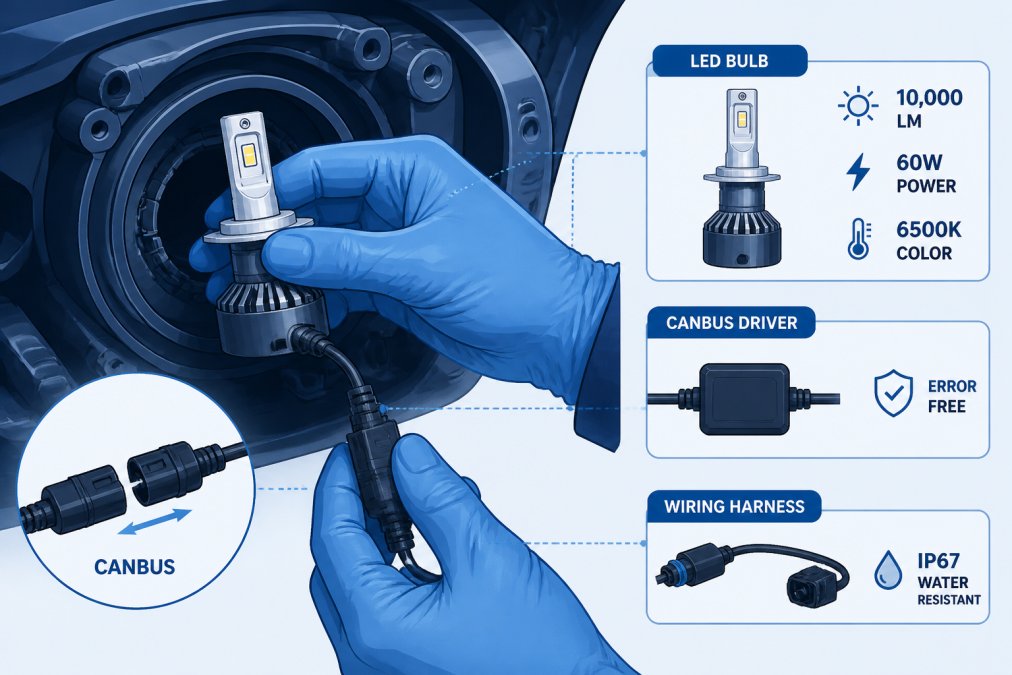
Flickering, Error Codes, and Installation Reliability
Flickering and dashboard error codes are the most common complaints among drivers upgrading to aftermarket LED lighting.
The problem stems from electrical load mismatch. Factory halogen headlights draw 55-65 watts per bulb, creating a specific electrical load that the vehicle's onboard diagnostics expect. LED bulbs, being far more efficient, draw only 8-15 watts. When the vehicle's electrical system detects this sudden drop in current draw, it interprets the change as a bulb failure and triggers an error code. Some vehicles respond by activating hyper-flashing (rapid on-off cycling).
CANBUS resistor modules solve this problem by adding a load resistor that mimics the electrical draw of a halogen bulb. RMS Lighting's CANBUS LED bulbs integrate this resistor technology directly into the bulb assembly, eliminating the need for separate module installation.
Flickering can also result from poor electrical connections or inadequate power supply. Older vehicles sometimes have corroded battery terminals or weak alternators that can't provide stable voltage under load. Installation reliability depends heavily on vehicle-specific fitment. A bulb that physically doesn't fit the housing socket will have poor contact, causing intermittent flickering or complete failure.
Federal Motor Vehicle Safety Standards FMVSS 108 headlight requirements
Price-to-Performance Comparison and Warranty Coverage
Price varies dramatically across alternatives, and the relationship between cost and performance is non-linear.
RMS Lighting's 130-watt CANBUS LED bulbs at $109 per pair represent strong value for plug-and-play upgrades. This price includes CANBUS compatibility, vehicle-specific fitment, and 30,000 lumens of output. Budget LED bulbs starting around $32 per bulb often report flickering issues in certain applications due to inadequate CANBUS design.
Morimoto's 4Banger HXB LED pods at $300-400 per pair include complete optical redesign, dual projector systems, and aggressive styling. Baja Designs' LP4 Off-Road Lights at $400-500 each serve an entirely different use case: extreme durability and thermal management for off-road racing.
Warranty coverage varies meaningfully. Baja Designs offers a limited lifetime warranty plus 30-day satisfaction guarantee. RMS Lighting provides vehicle-specific compatibility guarantees and responsive customer support. Morimoto's warranty typically covers manufacturing defects for 2-3 years. Budget brands often offer minimal warranty coverage.
The practical calculation: a $109 RMS Lighting LED bulb with CANBUS compatibility and a 2-year warranty is better value than a $32 budget bulb that causes error codes and requires additional resistor modules to function properly.
Conclusion: Finding the Right LED Upgrade for Your Vehicle
Choosing among Diode Dynamics alternatives requires matching your specific needs to the right manufacturer. Baja Designs excels at extreme off-road durability. Morimoto delivers aggressive styling with precision optics. RMS Lighting provides reliable plug-and-play CANBUS LED bulbs that solve real installation problems without unnecessary complexity.
The decision ultimately depends on three questions: What is your vehicle's primary use case? What's your budget for the complete installation? How important is maintaining a factory appearance versus achieving a dramatic visual transformation?
For most drivers upgrading classic cars and trucks while maintaining original styling, RMS Lighting's high-output CANBUS LED bulbs deliver measurable visibility improvements with minimal installation complexity. Our 130-watt options provide significant brightness gains over factory halogen setups, and CANBUS compatibility eliminates the flickering and error code headaches that plague many aftermarket upgrades. Learn more about RMS Lighting's vehicle-specific LED solutions and discover the difference that precision-engineered lighting can make for your driving experience.
Frequently Asked Questions
Why do some automotive LED bulbs cause dashboard error codes and flickering?
Dashboard errors and flickering occur when LED bulbs draw less power than factory halogen bulbs, causing the vehicle's CANbus system to register a fault. Many cheaper LED kits lack proper resistors or CANBUS-compatible circuitry to match the electrical signature of original bulbs. RMS Lighting's CANBUS-enabled LED bulbs solve this by mimicking the power draw of factory components, eliminating error codes and hyper-flashing issues that plague incompatible kits.
How do Morimoto and Diode Dynamics compare in light output and beam pattern?
Morimoto Lighting focuses on aggressive styling with projector optics that create sharp cutoff lines and focused beam patterns, ideal for complete housing overhauls. Diode Dynamics emphasizes direct bulb replacements with plug-and-play simplicity. Morimoto products typically offer higher lumen output but require more extensive installation. Both prioritize street-legal compliance, though Morimoto's XB LED series is geared toward enthusiasts willing to modify housings for maximum visual impact.
Will LED conversion kits work in older halogen headlight housings without modification?
Most direct-replacement LED bulbs (H4, H7, H11, 9005, 9006) fit into factory halogen housings without modification, but beam pattern quality depends on the housing design. Older housings with reflector-style designs may produce scattered light rather than a focused beam. Vehicle-specific LED kits from RMS Lighting are engineered for your exact model, ensuring proper beam spread and visibility. If you want aggressive styling or maximum output, projector-style housings from brands like Morimoto require professional installation.
What's the price difference between RMS Lighting LED bulbs and budget alternatives like Amazon?
RMS Lighting's 130W CANBUS LED bulbs cost $109 per pair and include premium thermal management, correct LHD lens patterns, and CANBUS compatibility to prevent error codes. Budget Amazon kits often cost $30-60 but frequently cause flickering, dashboard warnings, and premature failure due to inadequate heat sinks and no CANbus circuitry. The premium reflects rigorous testing, longer lifespan, and reliability, avoiding replacement costs and frustration from failed installations.
How should I evaluate beam pattern and light output before buying automotive LED bulbs?
When choosing automotive LED bulbs, check lumen output (RMS Lighting delivers 30,000 LM per pair at 130W), color temperature (6500K provides daylight visibility without excessive blue), and beam pattern specifications. Verify the product is DOT-compliant and SAE-certified to ensure street-legal cutoff lines. Test reports from manufacturers should show measured lux values and beam spread data. RMS Lighting's vehicle-specific kits eliminate guesswork by matching your exact headlight housing, guaranteeing proper focus and safe visibility for oncoming drivers.
[EXTERNAL_LINK: SAE J583 fog and driving lamp performance standards | sae.org]
This article was written using GrandRanker