



How to Clean a Car Windshield Without Streaks

Last Updated: November 3, 2026
Quick Summary
To clean car windshield glass without streaks, work on cool shaded glass, spray the cleaner lightly, wipe in sections, and buff each section dry right away with a separate clean towel. Streaks usually come from residue left by too much product, which a dry buff removes.
- Work on a shaded spot with the glass cool to the touch.
- Spray two or three light sprays per section, not a heavy coat.
- Wipe in horizontal strokes first, then vertical strokes on a second pass.
- Buff each section dry with a clean towel immediately after wiping.
- Spray the towel, not the glass, when cleaning the inside to protect the dashboard.
Table of Contents
- Why Windshields Streak in the First Place
- Choosing the Best Glass Cleaner for Your Car Windshield
- Gathering the Right Towels and Water
- Step-by-Step: Cleaning the Outside of the Windshield
- How to Clean Windshield Inside Without Streaks
- Why Windshield Streaks Show Up When It Rains
- Booking a Full Wiper and Glass Check With RMS Lighting
- Frequently Asked Questions
Why Windshields Streak in the First Place
Streaks rarely come from the glass itself. Most of the time, a thin film of road grime, wax, or leftover cleaner sits on the surface and smears under light, so keeping a clean car windshield starts with understanding that film. Once you see it, the haze is hard to ignore. The useful skill is not knowing that streaks happen, it is reading the pattern well enough to pick the right fix on the first try. Reading whether the haze comes from grime, wax, or cleaner residue helps prevent glass streaks before they form, since each calls for a different approach.
Use the pattern to diagnose the cause before you reach for a towel:
- Uniform cloudy haze that reappears minutes after wiping. This is cleaner residue. Too much product, or a cleaner that flashes dry before you buff, leaves a film behind. Fix: cut to two or three sprays per section and buff immediately with a dry towel.
- Rainbow-sheen or greasy smear that smears rather than lifts. This is oily interior film from dashboard off-gassing, vinyl, and breath. Fix: a dedicated automotive glass cleaner and a fresh towel, worked in small sections; a dry buff alone will not remove it.
- Streaks that follow the path of the wiper. The blades are the source, not the glass. Worn rubber, a bent arm, or contaminated washer fluid deposits a line the wiper redraws every pass. Fix: clean the blade edge with isopropyl alcohol, then replace blades that chatter or skip.
- Lacy, spotted rings that resist wiping. These are hard-water or mineral deposits, usually from tap water in a homemade mix or from sprinklers. Fix: distilled water in any DIY solution, and a dedicated mineral remover for established spots.
- Streaks that only appear in direct sun or on hot glass. The cleaner is drying before the towel reaches it. Fix: move to shade and let the glass cool to the touch before cleaning.
- A gray film that returns within days. The towel is the culprit, a dirty or overused microfiber redeposits grime. Fix: separate towels for cleaning and buffing, and wash them without fabric softener.
A common mistake is spraying hard and wiping once. That leaves more product than the towel can lift, so the glass looks cloudy. Less cleaner and a clean, dry towel solve most streak problems, but only after you have matched the pattern to the cause. Diagnose first, then clean your car windshield.
Choosing the Best Glass Cleaner for Your Car Windshield
The best glass cleaner for a car windshield is one made for automotive glass and safe for the coatings and tint on your vehicle. Household cleaners with ammonia or harsh solvents can damage tint and dry out seals over time. The harder question is how to confirm that before you spray.
Read the label in this order:
- Check for an automotive-glass claim. A product labeled for automotive glass is formulated to flash off without leaving a film. General-purpose household glass cleaners often leave surfactants behind that streak under low sun.
- Check the tint warning. Aftermarket window film, especially dyed or metalized film, can be attacked by ammonia and by strong solvents. If your windows are tinted, choose an ammonia-free cleaner and confirm the label says it is safe for film. When in doubt, test a small corner of the film first.
- Check the coating warning. Hydrophobic and water-repellent windshield coatings are designed to shed water, and some aggressive cleaners strip them prematurely. If you have applied a coating, use a cleaner the coating maker approves, or a pH-neutral automotive glass cleaner, and avoid abrasive pads.
- Check what is nearby. Interior cleaners and protectants on the dashboard can out-gas onto the glass and create the greasy film you are trying to remove. Wipe the dashboard last, and keep glass cleaner off vinyl, leather, and painted trim.
Keeping one dedicated glass cleaner for the car is a sensible habit. A simple DIY mix of distilled water and isopropyl alcohol, with a few drops of mild dish soap, is a common approach; distilled water helps keep minerals off the glass.
Watch out: Never use dish soap in large amounts. It leaves a film that causes streaks, so one or two drops is plenty. And never mix ammonia with bleach-based products, the combination produces a dangerous gas.
Gathering the Right Towels and Water
The right tools matter as much as the cleaner. You need:
- Two or three clean microfiber or waffle-weave towels
- One towel for cleaning and a separate dry towel for buffing
- Distilled water if you make your own cleaner
- A plastic razor blade for stubborn spots on the outside glass
- A spray bottle for controlled application
Keep towels separate. Use one damp towel to lift dirt, then a dry towel to buff. This keeps grime from going back onto the glass.
Step-by-Step: Cleaning the Outside of the Windshield
Work on a shaded spot with the glass cool to the touch. Hot glass dries the cleaner too fast and causes streaks.
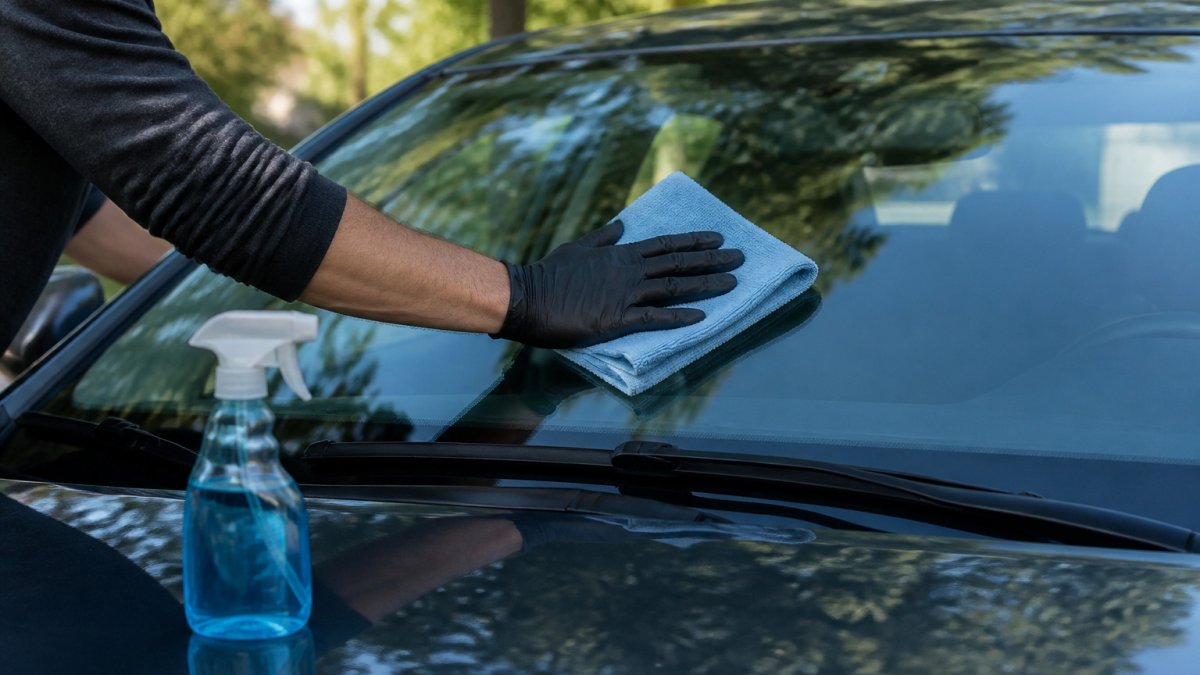
- Rinse the glass. Spray plain water to loosen loose dirt.
- Spray lightly. Apply two or three sprays of cleaner to the glass, not the towel.
- Wipe in sections. Divide the windshield into four to six areas and clean one at a time.
- Wipe in one direction. Use horizontal strokes on the first pass, then vertical strokes on the second.
- Buff dry. Use a clean, dry towel right away to remove any remaining film.
- Check for spots. Hold the towel in front of the glass to spot any remaining haze.
Clean the wiper area and the lower edge of the glass too. Grime collects there and smears the rest of the windshield when you drive.
The outside cleaning process comes down to a few steps, each with a clear timing or approach.
| Step | What to do | Time or frequency |
|---|---|---|
| Cool the glass | Work on a shaded spot until glass is cool | Before cleaning |
| Rinse | Spray plain water to loosen dirt | Before cleaning |
| Spray lightly | Two or three sprays on the glass | Per section |
| Wipe in sections | Divide into four to six areas | One area at a time |
| Wipe direction | Horizontal first, then vertical | Two passes |
| Buff dry | Use a clean, dry towel | Immediately after wiping |
How to Clean Windshield Inside Without Streaks
The inside of the windshield collects a greasy film from the dashboard, vinyl, and breath. This film is the main reason the glass looks hazy.
Use the same method as the outside, with one change: spray the towel, not the glass, to keep cleaner off the dashboard. Work in small sections and buff each one dry before moving on. Clean the top edge near the headliner, where dust and smoke build up.
Skipping this step is one reason fogging and streaks can return.
Why Windshield Streaks Show Up When It Rains
Rain can make streaks look worse. Water beads on dirty glass and spreads the film into a visible haze. The wiper blades can also smear grime if the rubber is worn or dirty.
If streaks appear mainly in rain, check these items:
- Wiper blades. Replace blades that chatter, skip, or leave lines.
- Washer fluid. Use a washer fluid made for glass, and keep the reservoir filled.
- Glass film. Clean the outside with the method above to remove the film that rain exposes.
Once the glass is clean and the blades are fresh, most rain streaks disappear.
Booking a Full Wiper and Glass Check With RMS Lighting
Clear glass is only part of good visibility. Headlights and turn signals matter just as much when visibility drops, and dim factory halogen bulbs can reduce nighttime visibility.
RMS Lighting LLC offers LED headlamp conversion kits and bulbs designed for automotive use. Our expert team is here to help you find the right fit for your vehicle. For current pricing, visit the RMS Lighting LLC website, as pricing depends on quantity, dates, and delivery.
Frequently Asked Questions
How can I wash my car windshield without leaving streaks?
Use a dedicated glass cleaner or a mix of distilled water and isopropyl alcohol, spray lightly, and wipe with a clean, dry microfiber or waffle-weave towel. Work in small sections, wipe in one direction, and finish with a separate dry towel. Dirty towels and overspraying are the two most common causes of streaking, so keep towels clean and avoid soaking the glass.
Is Dawn dish soap safe for car windshields?
Dish soap can clean away road grime, but it leaves a residue that causes smearing and haze, especially when used at full strength. A small amount diluted in water, followed by a thorough rinse and a dry-towel finish, is far less likely to leave a film. For a streak-free result, a purpose-made glass cleaner is the more reliable choice.
Is it okay to use Windex on the inside of a windshield?
Many drivers use Windex on the inside glass, and it works for most windshields. Spray it on the towel rather than the glass to limit overspray onto the dashboard, and avoid ammonia-based cleaners on tinted or coated glass unless the label says it is safe for those surfaces. Wipe the glass fully and dry it with a clean towel.
What is the best cloth to use for streak-free glass cleaning?
A clean, lint-free microfiber towel or waffle-weave towel works best. Use one towel for cleaning and a second, dry towel for buffing. Replace or wash towels once they get dirty or hold residue, because a dirty towel spreads grime and creates the streaks you are trying to remove.
