

7 CANbus LED Reverse Bulb Mistakes to Avoid

Quick Summary
A canbus led reverse bulb is a CANbus-compatible LED replacement that gives brighter, whiter backup lighting than factory bulbs. Results depend on matching the bulb size, checking CANbus compatibility and confirming beam placement before you order.
- Confirm the bulb number from the old bulb's base or glass before ordering.
- LED bulbs draw less power, which can trigger a bulb-out warning on CANbus vehicles.
- Load resistors get hot, so mount them to metal away from plastic and wiring.
- Test the bulb rotated 180 degrees if it does not light, since polarity is a common cause.
- Judge reverse bulbs on beam pattern and fitment first, then on brightness and color.
Table of Contents
- Why CANbus LED Reverse Bulbs Improve Backup Lighting
- Finding the Right Size: 921, 912, T15 and W16W Cross-References
- What CANbus Does and When It Causes Error Messages
- Choosing the Brightest 921 LED Reverse Bulb
- Lumen Ratings, Beam Pattern and Color Temperature
- Best LED Backup Lights for Trucks and Larger Vehicles
- Your Next Step: Verify Fitment Before You Order
- Frequently Asked Questions
Why CANbus LED Reverse Bulbs Improve Backup Lighting
Last Updated: November 16, 2026
Backing up in the dark is where a weak reverse light shows its limits. Owners who swap their factory reverse bulbs for LED units often expect a dramatic change, then find the result is less clear than they hoped. The gap almost always comes down to bulb size, CANbus compatibility and beam placement. Get those three right and a CANbus LED reverse bulb gives you a brighter, whiter view of the space behind you.
Most of the mistakes below are avoidable. They happen when buyers skip the fitment check or assume every "error-free" listing means the same thing. Each section covers one of them, along with what to do instead.
Finding the Right Size: 921, 912, T15 and W16W Cross-References
Reverse bulb sizes are not always easy to read from the packaging. A guide to LED parking and small-base bulb alternatives can help you compare options against your size. Many LED reverse bulbs are sold as cross-references, so one listing may cover several factory numbers. For example, one 921-style CANbus bulb is marketed as a direct replacement for 921, 912 and T15 wedge-base bulbs. That does not mean every vehicle uses all three.
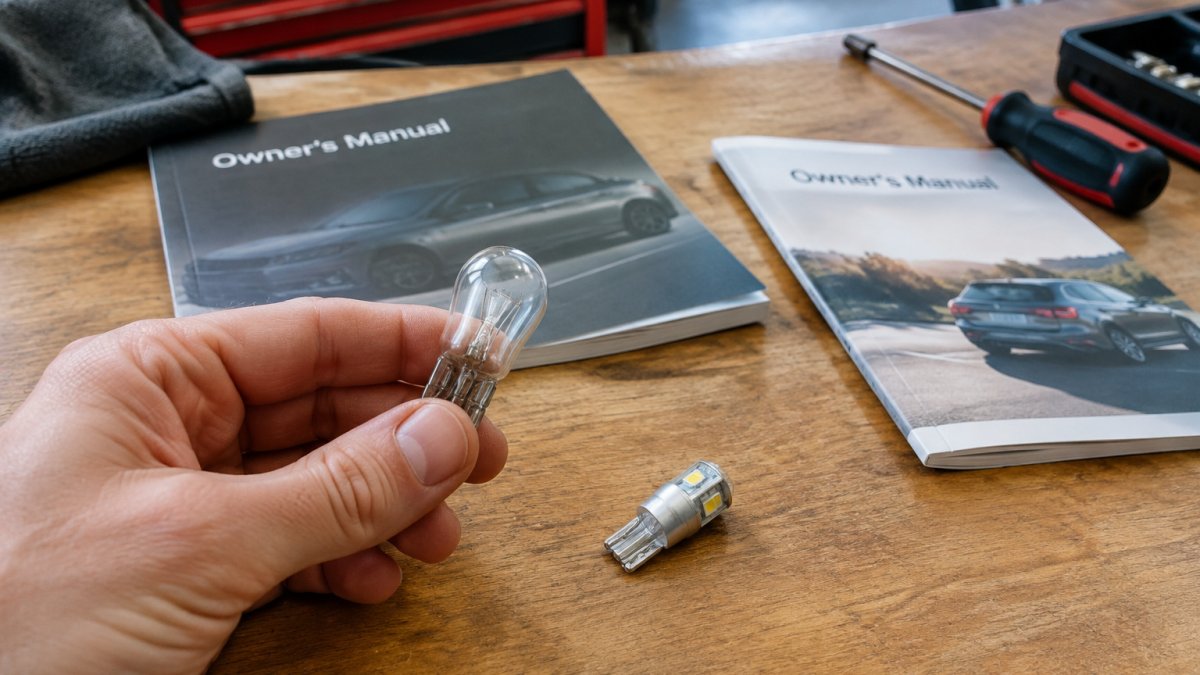
Start by pulling the old bulb and reading the base. Wedge-base bulbs are common, but the base shape and length still have to match your socket.
Once you have the number, check the base and fitment notes on the product listing before you buy.
Matching the bulb size to your socket is the first check, and the article's cross-reference examples show why it matters.
| Bulb number | Listed cross-reference | Check |
|---|---|---|
| 921 | 912, T15 | One listing may cover several factory numbers |
| Wedge base | Length and shape | Must match your socket |
| Old bulb | Number on base or glass | Confirm before ordering |
What CANbus Does and When It Causes Error Messages
CANbus is the vehicle's communication network. It monitors bulbs and can flag a bulb that draws too little current. LED bulbs draw far less power than halogen or incandescent bulbs, so an LED swapped in without a CANbus design can trigger a bulb-out warning or an error message on the dashboard.
CANbus-compatible LED reverse bulbs are built to draw a load the system recognizes. That is the main reason to choose them over generic LEDs. It is not a guarantee, though. Error-free claims on bulb listings should be checked against your vehicle's application notes. Check your vehicle's application notes before you assume the bulb will work.
Watch out: a CANbus bulb installed on a vehicle or circuit that does not use CANbus can cause problems with other vehicle circuits. Forum discussions warn about exactly this, so confirm the application first.
Reading the Symptoms
The warning you see tells you what the vehicle thinks is wrong, and that points to the fix. A bulb-out message on the dash usually means the monitoring circuit sees too little current draw. A fast-blinking turn signal, often called hyperflash, happens when the flasher module expects a higher load than the LED provides. A brief flicker when the bulb first powers on is common on vehicles that pulse the circuit to test for a burned-out bulb. A bulb that works in one socket but not the other is usually a polarity issue, not a CANbus issue.
Load Resistors, Decoders and When You Actually Need Them
A load resistor is a ceramic power resistor wired in parallel with the LED bulb. It adds resistance so the vehicle's monitoring circuit sees a load closer to the original incandescent bulb. Resistors get hot, often too hot to touch, so they need to be mounted to metal, away from plastic trim and wiring. A CANbus decoder or error canceller is a small inline module that does the same job electronically without the heat. Some vehicles still need a resistor or decoder to clear the warning, even with a CANbus-designed bulb. Treat that as a possibility to check against your specific application, not a standard step.
Polarity and the Plug-and-Play Myth
LED bulbs are polarity-sensitive: the anode and cathode have to match the socket. Many wedge-base sockets are keyed so the bulb only goes in one way, but some aftermarket bulbs and some sockets allow the bulb to seat either direction. If the bulb does not light, pull it, rotate it 180 degrees and reseat it before assuming the bulb is defective. This is the single most common cause of a 'dead' LED reverse bulb out of the box.
What to Do If a CANbus Bulb Still Triggers an Error
Work through the checks in order. Confirm the bulb number and base match the socket. Confirm the bulb is seated fully and the polarity is correct. Test the bulb in the opposite reverse socket if the vehicle has two. If the warning persists and the bulb lights correctly, the vehicle likely needs a load resistor or decoder sized to the reverse circuit. If the warning appears only in cold weather or only intermittently, the vehicle may be pulsing the circuit for bulb testing, and a decoder is usually the cleaner fix than a resistor. Document the bulb number, the vehicle year, make and model, and the exact warning message before contacting the seller, that information is what determines whether the issue is fitment, polarity or load.
Choosing the Brightest 921 LED Reverse Bulb
Brightness is the feature buyers compare most, and it is the easiest to misjudge. A high lumen number on the box does not by itself indicate a better beam on the road.
Instead, look at the physical design and the fitment notes. A bright white output that sits correctly in the lamp housing will usually outperform a higher-rated bulb that aims light poorly.
Lumen Ratings, Beam Pattern and Color Temperature
Lumen ratings tell you how much light a bulb emits. They do not tell you where that light goes. A reverse bulb spreads light into the area behind the car, so beam pattern matters as much as raw output. A focused, even pattern lights the ground near the bumper more usefully than a scattered one.
Color temperature is the other spec people ask about. Bulbs in the 6000K to 6500K range produce a white light, and the 6500K RMS1156LEDWHT bulb is listed at that color temperature. Color temperature changes how the light looks, not how far it reaches.
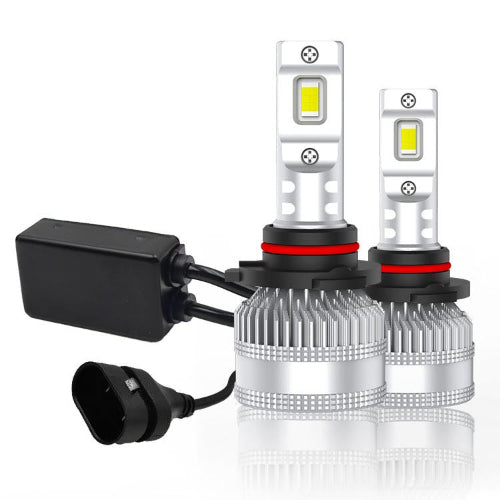
Our standard advice is to judge the bulb on pattern and fitment first, then on brightness and color.
Best LED Backup Lights for Trucks and Larger Vehicles
Trucks and larger vehicles raise the stakes. Reverse lights sit higher and farther from the rear bumper, and the area you need to see is larger. A bulb that looks adequate on a small car may leave a truck's rear corners in shadow.
Check the bulb size and socket type against your truck's actual application, not against a general "truck" category. Trucks often use different bulb numbers from car models, and some use two reverse bulbs per side. Confirm the count before you order.
Keep the spec sheet open while you compare. Note the bulb number, the base, the quantity and the CANbus statement for each option.
Your Next Step: Verify Fitment Before You Order
Most reverse-bulb returns come down to one mistake: the buyer ordered the wrong size. Before you add anything to your cart, verify four things. Confirm the bulb number from your owner's manual or the old bulb. Check the base type. Confirm whether your vehicle uses CANbus. And check whether you need a load resistor.
How to Confirm the Bulb Number
There are three reliable sources, and they should agree. The owner's manual's bulb specification chart lists the factory number for each lamp position. The old bulb itself usually has the number stamped or printed on the base or the glass. And the socket housing sometimes carries a molded number. Start with the old bulb, it is the number the vehicle was actually built with. If the manual and the old bulb disagree, trust the old bulb unless you know a previous owner swapped it.
Reading the Base and Socket
Wedge-base bulbs are the most common in reverse lights, but the base shape and length still have to match the socket. Compare the new bulb's base to the old one side by side: the width of the wedge, the depth of the base, and the position of the locating keys all matter. A bulb that seats but sits too deep can aim light poorly; one that sits too shallow can rattle or lose contact. If the listing shows a cross-reference covering several numbers, confirm your number is on that list and that the base pictured matches your old bulb.
A Safe Installation Sequence
Work with the vehicle off and the transmission in park or the parking brake set. Open the rear hatch or trunk and locate the reverse lamp housing. Most housings are accessed from inside the cargo area behind a trim panel or a small access door; some trucks and SUVs require removing two or three fasteners. Disconnect the harness connector before twisting out the socket, and never pull on the wires. Seat the new bulb fully, reconnect the harness, and test before reinstalling trim. Test with the ignition on and the shifter in reverse, and have a second person watch the lamp while you confirm the dash shows no warning.
What to Check After Installation
Confirm the bulb lights, the color is white rather than blue or yellow, and the beam spreads evenly across the ground behind the bumper rather than hot-spotting in one spot. Check both sides if the vehicle has two reverse lamps. Watch the dash for a bulb-out message for the first few drive cycles, since some vehicles only run the bulb check after the vehicle has been driven. If a warning appears, revisit the CANbus and polarity checks before assuming the bulb is wrong.
When to Ask Before You Buy
If any of those answers is unclear, ask before you buy. RMS Lighting can help you confirm fitment for your vehicle. Have the year, make, model, trim and the number from your old bulb ready, that is what lets us match the right bulb the first time. Once you have the right number, our product pages list the exact specs for each bulb.
Frequently Asked Questions
Can CANbus LED reverse bulbs cause a dashboard warning or hyperflashing?
CANbus LED reverse bulbs can trigger a bulb-out warning on some vehicles because the car's computer reads the lower current draw of an LED as a failed bulb. Some vehicles also need a load resistor or decoder to suppress the error. The warning can still appear with reverse lights. Check your vehicle's requirements and confirm with RMS Lighting before ordering if you are unsure.
Do CANbus LED reverse bulbs need a decoder or resistor?
Not every vehicle needs a decoder or resistor. Vehicles that monitor bulb circuits closely may show an error message with an LED bulb, and a load resistor is a common fix. The RMS Lighting 1156 and 3156 listings state that CanBus compatibility may vary and that additional resistors or modifications may be required for some applications. Test the reverse lights after installing to confirm no warning appears.
What is the brightest LED reverse light bulb?
Brightness is best compared using measured lumen output rather than advertised figures. RMS Lighting's 1156 and 3156 CanBus reverse bulbs are advertised at 20,000 lumens per pair, while the RMS1156LEDWHT 1156 bulb is rated at 1000 lumens per bulb with 6500K white light. Compare listings using the same measurement basis and verify the bulb size first.
How do I find the correct LED reverse bulb size for my vehicle?
Check your owner's manual or remove the existing bulb and read the base number printed on it. Common reverse bulb sizes include 921, 912, T15, W16W, 1156 and 3156. Some bulbs cross-reference to more than one size, so confirm the base type and socket before ordering. RMS Lighting recommends contacting the team with questions about fitment before placing an order.
