

7 Steps to Choose LED Headlights for Extreme Weather

Last Updated: November 1, 2026
Quick Summary
Choose LED headlights for extreme weather by prioritizing beam quality over raw lumens, then matching color temperature to your conditions: 3000K amber for fog and heavy snow, 4300K neutral white for rain and mixed winter weather. Confirm bulb fitment, aim the beam 25 feet from a wall, and check for an IP67 or IP68 rating.
- Ignore the lumen number on the box; beam quality decides whether you see the road.
- A 10,000-lumen bulb in a bad housing loses to a well-aimed 5,000-lumen setup.
- In fog, the enemy is upward light, so use a hard cutoff, low aim and wide spread.
- Aim LED headlights 25 feet from a flat wall, with the cutoff just below bulb height.
- LED lenses run cooler than halogen, so snow and ice can pack on while the bulb works.
Table of Contents
- Start With Beam Quality, Not Raw Lumens
- LED Headlights for Rain and Fog: What Actually Cuts Through
- LED Headlight Color Temperature for Bad Weather
- LED Headlight Bulb Compatibility and Fitment Before You Buy
- How to Aim LED Headlights and Control Glare
- Snow, Ice, and Lens Temperature on LED Housings
- Durability, Water Ratings, and What Warranty to Expect
- Match a Conversion Kit to Your Vehicle
- Frequently Asked Questions
Start With Beam Quality, Not Raw Lumens
The first rule of choosing LED headlights for extreme weather conditions is counterintuitive: ignore the lumen number on the box. Beam quality, not raw brightness, decides whether you see the road or blind the driver ahead of you.
Here is the problem with chasing lumens. Light that scatters outside the beam pattern does nothing for road visibility. According to IIHS headlight research, 5% of headlight systems tested for the 2026 model year had excessive glare, down sharply from 21% for 2017 models.
The RMS Lighting Gen3 conversion kits are built around a sharp cutoff line. A focused beam with a sharp top edge puts light on the pavement where you need it.
Three specs matter more than lumens:
- Beam pattern: the shape of light on the road, including cutoff
- Light distribution: even spread across the lane, not a hot spot
- Headlight aim: where the beam points after installation
A 10,000-lumen bulb in a bad housing loses to a well-aimed 5,000-lumen setup every time. Match the beam first, then worry about output.
LED Headlights for Rain and Fog: What Actually Cuts Through
Fog and heavy rain are not the same problem, and treating them the same is why so many LED upgrades disappoint in bad weather.
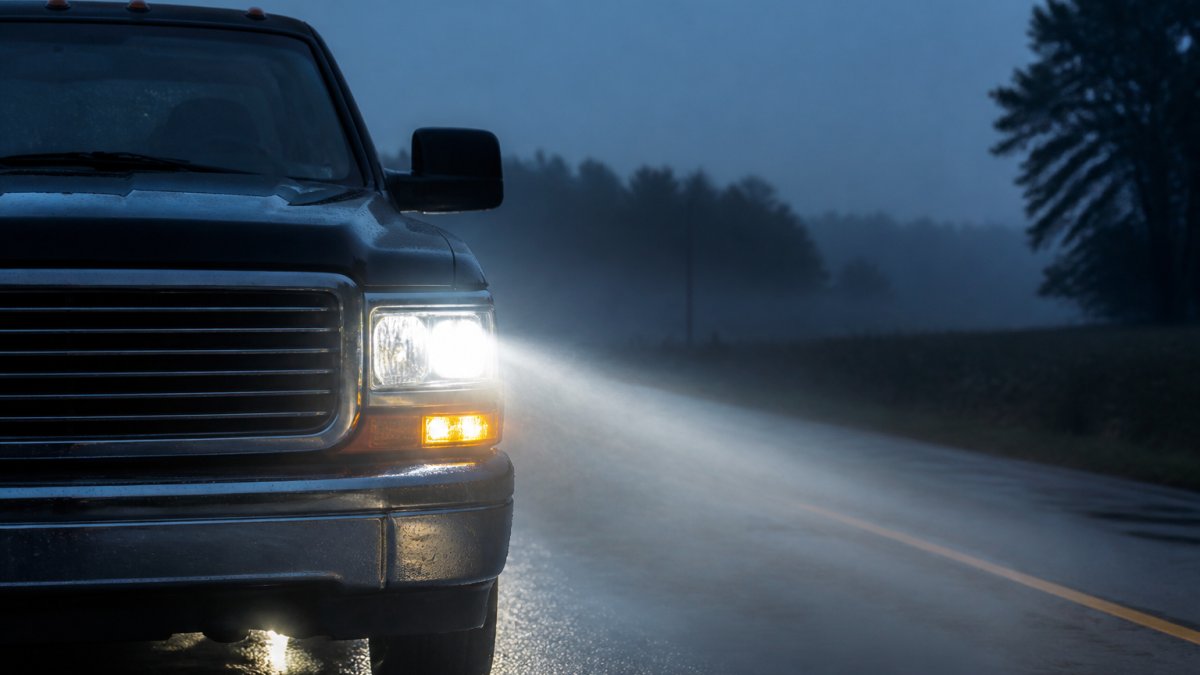
In fog, the enemy is upward light. Any beam energy that leaves the housing above the cutoff line hits the fog layer and bounces straight back into your eyes.
In heavy rain, the enemy is foreground glare and a wet road that reflects light like a mirror. A beam with a hot spot directly in front of the bumper washes out the pavement you actually need to read.
A practical condition-by-condition guide:
| Condition | Beam priority | Color temperature | What to avoid |
|---|---|---|---|
| Dense fog | Hard cutoff, wide spread, low aim | 3000K amber | High-mounted spot beams, 6500K cool white |
| Heavy rain | Even distribution, controlled foreground | 4300K neutral | Hot spots near the bumper, excessive output |
| Light mist / drizzle | Standard low beam with clean cutoff | 4300K | Fog lights left on unnecessarily |
| Mixed rain and dark | Low beam plus aimed fog light | 4300K | Running fog lights as a substitute for low beams |
A mini projector design helps in both conditions because the projector bowl and shield create a tighter cutoff than a reflector-style LED, which tends to scatter light above the beam.
One more rain-specific point: water on the lens and housing changes the beam. A dirty or water-spotted lens scatters light in every direction, which is why a quick wipe of the headlight lenses before a storm does more for visibility than a higher-lumen bulb. If you notice a hazy, widened beam in rain, clean the lens before you blame the bulb.
LED Headlight Color Temperature for Bad Weather
The best LED headlight color temperature for bad weather sits between 3000K and 4300K, not the 6500K most kits ship with. Lower Kelvin means warmer light, and warmer light scatters less in rain, fog, and snow.
Here is how the range breaks down:
| Color Temperature | Light Tone | Best For |
|---|---|---|
| 3000K | Warm amber | Fog, heavy snow, dust |
| 4300K | Neutral white | Rain, mixed winter weather |
| 5000K-6000K | Cool white | Clear nights, dry roads |
| 6500K | Blue-white | Style, not weather |
Why 6500K Is Not the Default Answer
Cool white looks modern in a parking lot. In a snowstorm, that same blue-white light reflects off flakes and creates a glare curtain in front of the vehicle. Warmer 3000K light cuts under the reflection and shows the road surface.
Consumer Reports has noted that LED headlights can be brighter but often lack clear advantages over halogens, which is a useful warning against buying on color or brightness alone. The right Kelvin depends on your conditions, not the trend.
LED Headlight Bulb Compatibility and Fitment Before You Buy
LED headlight bulb compatibility and fitment must be confirmed before you order, because a bulb that does not seat correctly throws the beam off no matter how good it is. Check three things: bulb type, housing depth, and electrical system.
Start with the bulb number in your owner's manual. An H4 housing takes an H4 bulb; an H11 fog light takes an H11. Then confirm the housing has room for a bulb with a cooling fan.
For older vehicles with sealed-beam housings, a full conversion kit is the cleaner path. These integrated assemblies provide the necessary foundation for mounting additional durable offroad gear that maintains visibility when navigating through the most punishing environments.
CANbus, Hyper-Flashing, and Older Harnesses
CANbus errors and hyper-flashing happen when a vehicle's computer expects a halogen bulb's power draw and gets a lower LED draw instead. A reader hitting hyper-flash after installing LEDs can buy the flasher fix relay directly. Readers whose vehicles trigger CANbus errors can find a deeper explanation of why CANbus LED bulbs solve it. Fixing LED Headlight Hyper Flash Issues: A How-To Guide explains how to diagnose and fix them.
BLOWOUT R8 20000LM H4 LED Bulbs →
How to Aim LED Headlights and Control Glare
To aim LED headlights, park 25 feet from a flat wall on level ground, mark the beam center height, and adjust until the cutoff sits slightly below the bulb height. Proper aim is the single biggest glare control step you can take.
A quick checklist:
- Park on level ground, 25 feet from a wall
- Measure bulb center height and mark it on the wall
- Adjust cutoff to sit just below that mark
- Verify the beam points straight, not into oncoming lanes
- Re-check after loading the trunk or towing
Headlight aim drifts after suspension work or a heavy load. Recheck it. A well-aimed LED headlight puts light on the road and keeps it out of other drivers' eyes, which is the whole point of glare control.
Snow, Ice, and Lens Temperature on LED Housings
Snow and ice accumulation on LED lenses is a winter concern in LED upgrades, and it comes down to heat.
The result is counterintuitive: a dim halogen with a clear lens can outperform a bright LED with an iced-over lens. That is the trade-off to plan for, not ignore.
Why it happens, mechanically. LED bulbs move heat backward through a heatsink or fan, away from the lens, because the emitter itself must stay cool to survive. That is good for bulb life and bad for lens de-icing.
A winter maintenance routine that actually works:
- Clear the lenses before every winter drive, not just the windshield, carry a separate soft scraper or microfiber for the lights so you do not scratch the lens with road grit.
- Clear snow from the top of the housing and the hood line ahead of the lights; snow blowing back onto a warm-then-cold lens refreezes fast.
- After a slushy drive, rinse the lenses with warm (not hot) water to remove salt film, which scatters light and accelerates hazing.
- Check the lens after every storm for a hazy or widened beam, that is your signal that ice or salt film is blocking light.
Failure planning for extreme conditions. Moisture ingress is the quiet killer of LED bulbs in winter. Temperature swings pull moist air into a housing and condense it on the cold lens and the emitter.
If you drive through blowing snow regularly, factor lens temperature and moisture sealing into the purchase decision alongside lumens and color temperature. The best winter LED setup is the one whose lens stays clear and whose seals stay dry, not the one with the biggest number on the box.
Durability, Water Ratings, and What Warranty to Expect
Durability in extreme weather comes down to two ratings: water resistance and operating temperature. Look for an IP rating and a stated temperature range before you buy.
An IP67 or IP68 rating means the bulb survives water exposure. The H4 Mini Projector LED bulbs in the Gen3 kits are listed with an IP68 waterproof rating and an operating temperature range of -40°C to +85°C.
Warranty tells you how much the maker trusts the build. The Gen3 conversion kits list a 2-year warranty on the LED bulbs. Read the terms before buying.
Match a Conversion Kit to Your Vehicle
Matching a conversion kit to your vehicle means starting with the housing type, not the bulb. Sealed-beam housings need a full kit; replaceable-bulb housings usually need only a bulb.
If you run a vintage truck with sealed beams, the Gen3 conversion kits are one option for keeping the factory look. For most classic owners, the full kit keeps the factory look while adding a controlled projector beam.
The steps, in order:
- Identify your housing type and bulb number
- Confirm depth for a fan-cooled bulb
- Check whether your vehicle needs CANbus support
- Choose color temperature for your weather
- Aim the beam after install
Get those right and choosing LED headlights for extreme weather conditions stops being a gamble.
Frequently Asked Questions
Are LED headlights good for driving in snow?
They can be, but only if the beam is aimed correctly and the housing stays clear. LEDs run cooler at the lens than halogen bulbs, so packed snow and ice are less likely to melt off on their own. Glare control depends heavily on aim and beam design, more than on the light source alone. Clear the lenses before driving and pick a kit with a sharp cutoff.
Which LED headlight color temperature is best for fog and rain?
Warmer color temperatures in the 3000K to 4300K range tend to work better in fog, heavy rain, and blowing snow because the light reflects back at the driver less aggressively than very cool white. A 6500K bulb puts out more visible white light on a clear night, but in dense weather that brightness can bounce off the moisture and wash out road detail. Match the temperature to the conditions you drive in most, not to the highest number on the box.
How do I choose an LED headlight bulb for my vehicle?
Confirm the bulb number first, either from the owner's manual or the original bulb, then check that the kit is built for your housing type. Sealed beam classics need a full conversion kit rather than a bare bulb. Look for a controlled beam pattern, a waterproof rating such as IP67 or IP68, and a warranty you can actually use. Confirming fitment before ordering helps avoid returns.
How should LED headlight bulbs be oriented when installed?
Most LED bulbs have an adjustable base so the chips sit in the same position the halogen filament did. If the chips face the wrong way, the beam scatters and you lose the cutoff line that keeps light off oncoming drivers. Install the bulb, check the pattern against a wall at about 25 feet, and rotate the base until the hot spot sits where the factory beam did. Re-aim the housing afterward if the pattern sits too high.
Extreme weather exposes every weak point in a lighting setup, from beam scatter to snow-packed lenses. RMS Lighting LLC builds conversion kits with correct lens patterns, projector-style beam control, and IP68-rated bulbs tested for real conditions. Browse our LED headlamp conversion kits and bulbs, or reach out and we will help you find the right fit for your vehicle. Get started with RMS Lighting LLC and see the road clearly in any weather.
