

How to Choose LED Bulbs for Classic Cars

Table of Contents
- Why LED Bulbs Matter for Classic Cars
- Understanding Beam Patterns and Cut-off Lines
- Automotive LED Color Temperature Guide
- Headlight Housing Sizes and Compatibility
- LED Headlight Conversion Kits for Trucks and Vintage Vehicles
- Addressing Electrical Load and Canbus Systems
- LED Flasher Relay for Classic Cars and Hyper-flashing Solutions
- Installation and DOT Compliance Essentials
- Frequently Asked Questions
Last Updated: September 21, 2026
Why LED Bulbs Matter for Classic Cars
Upgrading to LED bulbs transforms how your classic car performs at night. Factory halogen bulbs dim over time and waste energy as heat. LED bulbs deliver brighter light with less electrical draw, which matters for older vehicles with aging alternators and wiring.
The real advantage goes beyond brightness. LEDs last thousands of hours longer than halogen bulbs, so you replace them far less often. For a car you drive regularly, that's a genuine quality-of-life improvement.
At RMS Lighting LLC, we understand the struggles owners face with cheap LED kits that flicker, cause dashboard errors, or produce scattered light that doesn't actually help visibility. The difference comes down to how the bulb sits inside your headlight housing and whether the electrical system can handle the conversion without triggering canbus errors.
This guide walks you through how to choose LED bulbs for classic cars, understanding what actually matters in a conversion kit, and avoiding the common mistakes that leave you with warning lights and poor beam patterns.
Understanding Beam Patterns and Cut-off Lines
The beam pattern is what separates a good LED conversion from one that blinds oncoming drivers. A proper cut-off line creates a sharp boundary between illuminated road and dark sky, so your light doesn't scatter into other drivers' eyes.
Halogen bulbs naturally create this cutoff because of how they're designed. LED bulbs are point sources of light, so they need help from the housing to shape the beam correctly. This is why housing quality matters as much as bulb quality.
When you install an LED bulb in an old reflector housing designed for halogen, the light bounces unpredictably. You get glare, dark spots, and uneven illumination. A projector lens housing or a housing specifically engineered for LED bulbs solves this problem by controlling where light goes.
RMS Lighting LLC's Gen2 housings are designed specifically for LED bulbs. The adjustable rotating bulb base lets you position the LED chips precisely inside the housing so the beam pattern stays clean and the cutoff line stays sharp. This prevents the scattered light that wastes energy and frustrates other drivers.
Test your beam pattern before you drive at night. Park in front of a wall and look at where light hits. You should see a clear, defined edge where brightness stops. If light spreads unevenly or creates bright spots in odd places, adjust the bulb position inside the housing.
Automotive LED Color Temperature Guide
Color temperature affects both how bright your lights appear and how they look aesthetically. Temperature is measured in Kelvin, and the number tells you whether your light looks warm or cool.
6500K is cool white and looks closest to daylight. This temperature provides excellent visibility because your eyes are adapted to see detail in daylight-colored light. Most modern LED headlight conversions use 6500K because it improves visibility while looking professional.
5000K is neutral white and slightly warmer than 6500K. Some drivers prefer this for a softer appearance that still delivers visibility.
4000K and below starts looking yellow or amber. This reduces visibility compared to cooler temperatures, so it's not ideal for headlights unless you're going for a specific vintage aesthetic.
For classic cars, 6500K balances visibility with a clean, modern look that doesn't scream "this is an LED retrofit." The light looks bright and white without the harsh blue tint that some cheap LEDs produce.
Check local regulations before choosing color temperature. Some jurisdictions have rules about how blue or how bright headlights can be. A 6500K LED from a quality manufacturer typically stays within legal limits because the beam is controlled and doesn't scatter.
Headlight Housing Sizes and Compatibility
Classic cars use three main sealed beam headlight sizes. Knowing which one your car has is the first step in choosing a conversion kit.
7-inch round housings are the most common on older American cars. These are simple to identify because they're circular. If your car was built before the 1980s, it likely has 7-inch sealed beams.

5x7-inch rectangular housings appeared on many vehicles from the 1970s onward. These are wider than they are tall and fit in the horizontal headlight openings common on cars from that era.
4x6-inch housings are smaller and often found on trucks and compact cars. Some classic vehicles use quad headlights with four 4x6 units instead of two larger ones.
Measure your existing headlight opening to confirm size. A 7-inch conversion kit won't fit a 5x7 housing, and forcing it risks damaging your vehicle's wiring or housing.
RMS3321M2S- 7" (Gen2) Round Headlight →
RMS Lighting LLC offers Gen2 conversion kits in all three sizes. Each kit includes proper glass lenses with Left-Hand Drive beam patterns for North American roads. The housings resist yellowing over time, unlike plastic alternatives that degrade under UV exposure.
When you order, verify your vehicle's year, make, and model. Some cars have unusual housing sizes or configurations that need specific adapters. The right fit ensures your installation goes smoothly and your beam pattern stays correct.
LED Headlight Conversion Kits for Trucks and Vintage Vehicles
A conversion kit includes the housing, the LED bulbs, and any adapters needed to connect to your vehicle's wiring. The best kits are plug-and-play, meaning they connect directly to your factory harness without cutting wires.
Quality matters here because cheap kits often use flimsy housings, poor-quality LED chips, or inadequate cooling. These fail within months or cause electrical problems that trigger dashboard warning lights.
RMS Lighting LLC's Gen2 kits include 10,000-lumen H4 LED bulbs with active cooling fans. The bulbs produce 50 watts of power and operate at 6500K cool white. Each kit comes with a 2-year warranty on the bulbs themselves, which covers manufacturing defects.
The 7-inch round kit runs $179. The 5x7 rectangular kit also runs $179. The 4x6 kit, which includes harness adapters for quad headlight setups, runs $269. These prices reflect the engineering that goes into proper beam pattern and thermal management.
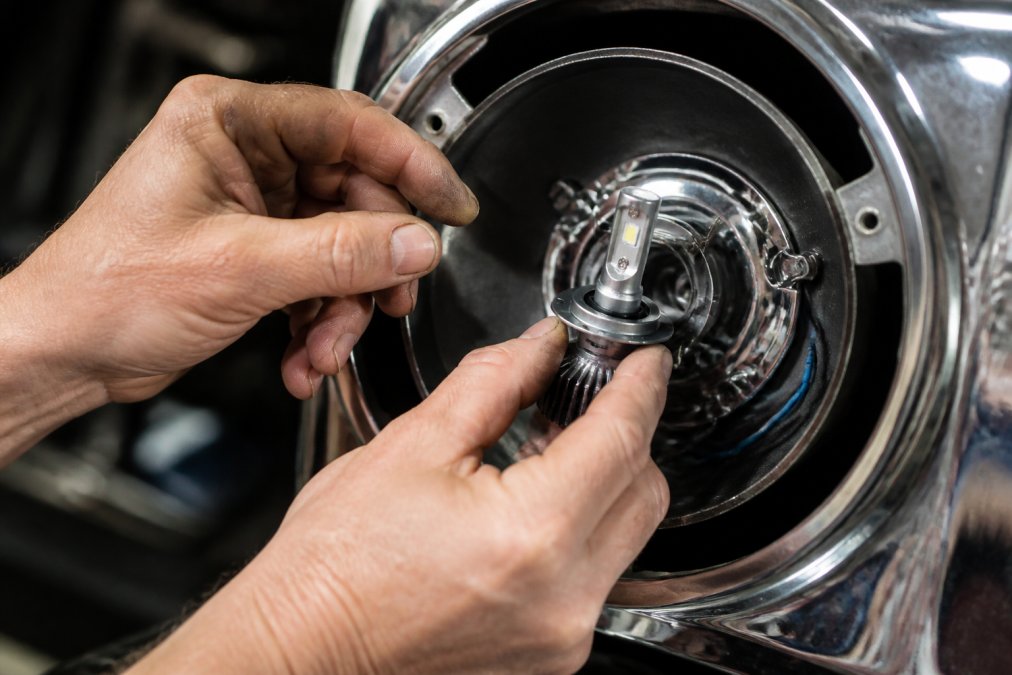
Installation typically takes 30 minutes to an hour if you're comfortable working with basic tools. You'll need a screwdriver to remove the old sealed beams and install the new housings. The LED bulbs plug into the H4 socket, and the housing plugs into your factory connector.
For trucks with quad headlights, the 4x6 kit includes adapters that convert the H4 3-prong connection to your factory 2-prong high beam connector. This keeps everything plug-and-play without modification.
Addressing Electrical Load and Canbus Systems
Older vehicles have simpler electrical systems than modern cars. A classic car's alternator and wiring weren't designed for the rapid on-off cycling that some LED bulbs create. This causes canbus errors and dashboard warning lights.
The problem happens when an LED bulb draws less current than the factory halogen bulb it replaces. Your car's electrical system expects a certain load. When the load drops, the system thinks something's wrong and triggers an error code.
This is where a load resistor or an LED flasher relay comes in. A load resistor mimics the electrical load of a halogen bulb so your system stays happy. An LED flasher relay replaces your factory flasher and handles the different electrical characteristics of LEDs.

RMS Lighting LLC's 2-pin speed adjustable LED flasher relay costs $8 and solves this problem directly. Instead of adding resistors to your wiring, you simply unplug your factory flasher and plug in the LED flasher. It eliminates the need for tapping wires and keeps your installation clean.
The flasher is speed adjustable, so you can dial in the flashing rate from 50 cycles per minute to 200 cycles per minute. This lets you match the original blink speed of your car's turn signals.
Check your vehicle's electrical system before installation. If you have modern canbus wiring, you might need additional support. If you have a simple 12V DC system like most classic cars, the LED flasher relay handles everything.
LED Flasher Relay for Classic Cars and Hyper-flashing Solutions
Hyper-flashing happens when your turn signals blink faster than normal. This occurs because LEDs draw less current than halogen bulbs, and your flasher interprets the lower current as a burned-out bulb.
The symptom is obvious: your turn signals flash twice as fast as they should.
| Component | Purpose | Cost | Installation Time |
|---|---|---|---|
| LED Headlight Kit (7-inch) | Replaces sealed beam headlights | $179 | 30-60 minutes |
| LED Headlight Kit (5x7 rectangular) | Fits horizontal headlight openings | $179 | 30-60 minutes |
| LED Headlight Kit (4x6 quad) | For four-light headlight setups | $269 | 45-90 minutes |
| LED Flasher Relay (2-pin) | Prevents hyper-flashing and errors | $8 | 5 minutes |
Installation and DOT Compliance Essentials
Before you install any LED conversion kit, check your local regulations. The Department of Transportation sets rules about headlight brightness, beam pattern, and color temperature. Most quality LED conversions comply with these standards, but cheap kits sometimes don't.
Frequently Asked Questions
How do I know which LED bulb size fits my classic car?
Classic cars use sealed beam headlights in three common sizes: 7-inch round, 5x7-inch rectangular, and 4x6-inch square. Check your vehicle's original headlight housing to identify the size, then match it to a compatible LED bulb conversion kit. The RMS Lighting Gen2 kits come in all three sizes with H4 LED bulbs rated at 10,000 lumens and include the proper harness adapters for plug-and-play installation without modification to your vehicle's wiring.
What is the difference between 3000K and 6000K LED color temperatures for vintage cars?
Color temperature measured in Kelvin affects both visibility and aesthetics. 3000K produces a warm, yellowish light similar to factory halogen bulbs, preserving a vintage appearance. 6000K delivers cool white light with improved visibility and a modern look. Most LED conversion kits for classic cars use 6500K (cool white) to maximize road illumination while maintaining a clean, professional appearance. Choose based on your preference for aesthetics versus nighttime visibility performance.
How do I prevent hyper-flashing when installing LED turn signals in a classic car?
Hyper-flashing occurs when your vehicle's flasher relay detects lower electrical load from LED bulbs than it expected from halogen bulbs. The solution is to replace the factory flasher with an LED-compatible flasher relay. The RMS Lighting 2-Pin Speed Adjustable LED Flasher Turn Signal Relay ($8.00) eliminates hyper-flashing by eliminating the need for load resistors and allows your LED turn signals to blink at the normal rate. Install it as a direct replacement for your OEM two-pin flasher.
Do LED headlights for classic cars require a relay harness?
Many LED conversion kits include harness adapters to simplify installation. The RMS Lighting 4x6 Gen2 kit includes H4-to-factory high beam harness adapters that convert the H4 3-prong connection to the factory 2-prong connector, enabling true plug-and-play installation. However, if your vehicle has Canbus systems or complex wiring, you may need a voltage regulator or load resistor. Always verify your specific vehicle's electrical requirements before installation.