

How to Improve Vehicle Visibility With LED Dome Lights

Last Updated: November 9, 2026
Quick Summary
To improve vehicle visibility with LED dome lights, swap your dim factory incandescent bulbs for LEDs in the same socket, choosing a 500-lumen festoon LED in 6500K white for most cabins. Measure your existing bulb's base type and length first, then test polarity before reinstalling the lens.
- A quality LED puts out several times the light of a stock bulb in the same socket.
- Shop by lumens, not wattage, since wattage tells you power draw rather than brightness.
- Changing interior car lights to LED takes about fifteen minutes per fixture with no special tools beyond a trim removal tool.
- LED dome light flickering usually traces to reversed polarity, a canbus system, or a loose socket.
- Buy a two-pack even if you only need one bulb so matching pairs look correct.
Table of Contents
- Why LED Dome Lights Beat Dim Factory Bulbs
- Bright LED Dome Lights for Cars: How Much Output You Need
- LED Dome Light Bulb Compatibility: Sizing Festoon and Wedge Bases
- How to Change Interior Car Lights to LED
- LED Dome Light Flickering: Polarity, Canbus and Loose Sockets
- Mistakes That Cost You Light and Damage Trim
- Picking the Right Bulb Size for Your Vehicle
- Frequently Asked Questions
Why LED Dome Lights Beat Dim Factory Bulbs
LED dome lights replace factory incandescent bulbs in your cabin's overhead housing, using light-emitting diodes to produce more light with less power draw. At RMS Lighting LLC, we focus on the practical side: which bulb fits, which color you want, and what goes wrong during install.
Factory interior bulbs were built to be cheap, not bright. Most drivers only notice how bad they are the first time they drop keys under the seat at night.
Incandescent vs. LED: What Changes in the Cabin
An incandescent bulb pushes current through a filament, losing most energy as heat. An LED produces light directly, so it runs cooler and draws far less from your electrical system.
- Brightness: A quality LED puts out several times the light of a stock bulb in the same socket.
- Color: Factory bulbs glow warm yellow. LEDs can be crisp white or warmer, your choice.
- Heat: LEDs run cool, which is easier on plastic lens covers that yellow and crack over time.
That last point matters on older vehicles. A tired wiring harness and a high-draw filament bulb are not a great pair.
Where Interior Visibility Actually Fails
The dome light is only one part of the picture. Interior illumination fails in specific places, each with its own fix:
- Footwells: Dark on most cars. A map light or courtesy light upgrade helps here.
- Trunk and cargo areas: Often lit by a single weak bulb tucked in a corner.
- Door handles and entry points: Hard to find in the dark, especially for passengers.
Walk around your car at night with the interior lights on. You will spot the dead zones in about thirty seconds.
Bright LED Dome Lights for Cars: How Much Output You Need
For most cabins, a 500-lumen festoon LED in a 6500K white is the sweet spot: bright enough to light the whole cabin without turning the interior into a floodlight that hurts your eyes.
Output is measured in lumens, and it is the number you should actually shop by. Wattage tells you power draw, not brightness.
Here is how to think about output levels:
| Output | Best For | Trade-off |
|---|---|---|
| Under 200 lumens | Glovebox, console, subtle accent | Too dim for cabin-wide use |
| 300-500 lumens | Dome, map, trunk, cargo | Balanced brightness and comfort |
| 600+ lumens | Large cabins, vans, trucks | Can feel harsh in a small cabin |
The 31MM Super Bright 500LM LED Dome Light sits right in that middle band, with a 6500K white output and a plug-and-play fit for compatible applications.

Reading the Kelvin Scale Before You Buy
Color temperature is measured in Kelvin, and it decides whether your cabin looks modern or muddy.
- 3000K: Warm, yellow-white. Closest to the factory look.
- 4000K-5000K: Neutral white. Clean without being harsh.
- 6000K-6500K: Cool white with a slight blue edge. The most "modern" look.
Match your interior bulbs to each other. Mixing a 3000K dome light with a 6500K map light looks like a mistake, because it is one.
LED Dome Light Bulb Compatibility: Sizing Festoon and Wedge Bases
LED dome light bulb compatibility comes down to two things: base type and base length. Get either wrong and the bulb will not seat, or it will rattle loose and flicker.
- Festoon: A cylinder with metal caps on both ends. Sized by length in millimeters, such as 31MM or 41MM.
- Wedge base: A flat plastic base with two wire contacts, pushed straight into the socket.
Measure your existing bulb before ordering. Pull it out, lay it against a ruler, and note the length in millimeters.
Buying by vehicle model without measuring is the single most common reason a "direct fit" LED arrives and does not fit. If you have confirmed a 41MM base, the 41MM Super Bright 500LM LED Dome Light matches that length.
How to Change Interior Car Lights to LED
Changing interior car lights to LED takes about fifteen minutes per fixture and needs no special tools beyond a trim removal tool. The job is beginner-friendly, but the details decide whether it goes smoothly.
Tools and Prerequisites
- Plastic trim removal tool, never a metal screwdriver
- Your new LED bulbs, correct base and length
- A clean microfiber cloth
Skip the metal tools. A flathead screwdriver will gouge plastic trim in a way you cannot undo.
Step-by-Step Installation
- Turn the interior light switch to OFF. Leave the door closed so the circuit stays cold.
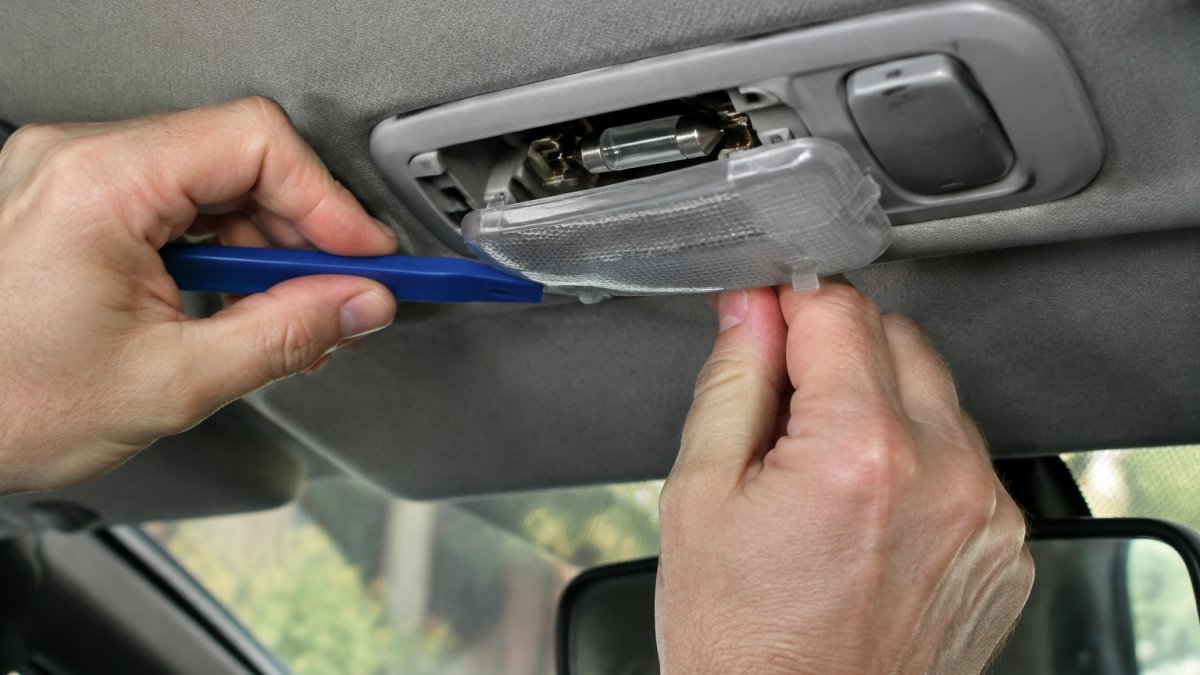
- Pry the lens cover off. Work the trim tool under one edge and ease it out. Plastic clips are brittle on older cars.
- Pull the old bulb free. Festoon bulbs pop out of spring clips. Wedge bases pull straight out of the socket.
- Check polarity before seating the new bulb. LEDs only work one way. If it does not light, flip it.
- Seat the new bulb firmly. It should sit flush with no wobble.
- Test before reinstalling the lens. Turn the switch on and confirm output.
- Reinstall the lens cover. Press evenly around the edges until every clip seats.
If you want a deeper walkthrough, our guide on installing red LED interior lights covers the same process with more detail. And if you are worried about damaging the circuit, read up on preventing electrical shorts when installing LED bulbs before you start.
LED Dome Light Flickering: Polarity, Canbus and Loose Sockets
LED dome light flickering almost always traces to one of three causes: reversed polarity, a canbus system that does not recognize the low current draw, or a socket that is not making solid contact. Diagnose in that order and you will usually solve it in minutes.
- Polarity: LEDs are directional. Flip the bulb in the socket. If it lights steady, that was it.
- Canbus: Some vehicles monitor bulb resistance and flag an error when an LED draws less current than expected. A canbus-ready bulb or a load resistor fixes it.
- Loose socket: Spring clips lose tension over time. Bend the clip slightly or reseat the bulb.
Why Polarity Trips Up So Many Installs
An incandescent filament does not care which way current flows; an LED does. The diode only emits light when the anode sees positive voltage and the cathode sees ground.
That is why the first diagnostic step is always to pull the bulb and rotate it 180 degrees.
A common pattern: a driver installs four bulbs, sees two light and two stay dark, and concludes half the order was bad. In reality, the two dark sockets are wired with reversed polarity. Flip the dark ones and all four light.
Watch out: do not test polarity by holding a bulb loosely against the contacts.
Canbus: What It Is and Why Your New Bulb Throws a Warning
Canbus is shorthand for the controller area network modern vehicles use to let modules talk to each other.
- Canbus-ready LED bulbs have a built-in resistor or driver circuit that presents a load the module recognizes. They cost more per bulb and run slightly warmer, but they install with no extra wiring and keep the factory harness untouched.
- Load resistors are separate ceramic units wired in parallel with the bulb. They are cheap and effective, but they get hot, hot enough to melt plastic if mounted carelessly, and they require splicing into the factory wiring, which is a permanent modification.
For interior dome lights, canbus-ready bulbs are usually the better choice: low current draw, manageable heat, and no cutting into a harness that was never designed for it.
Watch out: a canbus-ready bulb that is the wrong base length will still throw a warning if it does not seat firmly.
Loose Sockets and Corroded Contacts
Spring clips in festoon sockets lose tension over years of heat cycling.
Corrosion is the other silent culprit. Interior bulbs live in a humid environment, and contacts oxidize over time. A pencil eraser or a microfiber cloth with a dab of electronics cleaner removes the film.
Testing polarity properly saves you a second teardown. Our guide on testing LED headlight polarity before you install walks through the multimeter check in plain steps.
Mistakes That Cost You Light and Damage Trim
The most expensive mistake is forcing a lens cover with a metal tool. Plastic clips snap, and a cracked lens lets moisture into the housing.
- Skipping the measurement. Ordering by model year alone gets you the wrong length.
- Mixing color temperatures. A warm bulb next to a cool one looks unfinished.
- Overbuying lumens. A 600+ lumen bulb in a small cabin is genuinely unpleasant at night.
- Ignoring canbus warnings. A flickering bulb that "mostly works" will keep throwing codes.
One insider note: buy a two-pack even if you only need one bulb. The second one goes in the trunk light or the map light, and matching pairs look correct.
Picking the Right Bulb Size for Your Vehicle
Measure first, match second, buy third. That order solves almost every fitment problem before it happens.
A quick reference for the decision:
| If your socket is... | Measure | Then choose |
|---|---|---|
| Festoon, short housing | End-to-end length | 31MM festoon LED |
| Festoon, longer housing | End-to-end length | 41MM festoon LED |
| Wedge base | Base width and pin count | Matching wedge LED |
| Unsure | Pull the bulb, bring it in | Measure against a ruler |
Check every fixture, not just the dome.
Most drivers put up with dim interior lighting for years because they assume it is just how the car was built.
RMS Lighting LLC offers LED dome light products for drivers who want a factory look with modern output.
Frequently Asked Questions
How do I know which LED dome light bulb size my car takes?
Pull the existing bulb and measure it end to end, then match that length to a festoon size such as 31mm or 41mm. Wedge base bulbs use a flat plastic base instead of glass caps. Your owner's manual or the bulb chart at an auto parts store confirms the number. Buy a two-pack so you have a spare, and check that the replacement matches the original length before you force the spring contacts.
Why is my new LED dome light flickering or staying dim?
LED dome light flickering almost always comes from one of three causes: the bulb is inserted backwards, the socket contacts are bent or corroded, or the vehicle's computer is pulsing current it does not recognize. Pull the bulb, rotate it 180 degrees and reseat it first. If it still flickers, clean the contacts with a pencil eraser and check for a canbus resistor requirement. A bulb that glows faintly with the switch off points to residual voltage in the circuit.
Can a brighter LED dome light drain my battery?
A 500-lumen festoon LED like the RMS Lighting 31MM draws about 3 watts, roughly a quarter of what an equivalent incandescent bulb uses. Leaving it on overnight is unlikely to strand you, but any interior light left on for days will eventually pull a battery down. The bigger risk is a bulb that stays faintly lit because of a bad door switch, so check that all lights go fully dark when the doors close.
Is it legal to drive with the dome light on?
No federal rule bans a dome light while driving, but several states treat interior lighting that obstructs the driver's view as a violation, and a lit cabin at night cuts your ability to see the road ahead. Keep the dome light off while moving except for quick tasks, and use map lights pointed downward if a passenger needs light. Check your state's vehicle code if you plan to run interior lighting while in motion.
