



Why Your Turn Signal Is Blinking Fast: Common Causes

Table of Contents
- What Rapid Turn Signal Blinking Means
- Burned-Out Turn Signal Bulb Symptoms and Diagnosis
- How to Fix a Fast Blinking Turn Signal: Step-by-Step
- LED Turn Signal Hyperflash Fix and Prevention
- Bad Turn Signal Relay Symptoms and Testing
- Other Common Causes: Socket Corrosion, Wiring, and Ground Issues
- When to Replace Your Flasher Relay
- Frequently Asked Questions
Last Updated: October 10, 2026
What Rapid Turn Signal Blinking Means
When your turn signal blinks faster than normal, it's sending a clear message: something in your electrical circuit has changed. Rapid turn signal blinking typically indicates that the flasher relay is detecting a problem with the turn-signal bulb circuit, usually a burned-out bulb, an incompatible LED conversion, or a fault in the relay itself.

The flasher relay pulses power to your turn-signal bulbs at a consistent rate. When it senses an interruption, a missing or failed bulb, it increases the flash rate to alert you.
The fix depends on the cause: a burned-out bulb requires replacement, an LED conversion needs a compatible relay, and a faulty relay must be swapped out. We'll walk through each scenario.
Burned-Out Turn Signal Bulb Symptoms and Diagnosis
A burned-out turn signal bulb is the most common reason for rapid blinking. When a filament fails, the circuit becomes incomplete, and your flasher relay interprets this as a problem that demands faster blinking to get your attention.

Your turn signal blinks noticeably faster on one side (left or right), and the dashboard indicator light may also blink at the accelerated rate. One side of the vehicle shows no light or blinks rapidly while the other flashes normally.
This diagnosis is visual and requires no tools. Activate the turn signal and observe: if one side shows no light or a dim glow, the bulb's filament has failed, interrupting the electrical load the relay expects.
How to Fix a Fast Blinking Turn Signal: Step-by-Step
Fixing a burned-out bulb takes about 15 minutes: locate the failed bulb, remove it, and install a replacement.
Step 1: Identify Which Bulb Has Failed
Start by activating your turn signal and walking around the vehicle to confirm which side is blinking rapidly or not illuminating. Note whether it's the front turn signal, rear turn signal, or both on the same side.
Locate the bulb socket, typically accessible from the fender or trunk area. Check your owner's manual for the exact location; some vehicles require removing a trim panel, while others have sockets that twist out from the rear of the lens.
Gently pull or twist the socket to remove it. A burned-out bulb typically shows a blackened interior or visibly broken filament.
Step 2: Replace the Burned-Out Bulb
Note the bulb type from your owner's manual. Common turn-signal bulbs include 1156, 1157, 3156, and 3157 sizes.
Match the specification exactly; using an incorrect bulb type can cause rapid blinking or electrical issues.
Insert the new bulb and twist clockwise until it seats firmly. Reinstall the socket into the lens assembly until it clicks into place.
Step 3: Test the Turn Signal
Activate your turn signal and verify both sides blink at the normal rate. If one side still blinks rapidly, you may have a second failed bulb or an underlying electrical issue.
LED Turn Signal Hyperflash Fix and Prevention
LED bulbs draw significantly less current than incandescent bulbs. When the electrical load drops below the threshold your factory relay expects, it speeds up the blinking, a phenomenon known as LED turn signal hyperflash.
Replace your factory flasher relay with one designed for LED bulbs. RMS Lighting LLC offers the EP27 LED Flasher Relay, engineered to eliminate hyperflash and maintain normal flash rate without external load resistors.
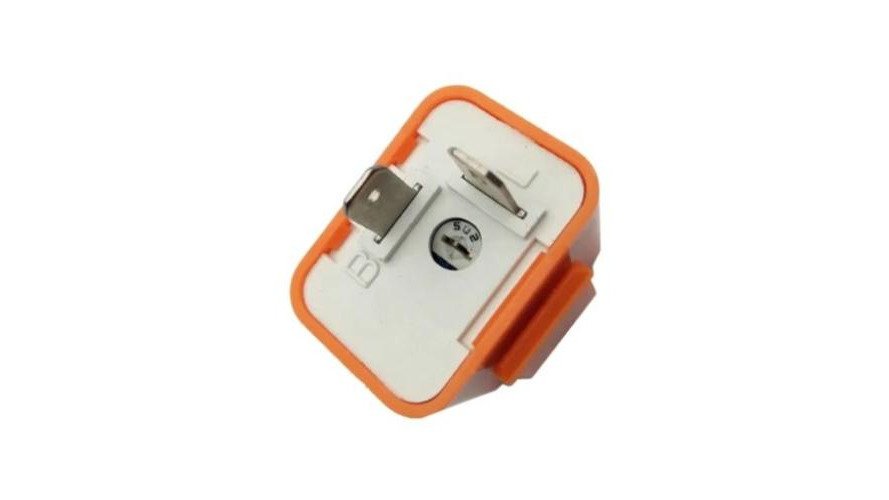
For 2-pin flasher sockets, the 2-Pin Speed Adjustable LED Flasher Turn Signal Relay allows you to adjust flash rate from 50 to 200 flashes per minute while eliminating rapid blinking.
Installation is straightforward: locate your factory flasher relay in the fuse box or under the dashboard, remove it, and plug in the LED-compatible replacement.
Bad Turn Signal Relay Symptoms and Testing
A faulty flasher relay can cause rapid blinking even when bulbs, sockets, wiring, and grounds are intact. When it fails, it may increase flash rate, cause intermittent blinking, or stop working entirely.
Symptoms of a Failing Relay
Rapid blinking on both sides simultaneously is the hallmark of a relay fault. Both left and right turn signals blink rapidly at the same time, or the blinking is inconsistent and stutters.
Other relay failure patterns include:
- No blinking at all, the relay fails to pulse power, and turn signals remain either constantly on or constantly off.
- Intermittent operation, turn signals work normally for a few seconds, then blink rapidly, then stop responding.
- Hazard lights affected, many vehicles use the same relay for both turn signals and hazard lights, so both may malfunction.
- Clicking sound absent or irregular, a working relay produces a distinct, rhythmic click that matches the blinking rate.
Locating Your Flasher Relay
Location varies by vehicle: under the dashboard (most common), in the engine bay fuse box, or behind a trim panel. Consult your owner's manual or fuse box cover diagram for the exact location.
Testing the Relay: The Listening Test
Activate your turn signal and listen near the relay. A working relay produces a distinct, rhythmic click matching the blinking rate. A failing relay may produce no sound, an irregular click, or a click that doesn't match the blinking speed. This test is quick but not definitive. Erratic electrical behavior often stems from broader power issues, as a failing car battery can cause inconsistent voltage levels that disrupt the timing of sensitive components throughout the vehicle.
Testing the Relay: Voltage and Continuity
Use a multimeter to test relay input and output voltages. With ignition on, the input pin should read approximately 12 volts. When the turn signal is activated, the output pin should show voltage pulses. If it shows steady voltage or no change, the relay is not switching properly. For a continuity test, remove the relay and test resistance between input and output pins; low resistance indicates a working relay.
The Swap Test
If your vehicle has multiple identical relays, perform a swap test: swap the suspected bad relay with another identical relay. If rapid blinking stops, the original relay was faulty. If blinking persists, the problem is elsewhere. Only swap identical relays to avoid electrical damage.
When Relay Replacement Is Necessary
Relay replacement is necessary if both turn signals blink rapidly simultaneously (with bulbs and wiring intact), the relay produces no clicking sound, voltage testing shows no output, the swap test confirms failure, or the relay is visibly damaged. Relays are inexpensive ($10-$30) and quick to replace: pull the old relay out and insert a new one of the same type.
EP27 LED Flasher Relay – Hyper Flash Fix →
If upgrading to LED turn signals, relay replacement is essential. Standard relays cause LED hyperflash; choose a relay designed for LED compatibility.
Other Common Causes: Socket Corrosion, Wiring, and Ground Issues
Beyond burned-out bulbs and faulty relays, several electrical issues can cause rapid turn signal blinking. These problems are less common but important to rule out systematically. The key is understanding how each failure interrupts the circuit and learning to test for it methodically.
Corroded Bulb Sockets
Corroded bulb sockets prevent proper electrical contact, creating resistance the flasher relay interprets as a failed bulb. Corrosion builds up from moisture and road salt exposure.
Remove the bulb and inspect the socket interior for white, green, or blue crusty buildup. Check the bulb's metal base for discoloration or pitting. Excessive resistance when inserting and removing the bulb indicates contact degradation.
Clean the socket contacts with a wire brush or fine sandpaper. Install a fresh bulb and test the turn signal. If rapid blinking stops, corrosion was the cause.
After cleaning, apply dielectric grease to the socket contacts to seal out moisture and prevent future corrosion.
Loose or Damaged Wiring
Loose or damaged wiring interrupts electrical flow, creating the same incomplete circuit as a failed bulb. Loose connectors, pinched wires, corroded terminals, or chafed insulation can all cause rapid blinking.
Locate the wiring harness to your turn-signal assembly and visually inspect for cuts, loose connectors, pinched wires, or corrosion. Gently wiggle connectors while the turn signal is activated; if blinking changes, you've found a loose connection.
Use a multimeter to test continuity between the socket's power contact and the relay output terminal. Low resistance (under 1 ohm) indicates a good circuit. For loose connectors, disconnect, inspect for corrosion, and reconnect firmly. Damaged wires must be replaced, not spliced.
Poor Ground Connections
The turn-signal circuit relies on a solid ground path. If the ground wire is corroded, loose, or disconnected, the circuit becomes incomplete. Ground failures are common in older vehicles and areas with heavy road salt exposure.

Locate the ground wire at the turn-signal assembly (typically black, connected to a metal stud). Inspect for corrosion, loose bolts, broken insulation, or discoloration. Follow the wire to the chassis ground point and check that connection too.
Using a multimeter in resistance mode, place one probe on the negative battery terminal and the other on the turn-signal assembly's metal housing. Low resistance (under 0.5 ohms) indicates a good ground.
Repair procedure:
Disconnect the ground wire at both ends. Clean the connection points with a wire brush to remove all corrosion. Reconnect the wire and tighten the bolts firmly.
After repair, retest the turn signal. Normal blinking should resume immediately.
Diagnostic Decision Tree
When facing rapid blinking with intact bulbs, follow this order:
- Inspect and clean the socket, corrosion is the easiest to fix and most common electrical cause.
- Check all connectors and wiring, wiggle test and visual inspection for damage.
- Test ground continuity, use a multimeter to confirm low resistance from battery negative to the light housing.
- If all three check out, the relay is the likely culprit (see next section).
When to Replace Your Flasher Relay
If your turn-signal bulbs are intact and your wiring checks out, the flasher relay is your next target. A relay typically fails due to age, heat exposure, or electrical stress.
Signs that replacement is necessary include rapid blinking on both sides simultaneously, inconsistent blinking patterns, or a relay that clicks erratically. If you've ruled out bulbs, sockets, wiring, and ground connections, relay replacement is the logical next step.
Flasher relays are inexpensive and quick to replace. Most vehicles mount the relay in the fuse box or under the dashboard, accessible in minutes.
If you're upgrading to LED turn signals, a relay replacement becomes essential. The 2 Pin Hyper Flash Flasher with Ground Wire is designed to eliminate hyperflash while supporting both LED and incandescent bulbs, making it a versatile choice for mixed lighting setups.
Rapid turn signal blinking is your vehicle's way of telling you something needs attention. Whether it's a simple burned-out bulb, an LED conversion requiring a compatible relay, or an aging flasher component, the fix is within reach.
Frequently Asked Questions
Why is my turn signal blinking faster than normal?
Rapid turn signal blinking typically occurs when the flasher relay detects lower electrical load than expected. This happens most commonly with a burned-out bulb, an LED conversion without a compatible relay, or a faulty flasher relay itself. The relay interprets the reduced current as a bulb failure and speeds up the flash rate as a warning signal. Check which turn signal is affected and inspect the bulb first, it's the easiest diagnosis.
Can a burned-out turn signal bulb cause rapid blinking?
Yes, a burned-out bulb is the most common cause of rapid blinking. When a turn signal bulb fails, the electrical circuit loses resistance. The flasher relay senses this change and accelerates the flash rate to alert you to the problem. If only one side of your turn signal is blinking fast, the bulb on that side has likely failed and needs replacement.
How do I fix hyperflashing after installing LED turn signal bulbs?
LED bulbs draw much less current than incandescent bulbs, which can cause factory flasher relays to misinterpret them as burned-out bulbs and trigger rapid blinking (hyperflash). The fix is to replace your factory flasher relay with an LED-compatible relay like the RMS Lighting EP27 LED Flasher Relay ($17.99) or a 2-pin adjustable LED flasher relay ($8.00-$10.00). These relays are designed to work with LED bulbs and restore normal flash rates without external load resistors.
Can a bad turn signal relay cause rapid blinking on both sides?
Yes, a faulty flasher relay can cause rapid blinking on both turn signal sides. If both left and right turn signals blink fast, or if your hazard lights also blink rapidly, the relay itself is likely the problem rather than individual bulbs. You can test this by swapping the relay with a known-good unit. If the problem persists after replacing the relay, check for wiring damage, corroded sockets, or poor ground connections in the electrical circuit.