


Benefits of Interior LED Car Lights

Table of Contents
- Why Interior LED Car Lights Matter
- Energy Efficiency and Battery Drain Prevention
- Improved Cabin Visibility and Illumination
- LED vs Halogen Interior Car Lights
- Lifespan, Durability, and Heat Dissipation
- How to Install Interior LED Car Lights
- Aesthetic Customization and Color Options
- Legal Considerations and Safety
- Frequently Asked Questions
Last Updated: September 19, 2026
Why Interior LED Car Lights Matter
Upgrading your vehicle's interior lighting from halogen to LED is one of the most straightforward modernizations you can make. Interior LED car lights transform how your cabin looks and functions, delivering brighter illumination, lower energy consumption, and a more contemporary aesthetic. Whether you're restoring a classic vehicle or simply tired of dim factory bulbs, the shift to LED technology addresses real pain points that halogen bulbs have created for decades.
The difference becomes obvious the moment you flip the switch. LED interior bulbs produce crisp, clean light that reveals details halogen never could. Your cabin suddenly feels more premium, visibility improves for reading maps or finding items in the dark, and the entire driving experience shifts. Beyond aesthetics, interior LED car lights reduce the electrical load on your vehicle's battery and alternator, meaning your charging system works less hard and your battery lasts longer between charges.
At RMS Lighting LLC, we've engineered interior LED solutions designed specifically for automotive applications. Our products like the 31MM Super Bright 500LM LED Dome Light deliver the brightness and reliability drivers expect while maintaining plug-and-play installation. Let's explore why interior LED car lights matter and how they solve the limitations of traditional halogen setups.

Energy Efficiency and Battery Drain Prevention
LED bulbs consume significantly less power than their halogen counterparts, which directly impacts your vehicle's electrical system. A typical halogen dome light draws several watts of power; LED replacements like RMS Lighting's 31MM and 41MM dome lights use only 3 watts while producing 500 lumens of output. That efficiency gain compounds across all interior lights, dome lights, map lights, courtesy lights, trunk lights, and footwell lighting.
Your vehicle's alternator charges the battery while the engine runs. Every watt of electrical load requires the alternator to work harder. When you're running multiple halogen interior lights simultaneously, that cumulative draw becomes noticeable, especially in older vehicles where the electrical system wasn't designed for modern power demands. Switching to interior LED car lights reduces this parasitic load, meaning your battery stays charged more effectively and your alternator doesn't strain as much.
The practical benefit appears in two scenarios. First, if your vehicle sits for extended periods, LED interior lights draw so little power that you'll experience minimal battery drain. Second, in vehicles with aging electrical systems, the reduced load can improve overall system stability and reduce voltage fluctuations that sometimes trigger dashboard warning lights. Many drivers report that switching to LED interior lighting eliminated mysterious electrical gremlins that plagued their vehicles.
Improved Cabin Visibility and Illumination
Halogen interior bulbs produce warm, yellowish light that lacks the intensity and color temperature needed for genuine visibility. When you're searching for something in your glove box at night or reading a map in dim light, halogen bulbs leave you squinting. Interior LED car lights solve this with higher lumen output and cooler color temperatures that match daylight more closely.
The RMS Lighting 31MM and 41MM LED dome lights deliver 500 lumens of 6500K white light, that's the color temperature of natural daylight. This brightness level and color combination creates visibility that halogen simply cannot match. Your cabin lights up with clarity, making it easy to locate items, read documents, or navigate at night. The difference is most noticeable in vehicles where the factory halogen dome light was the primary interior light source.
Improved illumination also enhances safety. Better visibility when entering or exiting your vehicle reduces trips and falls. Brighter interior lighting makes it easier to spot potential hazards inside the cabin. For vehicles used for work, contractors, delivery drivers, or service technicians, superior interior illumination translates to faster task completion and fewer mistakes. The practical value extends beyond aesthetics to genuine functional improvement.
LED vs Halogen Interior Car Lights
Understanding the differences between LED and halogen interior car lights clarifies why the upgrade makes sense. Halogen bulbs work by heating a filament until it glows, which generates both light and substantial heat. This heat is wasted energy that contributes to battery drain and adds unnecessary thermal load to your vehicle's electrical system. Halogen bulbs also have a shorter lifespan, typically lasting 500-1,000 hours of operation before dimming or failing.
Interior LED car lights use semiconductor technology to produce light through electroluminescence. This process generates minimal heat and converts electrical energy directly into light with far greater efficiency. An LED bulb can operate for 30,000-50,000 hours or more, meaning you might never replace it during your ownership of the vehicle. The color temperature is also controllable, with cool white (6500K) being a popular choice depending on your preference and application.
| Feature | Halogen | LED |
|---|---|---|
| Power Consumption | 5-10W per bulb | 1-3W per bulb |
| Brightness (Lumens) | 200-300 | 300-500 |
| Color Temperature | 2700K (warm yellow) | 3000K-6500K (customizable) |
| Lifespan | 500-1,000 hours | 30,000-50,000 hours |
| Heat Output | High | Minimal |
| Installation | Direct fit (most cases) | Plug-and-play for compatible applications |
| Cost | Lower upfront | Higher upfront, lower long-term cost |
The comparison reveals why interior LED car lights have become the standard upgrade. Yes, LED bulbs cost more initially, but the combination of superior brightness, longer lifespan, lower power consumption, and better aesthetics justifies the investment. For most drivers, the decision to switch is straightforward once you understand these differences.
31MM Super Bright 500LM LED Dome Light →
Lifespan, Durability, and Heat Dissipation
One of the most underappreciated benefits of interior LED car lights is their exceptional durability. An LED bulb rated for 30,000-50,000 hours of operation will outlast most vehicles. If you use your interior lights for an average of 2-3 hours daily, that translates to 30-50 years of operation. Realistically, you'll likely replace your vehicle before the LED bulb fails.
Halogen bulbs, by contrast, degrade gradually. They start at full brightness and slowly dim over time. You might not notice the dimming until you compare a new bulb side-by-side with the aged one. LEDs maintain consistent brightness throughout their lifespan, so your cabin lighting remains uniform and reliable for years. This consistency also means you won't experience the frustration of uneven illumination where one dome light is noticeably dimmer than another.
Heat dissipation is critical for long-term reliability. Halogen bulbs generate substantial heat that can damage surrounding plastic fixtures, wiring insulation, and lens covers over time. In vehicles with tight dome light housings or enclosed map light fixtures, this heat buildup accelerates component failure. Interior LED car lights produce minimal heat, eliminating this degradation pathway. The lack of heat also makes LED bulbs safer to handle immediately after use and reduces fire risk in applications where heat-sensitive materials surround the bulb.
Quality LED bulbs include proper thermal management through efficient circuit design and, in some cases, small heat sinks.
How to Install Interior LED Car Lights
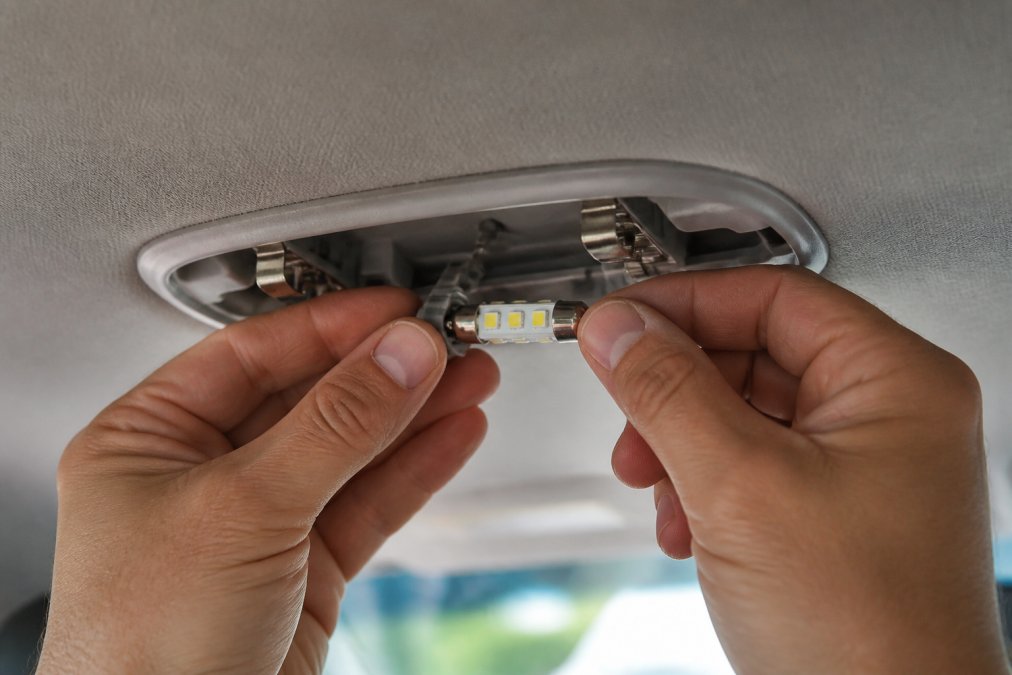
The installation steps are simple:
- Open the dome light fixture or access panel (usually involves a gentle pry with a plastic tool or your fingernail)
- Grasp the existing halogen bulb and twist or pull it straight out, depending on the base type
- Insert the new LED bulb and twist or push it in until it seats fully
- Test the light by closing the fixture and toggling the switch
- Repeat for each interior light location you're upgrading
Aesthetic Customization and Color Options
Beyond functionality, interior LED car lights offer customization possibilities that halogen simply cannot provide. The color temperature of your interior lighting dramatically affects how your cabin feels. Warm white (3000K) creates a cozy, traditional atmosphere. Neutral white (4000K) provides balanced, natural-looking illumination. Cool white (6500K) delivers a modern, crisp aesthetic that many drivers prefer for contemporary vehicles.
Legal Considerations and Safety
Before installing interior LED car lights, understand the regulatory landscape. Interior lighting is less heavily regulated than exterior lighting (headlights, taillights, turn signals), but some restrictions still apply. The primary concern involves color and brightness of interior lights visible from outside the vehicle.
Frequently Asked Questions
Do interior LED lights drain your car battery?
No. Interior LED car lights consume significantly less power than halogen bulbs, typically 1.5 to 3 watts per bulb compared to 10+ watts for traditional bulbs. This reduced energy consumption means minimal impact on your battery, even during extended use. Modern LEDs are designed to operate efficiently across your vehicle's 12-24V electrical system without causing battery drain.
Are interior LED lights legal to use in your vehicle?
Interior LED lights are generally legal for dome lights, map lights, courtesy lights, and footwell lighting. However, regulations vary by state regarding ambient or decorative interior lighting. The key restriction: interior lighting cannot interfere with visibility or distract other drivers. Avoid placing LEDs where they shine through windows or create glare. Always verify local regulations before installation, especially for custom ambient lighting projects.
How do I know if interior LED lights will work with my older vehicle?
Most modern interior LED bulbs are designed as plug-and-play replacements for standard bulb bases like 31MM festoon, 41MM festoon, and T10 wedge styles. Check your vehicle's owner manual or bulb specification to identify the base type. RMS Lighting offers LEDs across multiple base types and voltage ranges (10-24V AC for festoon styles, 12V DC for wedge bulbs), making them compatible with classic cars, trucks, and modern vehicles. Always verify compatibility before purchasing.
Why do some LED kits cause dashboard error codes or flickering?
Error codes and flickering typically occur when LEDs lack Canbus compatibility or proper resistive load. Vehicles with electronic lighting modules expect a specific electrical load; LEDs draw far less power, triggering fault codes. Canbus-compatible LEDs include built-in resistors or decoders that mimic traditional bulb resistance, preventing errors. Flickering can also result from poor wiring connections or incompatible dimmer circuits. Choosing quality, tested LEDs designed for automotive use eliminates these issues.