

Best Automotive LEDs: 2026 Guide

Table of Contents
- Best Automotive LEDs: Quick Comparison
- Best Plug and Play LED Headlight Kits
- LED Headlight Bulb Color Temperature Guide
- Brightness and Lumen Output Comparison
- Automotive LED Installation Best Practices
- Are LED Headlight Conversions Street Legal?
- Heat Dissipation and Long-Term Reliability
- Which LED Upgrade Should You Choose?
- Frequently Asked Questions
Last Updated: September 23, 2026
The best automotive LEDs excel in three areas: brightness, thermal management, and electrical compatibility. This guide from RMS Lighting LLC breaks down what separates quality upgrades from cheap alternatives that fail within months.
Best Automotive LEDs: Quick Comparison
| Product | Brightness | Color Temp | Best For | Price |
|---|---|---|---|---|
| H4 60W 10K Lumens LED | 10,000 lumens | 6500K | Headlight conversions | $50.00 |
| 1156 CanBus 20K Lumens | 20,000 lumens | White | Reverse lights | $59.00 |
| 194/T10 CanBus LEDs | 400 lumens | 6500K | Interior/marker lights | $8.99 |
| 1157 1000LM Dual-Function | 1,000 lumens | 6500K | Turn signals, parking | $55.00 |
Best Plug and Play LED Headlight Kits
The H4 format is the most common dual-beam headlight socket in pre-2010 vehicles. Upgrading to quality LEDs delivers the biggest visibility improvement without rewiring.

The RMSH4M2S 60W 10K Lumens LED Bulbs produce 10,000 lumens of 6500K cool white light with CREE 1860 LED chips. The active cooling fan maintains stable temperatures, preventing the gradual dimming that plagues cheaper alternatives. The 360-degree beam angle and built-in driver eliminate external ballasts. Installation takes under 15 minutes.
The CREE chipset is engineered for automotive use, delivering consistent output across the bulb's lifespan. The 2-year warranty backs this reliability.
H4 60W 10K Lumens LED Bulbs for Dual-Beam Applications
Dual-beam H4 headlights split power between high and low beam positions. LED versions must replicate this dual function without flickering or inconsistent beam patterns.
The 10,000 lumens output provides a significant brightness increase compared to traditional halogen H4 bulbs, improving nighttime visibility.
Beam pattern matters as much as lumens. These bulbs maintain the proper cut-off line, preventing glare while maximizing visibility.
Canbus-Compatible Reverse Light Upgrades
Reverse lights need maximum brightness in a small space without triggering dashboard error messages on modern vehicles.
The 1156 100W CanBus LED Chip 20,000 LM Reverse Bulbs deliver 20,000 lumens, roughly 10 times brighter than factory incandescent bulbs. The CanBus chipset prevents error codes and warning lights.

CanBus chips actively manage electrical communication, helping to prevent dashboard warnings.
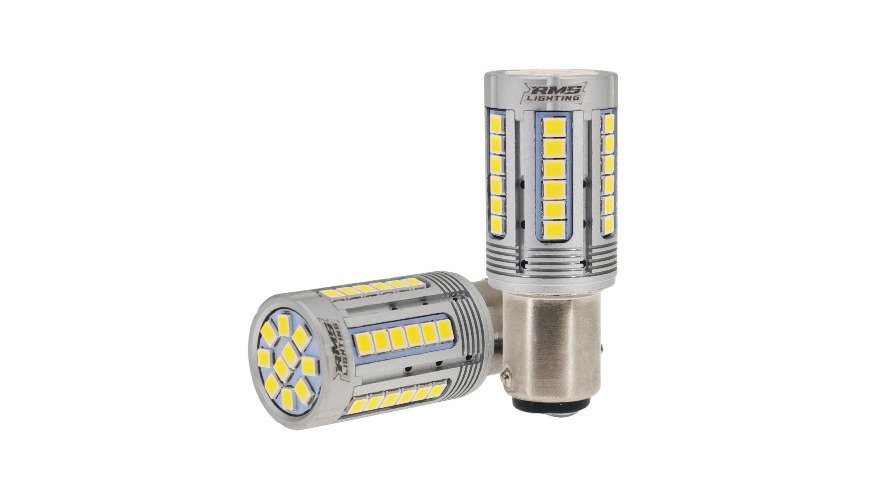
The 1156 socket is single-function, meaning it only handles reverse lights. If you need to upgrade turn signals or brake lights, you'll want the 1157 1000LM White/White LED Bulbs instead, which handle dual-function applications. Both come as pairs, so you're upgrading both sides at once.

LED Headlight Bulb Color Temperature Guide
Color temperature, measured in Kelvin (K), determines both appearance and night visibility, ranging from warm (yellowish) to cool (bluish).
Factory halogen bulbs run around 3000K (warm yellowish). LED upgrades typically range from 5000K to 8000K. Here's what each range means on the road:
5000K to 6000K (Cool White) is the sweet spot for night driving. The light improves contrast and visibility of lane markings and obstacles. The RMSH4M2S bulbs run at 6500K, matching overcast daylight.
6500K to 8000K (Bright Cool White) adds blue for an aggressive look but increases eye fatigue on long drives and may trigger glare complaints from oncoming drivers.
Above 8000K (Very Blue/Purple) performs poorly in fog, rain, or dust. Stay below 7000K in wet climates for better visibility.
Brightness and Lumen Output Comparison
Lumens measure total light output. More lumens means more light reaching the road, but only if the beam pattern directs it properly.
H4 headlight bulbs produce 10,000 lumens. Reverse lights like the 1156 CanBus model hit 20,000 lumens for maximum backup zone brightness. Interior lights deliver 500 lumens, sufficient for cabin use.
Jumping from 1,500 lumens (halogen) to 10,000 lumens (quality LED) provides a significant and noticeable improvement.
Quality LEDs aim to maintain stable output through proper heat management.
Automotive LED Installation Best Practices
Most LED bulb upgrades are plug-and-play, but understanding a few technical details prevents installation frustration.
Verify your bulb type by checking your owner's manual or the original bulb number. H4, H7, H11, 1157, 1156, 3156, 194, and T10 are different sockets with different pin configurations. Confirm before ordering.
Check your vehicle's electrical system voltage. Most run 12V DC; older vehicles may run 6V. The RMSH4M2S headlight bulbs are rated for 12V DC. The 194/T10 CanBus LEDs operate on AC 10-30V for broader compatibility.
Consider your headlight housing type. Reflector housings can work with LED bulbs. Projector housings require precise bulb positioning. Confirm compatibility before installing projector headlights.
Avoiding Canbus Errors and Hyper-Flashing
Hyper-flashing occurs when turn signals blink rapidly because your vehicle's electrical system detects lower LED resistance and interprets it as a burned-out bulb.
RMSH4M2S - 60W 10K Lumens LED Bulb's →
Use CanBus-compatible LEDs when possible. The built-in chip prevents false error codes. The 1157 LED bulbs and 1156 reverse bulbs both include this feature.
If hyper-flashing persists, use the 2-Pin Speed Adjustable LED Flasher Relay. It replaces your stock flasher and allows normal blinking without resistor hacks. Installation takes under 10 minutes.
Housing Compatibility and Beam Pattern Testing
Reflector housings use a curved mirror to bounce light forward. Projector housings use a lens to focus light into a specific beam pattern.
LED bulbs in reflector housings work well because the reflector bounces whatever light is there. The H4 headlight bulbs with their 360-degree beam angle deliver improved brightness without losing focus.
Projector housings require precise bulb positioning for the correct cut-off line. Even a millimeter misalignment ruins beam pattern. Fitment verification is critical.
Test by driving at night. If visibility is clear without glare, the beam pattern is likely correct.
Are LED Headlight Conversions Street Legal?
This is where things get technical. Federal law requires that any headlight meet DOT (Department of Transportation) standards for brightness, color, and beam pattern.
The standard is SAE J1383, which defines acceptable headlight performance. The issue is whether the bulb maintains proper beam focus in your specific housing.
Here's what actually matters for street legality:
Brightness must be within range. Too dim and you're unsafe. Too bright and you're blinding oncoming drivers. The DOT doesn't specify exact lumens; it specifies luminous intensity, which is measured in candlepower. Quality LED bulbs like the H4 60W models are engineered to meet this range.
Color temperature must stay in the white range. The DOT allows 4000K to 6000K for low beams. Above 6500K, you're technically in the blue range, which is illegal for forward-facing lights. This is why the 6500K rating on RMS Lighting bulbs is right at the edge, any higher and you're breaking the law.
Beam pattern must have a proper cut-off line. This is the sharp boundary between illuminated road and dark sky. Without it, you're scattering light everywhere, which blinds oncoming drivers and gets you pulled over.
The reality: installing quality LED bulbs in a compatible housing can help ensure compliance. The bulb quality matters as much as the installation.
Federal Motor Vehicle Safety Standards for headlights
Heat Dissipation and Long-Term Reliability
Heat can impact LED lifespan. Proper thermal management is crucial for long-term reliability.
The H4 headlight bulbs solve this with an active cooling fan that runs whenever the bulbs are on. The fan pulls heat away from the LED chips and dissipates it through aluminum fins. This keeps operating temperature stable even during long highway drives or sitting in traffic with headlights on.
Why does this matter? LEDs are semiconductor devices. When they overheat, the semiconductor can degrade, potentially leading to gradual dimming over time. Quality LEDs with proper cooling aim to maintain brightness over extended periods.
The thermal management difference highlights the value of quality LEDs. You're paying for the engineering that helps maintain performance.
Most LED bulbs have a rated lifespan of 30,000 to 50,000 hours. This lifespan assumes proper heat management. Without it, performance may be affected over time.
Which LED Upgrade Should You Choose?
The decision depends on what you're upgrading and what problem you're trying to solve.
For headlights on older vehicles: The H4 60W 10K Lumens LED Bulbs at $50.00 per pair are your best choice.
Frequently Asked Questions
What makes the best automotive LEDs different from budget options?
The best automotive LEDs combine high lumen output, proper color temperature, thermal management, and canbus compatibility. RMS Lighting's H4 60W bulbs deliver 10,000 lumens with active cooling fans and built-in drivers, preventing dashboard error codes. Budget options often lack thermal management, causing premature failure or electrical issues. Quality LEDs use premium chip designs like CSP CREE 1860 or SMD 2835 that maintain consistent brightness and lifespan.
Will LED headlight conversion kits work in older vehicles with reflector housings?
LED conversions can work in various housing types. Reflector housings may scatter LED light differently than projector housings. Before upgrading, verify your vehicle's housing type in the owner's manual. RMS Lighting recommends checking fitment compatibility before ordering, as some older reflector designs may not accommodate the bulb's size or heat sink without modification.
How do I prevent canbus errors and hyper-flashing when upgrading to LEDs?
Canbus errors can occur when LEDs draw less power than factory incandescent bulbs, potentially triggering warning lights. RMS Lighting offers canbus-compatible bulbs with high-power chips (100W models) that are designed to work with factory electrical loads. For turn signals, hyper-flashing can happen because LEDs blink faster than incandescent bulbs. Install an LED-compatible flasher relay (like RMS's 2-pin adjustable model) or add load resistors to fix this. Always verify your vehicle's electrical system before installation.
What color temperature should I choose for night driving visibility?
6500K cool white light provides crisp, natural-looking illumination. Higher color temperatures (8000K and above) appear bluer and may not comply with DOT regulations. Lower temperatures (4300K) look warmer. RMS Lighting's 6500K options are designed to deliver effective brightness and beam focus for nighttime driving.