

How to Choose the Correct Headlight Bulb Size

Table of Contents
- Why Choosing the Correct Headlight Bulb Size Matters
- How to Check Headlight Bulb Size Using Your Owner's Manual
- Using a Headlight Bulb Lookup by Vehicle
- Understanding Headlight Bulb Types: Halogen, LED, and HID
- Decoding Headlight Bulb Part Numbers and Socket Types
- LED Headlight Conversion Kit Compatibility with Your Vehicle
- Troubleshooting Incorrect Fitment and Aftermarket Risks
- Safety Considerations and Installation Best Practices
Last Updated: August 25, 2026
Why Choosing the Correct Headlight Bulb Size Matters
Selecting the correct headlight bulb size is critical for safety, legal compliance, and vehicle performance. Installing an incorrect bulb risks misaligned beam patterns that reduce visibility and potentially blind oncoming drivers. Improper fitment can damage your vehicle's electrical system, trigger dashboard warning lights, or void manufacturer warranties. Your headlight housing is engineered for specific bulb dimensions, wattage, and socket types, deviating from these specifications compromises the entire lighting system's effectiveness.
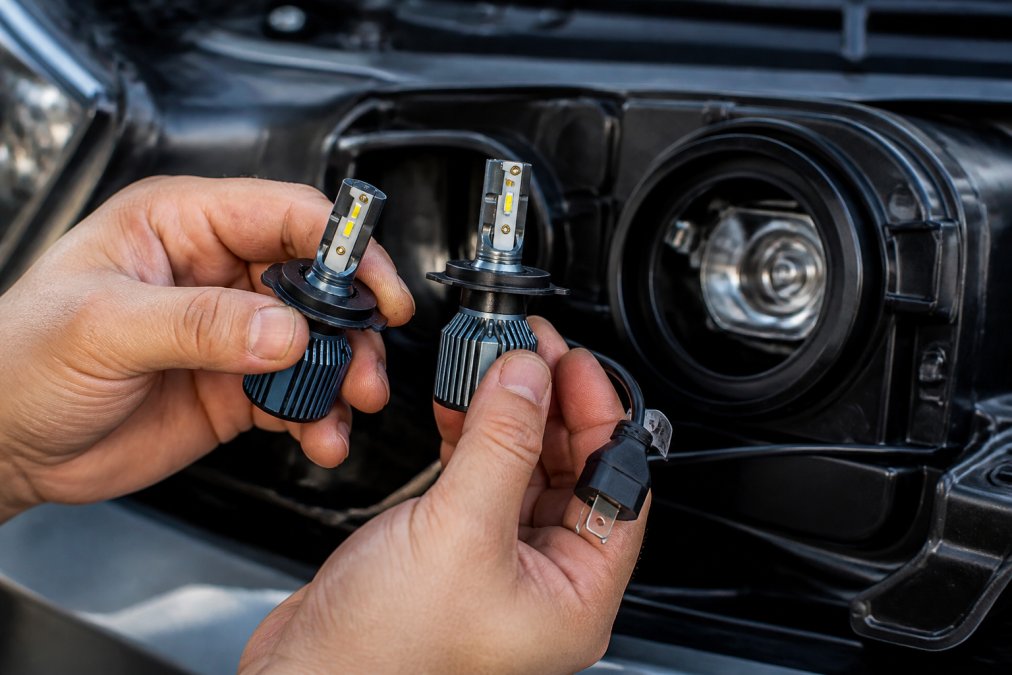
Understanding how to choose the correct headlight bulb involves three core steps: consulting your owner's manual, decoding bulb part numbers, and verifying compatibility with your vehicle's housing design.
How to Check Headlight Bulb Size Using Your Owner's Manual
Your vehicle's owner's manual is the definitive source for headlight bulb specifications. Locate sections titled "Maintenance," "Bulb Replacement," or "Lighting Systems." Most manuals include a detailed chart showing bulb types for each light position: low beam, high beam, fog lights, and daytime running lights. The chart lists the bulb part number, base type (H4, H7, H11, 9005, etc.), wattage, and sometimes color temperature in Kelvin.
Document the exact part number from your manual, this alphanumeric code is your blueprint for selecting a replacement bulb. When shopping for replacements, match this number exactly; even small variations can result in incompatibility.
If your owner's manual is missing, check the inside of your headlight housing for a label or marking indicating the correct bulb type.
Using a Headlight Bulb Lookup by Vehicle
When your manual isn't accessible, online headlight bulb lookup tools provide an efficient alternative. These tools use your vehicle identification number (VIN) or basic vehicle information (year, make, model, trim level) to cross-reference manufacturer specifications and return the correct bulb size for each lighting position.
The VIN is your vehicle's unique identifier, located on the driver's side dashboard or your registration documents. Enter the complete 17-character code into a bulb finder tool, and the system will display results for all lighting positions: headlight low beam, headlight high beam, fog lights, turn signals, and parking lights. Each result includes the correct bulb part number, base type, wattage, and sometimes color temperature specifications.
These lookup tools are particularly valuable for vehicles with multiple engine options or trim levels that use different lighting configurations.
The Society of Automotive Engineers maintains standards for bulb compatibility and socket types
Understanding Headlight Bulb Types: Halogen, LED, and HID
Modern vehicles use three primary headlight bulb technologies: halogen, light emitting diode (LED), and high intensity discharge (HID/xenon). Each technology operates differently and requires specific installation considerations.
Halogen Bulbs
Halogen bulbs contain a filament heated by electrical current, producing visible light. A halogen gas inside the bulb envelope extends filament life compared to traditional incandescent designs. Halogen bulbs typically produce 800-1,200 lumens with a warm color temperature around 3,000-3,500 Kelvin.
Halogen technology offers affordability, proven reliability, and compatibility with virtually all existing vehicle electrical systems. No modifications are required, halogen bulbs fit directly into factory housings. However, they generate significant heat, require frequent replacement (typically every 500-1,000 hours), and produce less light output than modern alternatives.
When replacing halogen bulbs, wear clean gloves or use a clean cloth to handle the bulb envelope; skin oils create hot spots that reduce bulb life.
LED Bulbs
LED headlight bulbs use semiconductor technology to convert electrical current directly into light without a filament. LEDs produce 2,000-3,000+ lumens with substantially lower power consumption than halogen. Color temperature ranges from 5,000K (daylight white) to 6,500K (cool white), providing superior visibility.
LED bulbs offer extended service life, many quality LED bulbs last 25,000-50,000 hours compared to halogen's 500-1,000 hours. LEDs generate minimal heat, improving thermal management and reducing stress on electrical components.
However, LED upgrades require careful consideration. Direct LED replacements must maintain proper beam pattern alignment to avoid blinding oncoming drivers. Quality LED bulbs from manufacturers like RMS Lighting LLC use precision engineering to match the original filament position and maintain proper beam geometry.
Some vehicles experience electrical system complications when upgrading to LEDs, potentially triggering error codes or hyper-flashing issues. Modern LEDs incorporate built-in drivers and thermal management to minimize these issues, but compatibility verification remains essential.
HID and Xenon Bulbs
High intensity discharge (HID) technology uses an electrical arc between two electrodes to produce light. HID bulbs generate 2,500-3,200 lumens with color temperatures ranging from 4,300K to 10,000K. However, HID conversion requires significant modifications: ballast units, ignitors, and potentially headlight housing modifications.
Factory HID systems use projector lenses that focus and direct the arc's light output into a controlled beam pattern. Retrofitting HID bulbs into halogen reflector housings typically produces poor results because the reflector geometry doesn't properly control the HID arc's light output, creating the characteristic blue-tinted glare associated with poorly-executed HID conversions.
The Department of Transportation establishes lighting standards for vehicle safety compliance
Decoding Headlight Bulb Part Numbers and Socket Types
Headlight bulb part numbers encode specific technical specifications that determine physical compatibility and electrical characteristics. Common designations include H4, H7, H11, H8, H9, 9005, and 9006. Each corresponds to a specific base type, filament configuration, and socket design.
The H4 bulb features a dual-filament design with separate high-beam and low-beam elements. The H7 is a single-filament design used primarily for low-beam applications in modern vehicles. The H11 is another single-filament variant commonly used for fog lights. The 9005 (HB3) is typically used for high-beam applications, while the 9006 (HB4) is used for low-beam or fog light applications.
Beyond the letter-number designation, bulb specifications include wattage (typically 55W or 60W) and color temperature (measured in Kelvin). A complete part number might read "H7 55W 6500K," indicating an H7 socket type, 55-watt power consumption, and 6500 Kelvin color temperature.
The socket connector type is critical for proper fitment. Some bulbs feature a bayonet base (twist-and-lock mechanism), while others use a push-and-twist or straight-pin design. The socket type must match your vehicle's headlight housing connector exactly.
LED Headlight Conversion Kit Compatibility with Your Vehicle
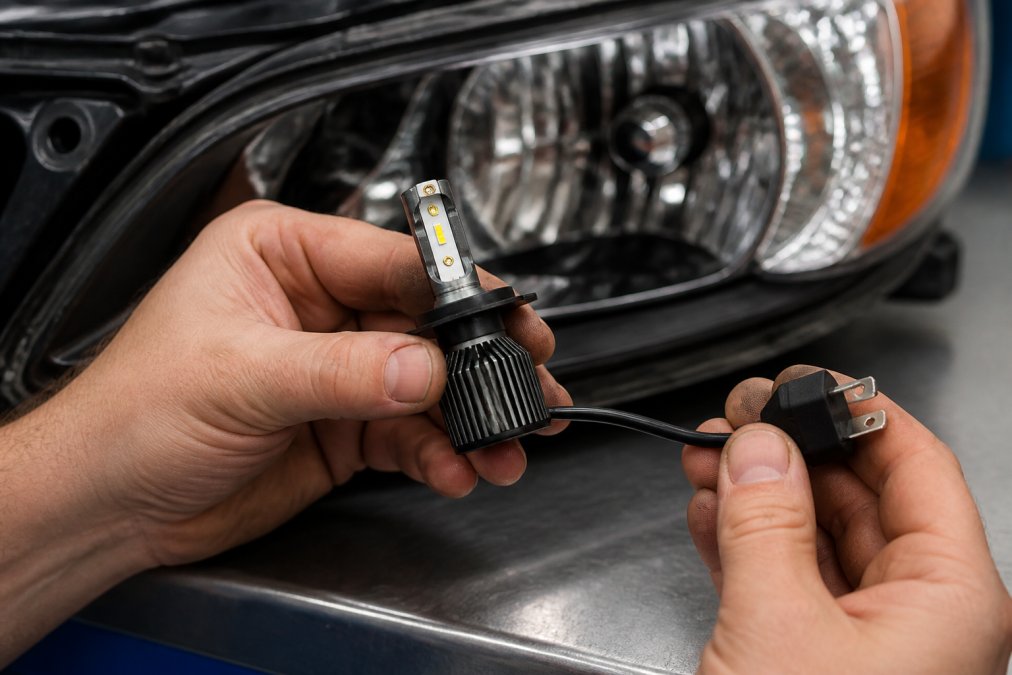
LED conversion kits offer a straightforward path to upgrade your vehicle's headlight performance. These kits typically include LED bulbs engineered to replace factory halogen bulbs while maintaining proper beam pattern alignment and electrical compatibility. However, compatibility depends on your specific vehicle's headlight housing design, electrical system, and thermal management capabilities.
Vehicles manufactured with projector lens housings are generally better candidates for LED conversion than those with reflector-style housings. Projector lenses focus and direct light output into a controlled beam pattern, which LED bulbs can replicate effectively.
Your vehicle's electrical system voltage and charging capacity also determine LED compatibility. Most vehicles operate 12-volt electrical systems. LED bulbs with built-in drivers can typically tolerate minor voltage variations, but older charging systems may experience electrical complications if the LED's power draw creates unusual current patterns.
Thermal management is another critical compatibility factor. Quality LED conversion kits incorporate active cooling fans and thermal management systems to maintain safe operating temperatures. Some headlight housings have limited space or poor ventilation that prevents effective heat dissipation.
RMS Lighting LLC offers LED conversion kits specifically engineered for compatibility with various vehicle platforms. Their RMSH4M2S - 60W 10K Lumens LED Bulb's (Pair) 6500K delivers 10,000 lumens with built-in driver and active cooling. The RMSH7M2S - 60W 10K Lumens LED Bulb's (Pair) 6500K provides similar performance for H7 socket applications, while the RMSH8/H9/H11M2S - 60W 10K Lumens LED Bulb 6500K covers fog light and alternative low-beam applications.


Before purchasing any LED conversion kit, verify that your vehicle's headlight housing is designed to accommodate the kit's physical dimensions and thermal output. Consult your owner's manual or use online compatibility verification tools to confirm compatibility with your specific vehicle year, make, and model.
Troubleshooting Incorrect Fitment and Aftermarket Risks
Even with careful planning, fitment issues sometimes occur. Understanding common fitment problems and their solutions prevents frustration and protects your vehicle's lighting system.
The most common fitment issue is connector incompatibility. You've selected the correct bulb part number, but the connector doesn't align with your vehicle's socket. The solution involves verifying the exact connector type before purchase and potentially contacting the bulb manufacturer to confirm compatibility.
Dust cover interference is another frequent issue. Some LED bulbs, particularly those with built-in drivers and cooling fans, have larger profiles than original halogen bulbs. The dust cover may not clear the bulb's larger body. In these cases, you may need to carefully trim or reposition the dust cover, or select a lower-profile LED bulb designed specifically for your vehicle.
Beam pattern misalignment creates safety and legal concerns. This occurs when the LED bulb's light-emitting surface doesn't align precisely with the reflector assembly's focal point. Quality LED bulbs maintain precise positioning within the socket to replicate the original filament position.
Dashboard error codes and hyper-flashing represent electrical system complications. Some vehicles monitor bulb current draw and trigger warning lights when LED bulbs draw less current than original halogen bulbs. These issues typically resolve with load-resistor modules or LED bulbs incorporating internal drivers.
Before upgrading, verify that your chosen bulbs meet Society of Automotive Engineers safety standards and comply with your local regulations. The safest approach involves selecting bulbs from established manufacturers like RMS Lighting LLC that have engineered their products for specific vehicle platforms and tested beam pattern alignment.
Safety Considerations and Installation Best Practices
Proper installation technique ensures your headlight upgrade delivers optimal performance and safety. Begin by allowing your vehicle's headlight system to cool completely before starting work. Halogen bulbs operate at extremely high temperatures; waiting at least 30 minutes after turning off your headlights ensures safe handling.
Locate your vehicle's headlight access point. Some vehicles allow bulb replacement from the engine compartment, while others require removing the headlight housing entirely. Consult your owner's manual for specific instructions.
When handling bulbs, wear clean cotton gloves or use a lint-free cloth to prevent skin oils from contaminating the bulb envelope. Remove the old bulb by twisting counterclockwise (for bayonet-style bases) or pulling straight back (for push-pin connectors). Inspect the socket and connector for corrosion or debris, cleaning any oxidation with a dry cloth if necessary.
Install the new bulb by reversing the removal process. For bayonet bases, insert the bulb and twist clockwise until it seats completely. For push-pin connectors, align the pins with the socket openings and push firmly until fully seated.
Before replacing the dust cover, verify the bulb is functioning. Turn on your headlights and confirm both low and high beams operate correctly. Check for any unusual flickering, dimming, or error messages on your vehicle's dashboard.
For LED conversion kits with external drivers or ballast units, follow the manufacturer's wiring instructions carefully. If you're uncomfortable with electrical work, consider having a professional technician perform the installation.
Choosing the correct headlight bulb size protects your safety, ensures legal compliance, and maximizes your vehicle's lighting performance. The process begins with your owner's manual, which contains the definitive specifications your vehicle requires. When you're ready to upgrade to modern LED technology, RMS Lighting LLC provides rigorously tested conversion kits engineered for specific vehicle platforms, eliminating guesswork and ensuring proper beam pattern alignment.
| Bulb Type | Light Output | Lifespan | Color Temperature | Best Use |
|---|---|---|---|---|
| Halogen | 800-1,200 lumens | 500-1,000 hours | 3,000-3,500K | Budget-conscious replacements |
| LED | 2,000-3,000+ lumens | 25,000-50,000 hours | 5,000-6,500K | Modern upgrades, extended reliability |
| HID/Xenon | 2,500-3,200 lumens | 2,000-3,000 hours | 4,300-10,000K | Maximum brightness, factory systems only |
Frequently Asked Questions
How do I know what size headlight bulb I need for my vehicle?
The fastest way is to check your owner's manual, which lists the exact bulb type and wattage. If you don't have the manual, use an online headlight bulb lookup by vehicle tool by entering your year, make, and model. You can also remove the existing bulb and check the part number printed on the base. Common sizes include H4, H7, H11, and 9005, each with different socket configurations and brightness ratings measured in lumens.
What is the difference between H11 and 9005 headlight bulbs?
H11 and 9005 bulbs have different socket types and connector configurations, so they are not interchangeable. H11 bulbs typically fit many sedans and smaller vehicles, while 9005 bulbs (also called HB3) are common in trucks and SUVs. The 9005 socket is larger and uses a different base type. Always verify your vehicle's requirements before purchasing, as installing the wrong bulb type will not fit properly in your headlight housing.
Can I use a different headlight bulb size than what is recommended by the manufacturer?
No. Using a different bulb size can damage your headlight housing, create incorrect beam patterns that blind oncoming drivers, and void your vehicle's warranty. The factory specifications account for the reflector assembly, projector lens geometry, and thermal management of your specific headlight housing. LED conversion kits designed for your vehicle's exact housing are engineered to work safely; however, generic aftermarket bulbs often cause dashboard error codes, hyper-flashing, and poor light distribution.
What should I do if an LED headlight conversion kit doesn't fit my older vehicle's housing?
Some older vehicles have headlight housings designed exclusively for halogen filament bulbs, and standard LED bulbs may not fit without modification. Before purchasing, verify LED headlight conversion kit compatibility with your specific year, make, and model. If fitment issues occur, check that the dust cover is fully removed and the connector is properly aligned. If the bulb still doesn't seat, do not force it. Contact the manufacturer for a refund or exchange. Precision-engineered kits designed for your vehicle type will fit without modification.
This article was written using GrandRanker