

Why Use CAN Bus LED Bulbs for Classic Car Lighting

Table of Contents
- What CAN Bus Means in Vehicle Lighting
- How Bulb Monitoring Detects Failed Bulbs and Triggers Warnings
- Why LED Bulbs Trigger Error Codes Without CAN Bus Compatibility
- CAN Bus-Compatible Bulbs and Decoders: How They Prevent Warning Messages
- LED Bulbs for Older Cars: Electrical Load and Compatibility Challenges
- LED Turn Signal Hyperflash Fix: Resistors and Load Balancing
- Classic Car LED Headlight Compatibility: Checking Before You Upgrade
- Frequently Asked Questions
Last Updated: October 14, 2026
What CAN Bus Means in Vehicle Lighting
CAN bus (Controller Area Network) is the communication system that lets your vehicle's parts talk to each other, sending signals between engine, brakes, lights, and dashboard.
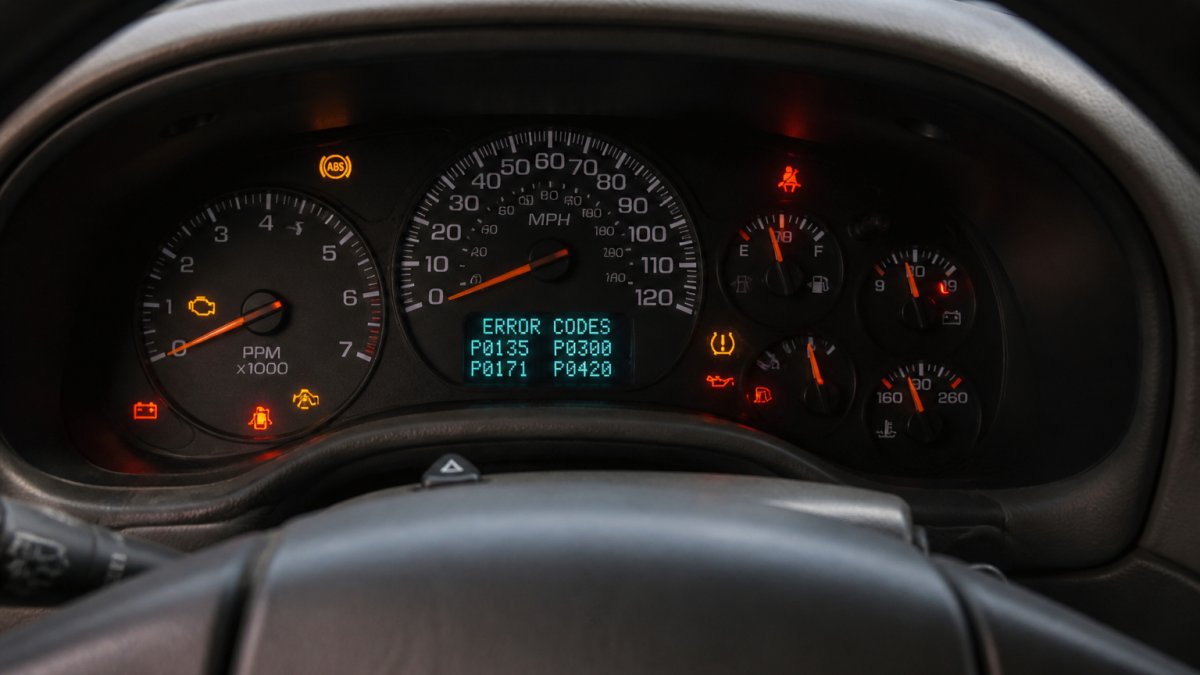
Classic cars often lack this system entirely, which is why CAN bus LED bulbs classic car upgrades require different considerations than modern vehicles.

The CAN bus constantly checks bulb health by measuring each light's power draw.
Understanding this helps you choose the right upgrade path: some cars need special bulbs, others resistors or decoders, and some nothing at all.
How Bulb Monitoring Detects Failed Bulbs and Triggers Warnings
Here's what happens step by step:
- The CAN bus sends a signal to light up your brake light
- It measures the current flowing through the circuit
- It compares that current to a preset standard
This keeps you safe: a failed bulb means other drivers can't see you, and the warning alerts you to a real problem.
LED bulbs create a false alarm: they're more efficient, so they draw less current, and the monitoring system assumes failure. It's not wrong, just designed for halogen bulbs.
Classic cars often lack this monitoring entirely, older electrical systems are simpler and don't track bulb health, which is why many classic car owners never encounter these warning codes.
Why LED Bulbs Trigger Error Codes Without CAN Bus Compatibility
Standard LED bulbs cause problems in modern vehicles because of a fundamental mismatch: load resistance.
A halogen bulb in a 1157 socket draws about 27 watts; an LED replacement might draw only 5.
These warnings don't mean the lights won't work, they'll illuminate fine, just that your vehicle is confused, and you'll stare at dashboard warnings every time you drive.
This is where CAN bus LED bulbs enter the picture. These bulbs are engineered to solve this exact problem.
CAN Bus-Compatible Bulbs and Decoders: How They Prevent Warning Messages
CAN bus-compatible LED bulbs mimic the electrical behavior of halogen bulbs using built-in resistors or special circuits that maintain the expected electrical load.
Install one and your monitoring system sees the correct current draw, no error codes, no warnings, because from an electrical standpoint everything is normal.
RMS Lighting LLC offers several CAN bus solutions. Our 1157 150W CanBus LED Chip 40,000 LM High Powered LED bulbs are engineered to eliminate these compatibility issues.

A CAN bus decoder is another option: a small device between bulb and socket that tricks the system into reading a standard bulb.
LED Bulbs for Older Cars: Electrical Load and Compatibility Challenges
Older vehicles present a different problem. Many classic cars predate CAN bus entirely, with straightforward electrics: power flows through a switch to the bulb, no monitoring, no error codes.
That sounds like good news, any LED installs without warnings, but older vehicles have their own challenges.
Electrical load becomes critical.
1157 150W CanBus LED Chip 40,000 LM High Powered LED →
Before upgrading to LEDs in a classic car, check your electrical system:
- Inspect wiring for cracks, corrosion, or exposed copper
- Test the battery voltage (should be 12-14 volts)
- Look for loose connections at the battery terminals
A weak electrical system can cause LED bulbs to flicker or fail prematurely. The bulbs aren't defective. The vehicle's power supply is insufficient.
RMS Lighting LLC recommends testing your electrical system before any LED conversion.
LED Turn Signal Hyperflash Fix: Resistors and Load Balancing
Hyperflashing is the rapid blinking of turn signals after an LED upgrade. The flasher unit was calibrated for incandescent current draw; drop in an LED pulling a fraction of that and it cycles too fast, making the vehicle look like it has a failed bulb.
There are two legitimate fixes, and they are not interchangeable:
- An electronic flasher unit. On many older vehicles the turn signal flasher is a cheap, serviceable part behind the dash or in the fuse block. Replacing it with a solid-state, LED-compatible flasher restores correct timing with no added load and no heat. This is the cleaner fix when the vehicle uses a replaceable flasher.
- A load resistor. A ceramic power resistor wired in parallel with the LED bulb draws enough current to fool the flasher (or the body control module) into seeing an incandescent load. It works on almost anything, but it converts electricity into heat by design.
The heat problem nobody warns you about
A load resistor sized to mimic a 21-watt incandescent turn signal dissipates roughly that much power as heat whenever the signal is on, comparable to a small soldering iron inside your fender. Manageable in a modern car, but in a classic with 40- to 60-year-old insulation, dried-out grommets, and possibly oil-soaked loom, it's a genuine fire risk if installed carelessly.
Load balancing in practice
- One resistor per LED bulb in a hyperflash circuit. Two rear turn signals means two resistors.
- Wire in parallel, not in series. The resistor taps across the bulb's positive and ground leads so it draws current alongside the LED, not through it.
- Match the resistor to the bulb it replaces. A resistor rated for the original incandescent wattage will restore the load the flasher expects. Undersized resistors run hotter and fail sooner.
When you do not need a resistor at all
If your classic car uses a mechanical or thermal flasher, swapping to an electronic LED flasher solves hyperflash with zero added load and zero added heat. If your turn signals are controlled by a modern body control module, a CAN bus-compatible LED bulb with built-in load circuitry may handle it without any external parts. Only reach for an external resistor when neither of those paths is available.
RMS Lighting LLC's RMS1157SB Switchback Canbus White / Amber LED Bulbs have load management on board, so in many applications they eliminate the need for an external resistor entirely. These dual-function bulbs work as parking lights and turn signals, switching from white to amber when you signal. If you do need external resistors, ask whether your chosen bulbs already include load-balancing circuits before buying anything else.
Classic Car LED Headlight Compatibility: Checking Before You Upgrade
Before spending money on any LED bulb for a classic car, answer one question first: does this vehicle actually have CAN bus bulb monitoring? Understanding whether your classic car needs CAN bus LED bulbs classic car solutions depends on your vehicle's age and electrical architecture. Most classic vehicles were built decades before CAN-based monitoring existed, so buying a CAN bus bulb for a car with no CAN bus is at best a waste of money and at worst adds unnecessary load and heat to a fragile electrical system.
Step 1: Identify your vehicle's electrical architecture
- Pre-1980s vehicles almost universally use simple switched circuits. Power flows from the battery through a switch to the bulb. There is no monitoring, no error codes, and no need for a CAN bus bulb or decoder.
- 1980s through mid-1990s vehicles may use a body control module or a lamp-out module for some circuits, but full CAN bus networks did not become common until later. Check your service manual or wiring diagram for a data bus.
- Mid-1990s and later vehicles are more likely to have CAN bus or a similar network monitoring bulb current. These are the vehicles where CAN bus-compatible bulbs or decoders earn their keep.
If your classic car has no data bus, skip the CAN bus bulb entirely. A standard LED with the correct socket and polarity is the right part.
Step 2: Verify the electrical system can support the upgrade
Classic cars vary widely, and the electrical system limits the upgrade more often than the bulb:
- Ground polarity. Some older vehicles were built positive-ground. LED bulbs are polarity-sensitive and will not work, and may be damaged, if installed in a positive-ground system without conversion.
- System voltage. Most classic cars are 12-volt, but 6-volt systems exist and require different components. Confirm before ordering.
- Charging output. A generator or low-output alternator may not keep up with added lighting load, especially at idle. Measure voltage at the battery with lights on and engine running.
Step 3: Match the socket and the housing
- Socket type. Classic cars use a range of headlight and auxiliary sockets. Confirm the original bulb number from the owner's manual, the old bulb itself, or the lens housing stamp before ordering.
- Lens and reflector design. A classic headlight housing was engineered around a specific filament position. An LED that places its light source differently will scatter the beam, reduce usable road illumination, and increase glare to oncoming drivers. This is the single most common reason a classic car LED headlight upgrade disappoints.
- Beam pattern over brightness. A dimmer bulb with a correct beam pattern is safer and more legal than a very bright bulb with a scattered pattern. Brightness alone is not a measure of performance.
Step 4: Understand the legal side
Headlights are regulated safety equipment, and aftermarket replacements are expected to meet federal motor vehicle safety standards for the lighting function they perform. In practice this means:
- The lamp should be designed for the housing it is installed in, not adapted to it.
- Beam cutoff and aim must be correct so light goes on the road and not into oncoming traffic.
- Color and intensity should match the requirements for the lamp position, white for headlights, amber for turn signals, red for brake and tail.
State inspection programs vary, and some are stricter than others about aftermarket lighting. If your vehicle is subject to inspection, confirm what your state checks before you buy.
Step 5: Install and verify
- Disconnect the battery before working on any lighting circuit.
- Remove the old bulb and inspect the socket for corrosion, melted plastic, or loose terminals.
- Install the LED, confirming polarity if the bulb is polarity-sensitive.
- Reconnect power and test low beam, high beam, parking, turn, and brake functions individually.
- Check for hyperflash on turn signals and for any warning messages on the dash.
- Aim the headlights per the vehicle's specification, or have them aimed professionally.
RMS Lighting LLC provides LED conversion kits for classic vehicle applications. If you're unsure whether your classic car has CAN bus monitoring at all, answer that first, it determines whether you need a CAN bus bulb, a decoder, or just a correctly spec'd standard LED.
Frequently Asked Questions
Do you need CAN bus for LED headlights in a classic car?
Not all classic cars have CAN bus systems. Older vehicles typically use simpler electrical architectures without bulb-monitoring circuits. However, if your classic car does have bulb monitoring (check your owner's manual for error codes), CAN bus-compatible LED bulbs prevent false warnings. If your car lacks CAN bus entirely, standard LED bulbs work fine, though you may need load resistors to avoid hyperflash in turn signals.
What does a CAN bus decoder do for LED lights?
A CAN bus decoder simulates the electrical load of a halogen bulb, preventing your vehicle's monitoring system from detecting an error. When you install LED bulbs, their lower current draw can trigger false warning messages. The decoder bridges that gap by making the LED circuit appear normal to your vehicle's electronics, eliminating dashboard error codes without requiring CAN bus-compatible bulbs.
Can LED bulbs cause turn-signal hyperflash in a classic car?
Yes. Hyperflash occurs when your vehicle's flasher relay expects a certain electrical load (current draw) from halogen bulbs. LED bulbs draw far less power, causing the relay to cycle faster and create a rapid on-off-on flashing effect. Load resistors or an LED flasher relay resolves this by restoring the correct electrical load or adjusting the relay's response time for LED bulbs.
Will CAN bus LED bulbs work in a classic car without a CAN bus system?
CAN bus-compatible LED bulbs are designed to work in vehicles with CAN bus monitoring systems. In classic cars without CAN bus, standard LED bulbs typically work just as well. However, verify your vehicle's electrical system first by checking for bulb-out warnings in your manual. If your classic car has no monitoring system, you avoid error codes entirely, just address hyperflash with resistors if needed.