

Driving Safely in Heavy Rain at Night: 9 Steps

Quick Summary
Slow down, leave a generous following distance, and use low beams instead of high beams so the road stays visible. Heavy rain at night cuts visibility and hides lane markings, so prepare your vehicle, brake early and gently, and pull over if you can't see the road.
- Check headlights, wipers, washer fluid and tire tread before driving in heavy rain.
- Reduce speed noticeably below the posted limit and keep a generous gap to the car ahead.
- Use low beams in rain and spray, since high beams reflect light back at you.
- If you hydroplane, ease off the accelerator, keep the wheel straight and avoid hard braking.
- Never drive through flooded roads; rushing water can sweep a vehicle away.
Table of Contents
- Why Night Rain Is Harder Than Daytime Rain
- Step 1: Prepare Your Vehicle Before the Storm
- Step 2: Slow Down and Increase Your Following Distance
- Step 3: Use Your Lights to Improve Visibility at Night
- Step 4: Learn How to Avoid Hydroplaning on Wet Roads
- Step 5: Handle Highway Driving in Heavy Rain Safely
- Step 6: Know What to Do If Your Car Hydroplanes
- When to Pull Over and Wait Out a Downpour
- Frequently Asked Questions
Why Night Rain Is Harder Than Daytime Rain
Last Updated: November 6, 2026
Heavy rain at night cuts your visibility, and the road gets harder to read in a hurry. The right lighting matters a great deal in a downpour. This guide covers the tips for driving safely in heavy rain at night that matter most. Because poor visibility makes every decision more consequential, steady safe driving habits matter just as much as choosing the right lights.
Rain blurs the road, reflects glare off wet pavement, and hides lane markings. Your headlights have to work harder, and so do you. Drivers should keep a generous following distance during rain.
Here's the core problem: at night, you lose the cues you normally rely on. Nine steps can help, and each one tackles a different part of the challenge.
Step 1: Prepare Your Vehicle Before the Storm
Start before the storm hits. A few checks now can save you trouble later.
AAA recommends checking tires, wipers, lights and washer fluid before driving in heavy rain (AAA guidance on driving in heavy rain). Focus on the parts you rely on most after dark. See an overview of quality automotive LED options to consider.
Check Your Headlights, Wipers and Washer Fluid
- Confirm both headlights and fog lights work
- Replace worn wiper blades that streak or skip
- Fill washer fluid so you can clear road spray fast
- Check tire tread and pressure for better grip
Step 2: Slow Down and Increase Your Following Distance
Slowing down gives you more time to react when the road gets slick. Reduce your speed noticeably below the posted limit during heavy rain.
Following distance matters just as much. Keep a generous gap between you and the car ahead. That gap gives you room to stop on a wet road.
It's harder to control or stop a vehicle on slick roads, so drive gently and brake early (NHTSA guidance on driving in severe weather).
The article's advice on speed and spacing in rain can be scanned at a glance.
| Factor | Guidance | Why it matters |
|---|---|---|
| Speed | Noticeably below posted limit | More time to react on slick roads |
| Following distance | Generous gap to car ahead | Room to stop on a wet road |
| Braking | Brake early and gently | Slick roads reduce control and stopping power |
Step 3: Use Your Lights to Improve Visibility at Night
Your lights are your main tool in the dark, but heavy rain changes how they behave. Compare brighter bulb options for night rain driving. Water droplets in the air and a wet film on the pavement both scatter light back at you, so the same headlights that work fine on a dry night can wash out the road ahead. The goal is to put usable light on the pavement without throwing glare into your own eyes or oncoming drivers'.

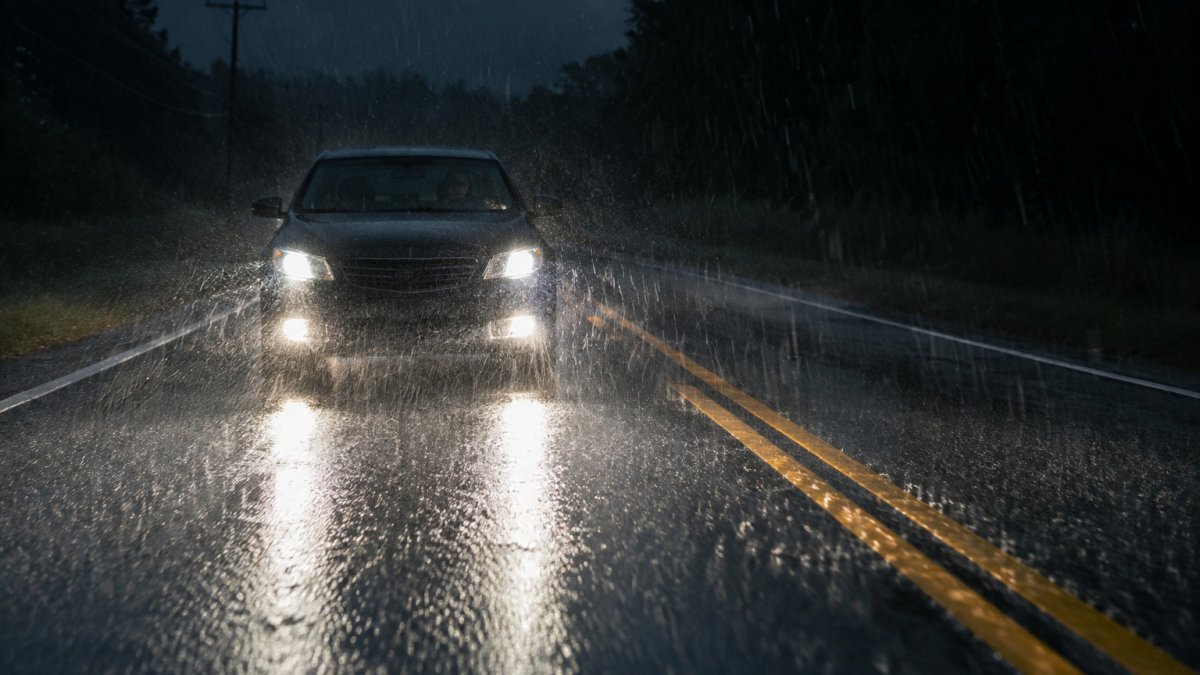
Use low beams in heavy rain. High beams hit the rain and spray and reflect the light straight back, which makes the road harder to see, not easier. Save high beams for clear, dry stretches with no traffic, and switch back to low beams as soon as rain, fog, or spray appears. If your vehicle has fog lights, use them with low beams, not instead of them.
Check that your headlights aim correctly. A common pattern is that a slightly high aim throws light into the rain and oncoming traffic, while a low aim leaves a dark band just ahead of the bumper where you need to see lane markings. Have the aim checked if you notice either symptom. Keep the headlight lenses clean, because a hazy lens scatters light and cuts reach.
Manage glare from the inside of the windshield too. A dirty or fogged inner surface turns oncoming headlights into a smear of light across your view. Run the defroster and keep the inside glass clean. At night in rain, the reflections of dashboard lights and headlights on a wet windshield can hide lane markings and the edges of the road, so dim the instrument panel and avoid bright objects on the dash. Follow steps to reduce dashboard glare at night.
Watch out: if oncoming headlights leave you with a temporary blind spot, don't stare at them. Look toward the right edge of your lane and use the white edge line as a guide until the vehicle passes.
- Use low beams in heavy rain and spray
- Turn on headlights so other drivers can see you
- Keep the windshield and headlight lenses clean, inside and out
- Avoid high beams in fog, rain, or spray
- Dim the dash and clear reflections that hide lane markings
Step 4: Learn How to Avoid Hydroplaning on Wet Roads
Hydroplaning happens when a layer of water lifts your tires off the road. Standing water and fast speeds make it more likely.
To avoid it, slow down before you reach standing water. Drive in the tire tracks left by cars ahead, where the water is often thinner. Keep steering steady and avoid sudden moves.
Step 5: Handle Highway Driving in Heavy Rain Safely
Highways carry more speed and more spray. Keep a wide gap between you and the trucks ahead, since their spray can cut your visibility to nothing. Move to the right lane if you can, where traffic is usually slower.
If visibility drops below what you can safely handle, exit at the next safe stopping place.
Step 6: Know What to Do If Your Car Hydroplanes
Hydroplaning happens when water builds up faster than your tires can push it away, and the tire lifts off the pavement on a thin film of water. At that point the steering and brakes stop responding the way you expect, and the car keeps moving in whatever direction it was already going. The faster you are going and the more water is on the road, the easier it is to lose contact.
The response is a sequence, not a single move. First, ease off the accelerator smoothly and keep the steering wheel pointed straight ahead. Do not brake hard and do not jerk the wheel, because either one can turn a straight slide into a spin once the tires regain grip. Hold the wheel steady and let the vehicle slow on its own. When you feel the tires reconnect with the pavement, brake gently and continue at a lower speed.
A common pattern is that drivers react to the sudden loss of steering by steering harder, which is the opposite of what the situation needs. Keep the inputs small and wait for grip to return.
Watch out: if the rear of the car steps out while you are hydroplaning, do not stab the brakes. Ease off the accelerator, look where you want to go, and make small steering corrections as the tires regain contact.
After a hydroplane, treat it as a warning. Slow down further, increase your following distance, and avoid the standing water or tire tracks that triggered it. If the same stretch keeps causing the car to feel light, move to a lane with less water or take an alternate route.
When to Pull Over and Wait Out a Downpour
Sometimes the safest move is to stop. If you can't see the lane markings, or water is pooling across the road, find a safe place to pull over. Turn on your hazard lights and wait for the rain to ease.
Never drive through flooded roads. Rushing water can sweep a vehicle away, and the road bed under the water may be damaged (NHTSA road safety guidance).
Night rain demands better lighting and steady habits. At RMS Lighting LLC, our LED headlight bulbs, including the RMSH4M2S - 60W 10K Lumens LED Bulb's (Pair) 6500K at $50.00, are built to help you see the road clearly when conditions turn. Browse our lineup and choose the bulbs that fit your vehicle.

Frequently Asked Questions
How do you drive in heavy rain at night?
Slow down, leave at least seven seconds of following distance, and use your low-beam headlights so other drivers can see you. Keep your steering smooth and avoid sudden braking. Watch for standing water and the glare of oncoming headlights on wet pavement. If visibility drops below what you can safely manage, find a safe place to pull off the road and wait for the rain to ease.
What are two tricks to avoid hydroplaning?
The two most effective habits are reducing speed and keeping your tires in good condition. Slow down by at least 5 mph below the posted limit in rain, and avoid driving through standing water or rushing water. Check your tire tread and inflation regularly, since worn tires channel water poorly and make hydroplaning more likely.
When should you pull over during heavy rain at night?
Pull over when you cannot see lane markings, road edges or vehicles ahead, or when water is pooling faster than your tires can clear it. Also stop if you feel the car losing traction and cannot regain control. Choose a safe, well-lit spot away from traffic lanes, turn on your hazard lights and wait for conditions to improve before continuing.
How can you improve visibility when driving in rain at night?
Run your headlights on low beam, which reduces glare compared with high beams, and keep your windshield clean with fresh washer fluid. Run your defroster and wipers at a speed that keeps the glass clear. Avoid looking directly into oncoming headlights, and keep your eyes on the right edge of the lane markings to stay oriented.
