


Plug and Play LED Headlight Conversion Kits

Table of Contents
- What Are Plug and Play LED Headlight Conversion Kits
- LED Headlight Bulb Compatibility and Socket Types
- How to Install LED Headlight Conversion Kit Components
- CANBUS LED Headlight Decoder Technology
- Key Specifications: Brightness, Color Temperature, and Beam Pattern
- Thermal Management and Cooling Systems
- Legal Compliance and DOT Regulations
- Top Plug and Play LED Headlight Options
Last Updated: August 17, 2026
What Are Plug and Play LED Headlight Conversion Kits
A plug and play LED headlight conversion kit replaces factory halogen bulbs with advanced LED bulbs that install without wiring modifications or electrical system changes. These kits fit directly into existing headlight sockets and connect to your car's standard power supply. RMS Lighting LLC's conversion kits deliver superior brightness and longevity compared to halogen bulbs while maintaining factory appearance.

LED conversion kits offer simplicity and immediate performance gains. You get improved visibility without professional installation or extensive modifications. LED bulbs use semiconductor diodes that emit light more efficiently than heated filaments, resulting in longer lifespan, reduced heat, and dramatically improved lumen output. For drivers of older vehicles with poor nighttime visibility, this upgrade represents one of the most impactful modifications available.
| Feature | Halogen Bulbs | LED Conversion Kits |
|---|---|---|
| Lifespan | 400-1,000 hours | 30,000+ hours |
| Heat Output | Very High | Low |
| Lumen Output | 700-1,200 | 10,000-30,000 |
| Power Consumption | 55W per bulb | 30-65W per bulb |
| Installation | Basic | Plug and Play |
LED Headlight Bulb Compatibility and Socket Types
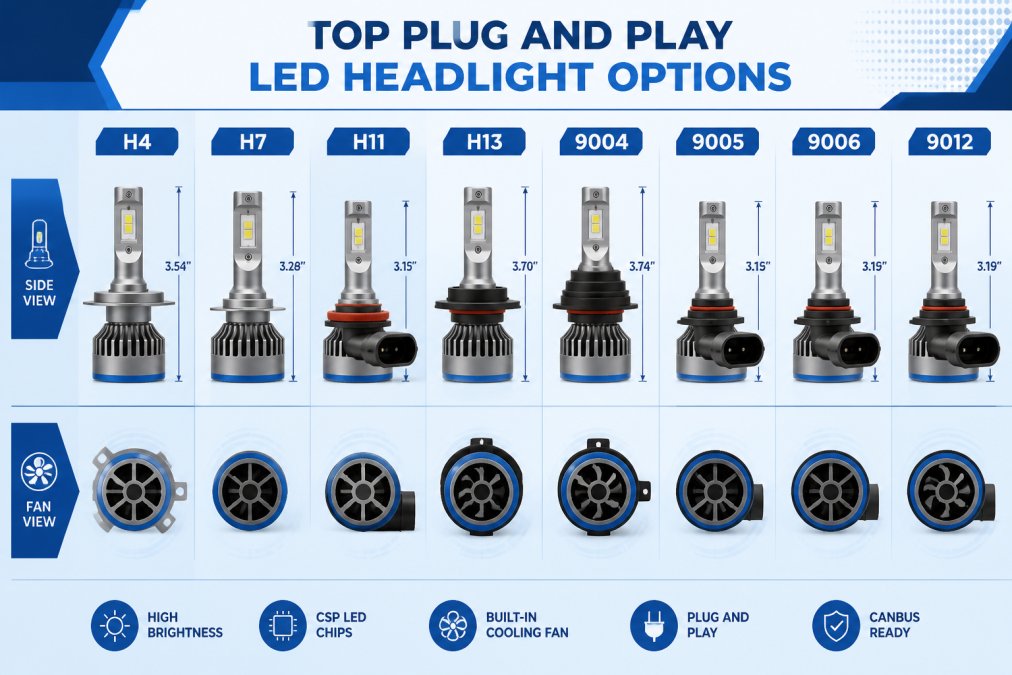
Understanding socket types is essential before purchasing any LED conversion kit. Your vehicle's headlight assembly uses a specific socket design that determines which bulbs will fit. Common socket types include H4, H7, H11, H13, 9004, 9005, 9006, and 9012, each with distinct pin configurations and physical dimensions. Forcing a bulb into an incompatible socket damages both the bulb and headlight housing.
The H4 socket handles dual-filament applications in older trucks and classic vehicles. The H7 socket is standard in many modern European vehicles. H11 sockets appear in contemporary sedans and crossovers, while H13 sockets are prevalent in full-size trucks. The 9004, 9005, 9006, and 9012 designations cover additional applications, primarily in North American vehicles manufactured before the mid-2000s.
Compatibility extends beyond socket type to your vehicle's headlight housing design. Projector-style housings differ significantly from reflector-style assemblies. LED bulbs with active cooling fans may not fit within reflector housings due to spatial constraints. Before selecting a conversion kit, verify your specific vehicle's socket type and housing style through your owner's manual or parts diagram.
RMS Lighting LLC offers 130W CANBUS LED bulbs in eight socket configurations: H4, H7, H11, H13, 9004, 9005, 9006, and 9012. This range ensures compatibility whether you drive a classic restoration project or modern truck.

How to Install LED Headlight Conversion Kit Components
What You'll Need Before Starting
Gather your new LED conversion bulbs, a work light for visibility, and optionally, mechanics gloves to protect your hands. Most plug and play kits require no additional tools. Park your vehicle on a level surface with the engine off and headlights cool. Allow 30 minutes for installation, though experienced installers often complete the work in 10-15 minutes.
Ensure your vehicle's ignition is completely off before opening the headlight assembly. Some vehicles require removing the headlight housing entirely, while others allow access from the engine bay without disassembly.
Step-by-Step Installation Process
Step 1: Access the Headlight Housing (5 minutes) Open your vehicle's hood and locate the rear of the headlight assembly. Depending on your vehicle model, you may access the bulb from the engine bay or need to remove the entire headlight housing. If accessing from the engine bay, look for a rubber dust cover backing the bulb socket. Twist this counterclockwise to remove it.
Step 2: Remove the Old Halogen Bulb (2 minutes) Grasp the halogen bulb at its base and twist counterclockwise approximately 90 degrees. The bulb will release from the socket. Set it aside carefully.
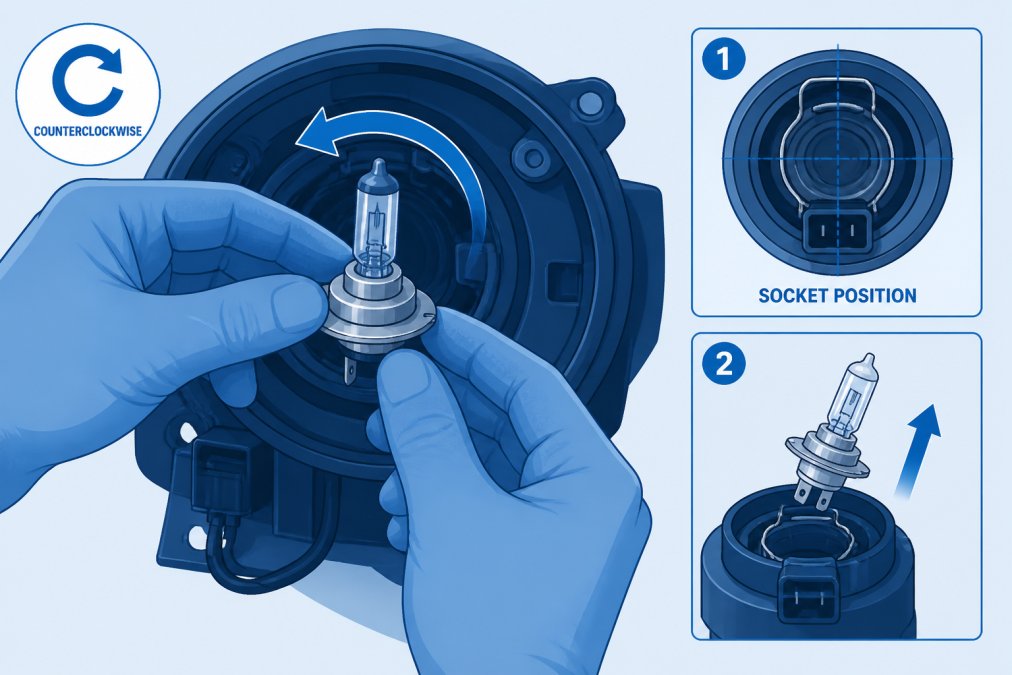
Step 3: Install the LED Conversion Bulb (2 minutes) Align your new LED bulb with the socket. Insert it straight and twist clockwise until it seats firmly. You should feel a definite click when fully installed. Do not force the bulb; if it resists, ensure you have the correct socket type and proper orientation.
Step 4: Reinstall the Dust Cover (1 minute) Twist the rubber dust cover back onto the socket housing clockwise until snug. Hand-tight is sufficient.
Step 5: Test the Headlights (3 minutes) Close the hood and turn on your ignition. Activate the headlights and verify both bulbs illuminate. If one bulb doesn't light, reopen the hood and reseat that bulb, ensuring it's twisted fully into the socket.
Common Installation Mistakes to Avoid
The most frequent error involves installing the bulb without fully seating it in the socket. Always twist until you feel distinct resistance, then attempt one more quarter-turn to confirm full seating.
Touching the LED diode surface with bare fingers introduces skin oils that can degrade performance. If you do touch the diode, wipe it with a soft, lint-free cloth before installation.
Always ensure the ignition is off and allow at least 10 minutes for halogen bulbs to cool before removal.
CANBUS LED Headlight Decoder Technology
CANBUS compatibility addresses a critical issue that plagued early LED conversion kits: dashboard error codes and hyper-flashing turn signals. Your vehicle's onboard computer monitors the electrical load of each lighting circuit. When you replace a 55-watt halogen bulb with a 30-watt LED bulb, the electrical current drops significantly. Your vehicle's computer interprets this as a bulb failure and triggers warning lights.
CANBUS LED decoder technology solves this problem through integrated circuitry that mimics the electrical signature of the original halogen bulb. The decoder maintains the electrical load your vehicle's computer expects, allowing it to recognize the LED bulb as functioning rather than failed.
RMS Lighting LLC's 130W CANBUS LED bulbs incorporate premium decoder technology built directly into each bulb's housing. This eliminates the need for external decoder modules or complex wiring modifications. The integrated design ensures flicker-free operation and voltage stability across the 9-32V DC operating range. The decoder also provides overvoltage and reverse-polarity protection, safeguarding your vehicle's electrical system.

Key Specifications: Brightness, Color Temperature, and Beam Pattern
Brightness is measured in lumens, representing the total amount of visible light emitted. Factory halogen bulbs typically produce 700-1,200 lumens. RMS Lighting LLC's 130W CANBUS LED bulbs deliver 30,000 lumens per pair, providing roughly 25 times more light output than original equipment.
Color temperature, measured in Kelvin (K), describes the light's appearance on the white-to-yellow spectrum. Factory halogen bulbs operate at approximately 3,200K, producing warm yellow light. LED conversion kits typically offer 6,000K to 6,500K color temperatures, producing bright white light similar to daylight. The 6,500K standard used in RMS Lighting LLC's conversion kits provides optimal visibility without the blue tint that ultra-high-color-temperature bulbs produce.
Beam pattern determines where light projects relative to your vehicle's position. A proper beam pattern illuminates the road ahead while minimizing glare to oncoming drivers. Projector-style headlight housings focus light through a lens, creating a defined cutoff line. Reflector-style housings scatter light across a wider area. LED bulbs with 360-degree beam angles work effectively in both housing styles.
Thermal Management and Cooling Systems
Heat dissipation represents a critical design challenge in LED conversion kits. While LED diodes produce far less heat than halogen filaments, the power electronics that drive them generate substantial thermal energy. Inside a sealed headlight housing, this heat must be managed to prevent degradation.
Quality LED conversion kits employ active cooling fans that draw air through the bulb housing, continuously removing heat. RMS Lighting LLC's 130W CANBUS LED bulbs feature built-in active cooling fans powered by the same 12V circuit as the bulbs themselves. The aluminum alloy housing provides superior heat dissipation compared to plastic alternatives.
Operating temperature specifications indicate the range within which the bulb maintains full performance. RMS Lighting LLC's bulbs operate from -40°C to +85°C, accommodating everything from winter Arctic conditions to summer heat under the hood.
Legal Compliance and DOT Regulations
LED headlight conversion kits exist in a regulatory gray area in the United States. The Department of Transportation does not explicitly prohibit LED conversions in factory headlight housings, but it also does not certify most aftermarket LED bulbs for road use.
Vehicles manufactured with factory LED headlights meet specific DOT standards for beam pattern, glare, and brightness. A quality LED bulb installed in a factory headlight housing maintains the beam pattern and glare characteristics of the original design. Review your insurance policy language before installation, as some policies include clauses addressing modifications.
The Federal Motor Vehicle Safety Standards (FMVSS) establish minimum brightness and beam pattern requirements for headlights. As long as your conversion kit produces a proper beam pattern and meets minimum brightness requirements, which quality kits do, you remain compliant with federal standards.
Top Plug and Play LED Headlight Options
130W CANBUS LED Bulbs: H4, H7, H11, H13, 9004, 9005, 9006, 9012 Socket Types
RMS Lighting LLC's 130W CANBUS LED bulbs represent the premium choice for drivers seeking maximum brightness and reliability. These bulbs deliver 30,000 lumens per pair at 6,500K color temperature, providing exceptional nighttime visibility. The integrated CANBUS decoder prevents dashboard error codes and hyper-flashing, eliminating frustration that plagues budget LED kits. Built-in active cooling fans ensure the LED chips operate at optimal temperatures, extending lifespan to 30,000+ hours.
The aluminum alloy housing provides superior heat dissipation. IP68 waterproof rating protects against moisture intrusion. Operating voltage range of 9-32V DC accommodates standard 12V systems and high-output alternators without flickering. The 360-degree beam angle works effectively in both projector and reflector-style housings.
Available in eight socket configurations, these bulbs fit virtually any vehicle from classic trucks to modern sedans. Each configuration is priced at $109.00 per pair. Installation is genuinely plug and play: remove your old halogen bulb, twist the LED bulb into the socket, and activate your headlights. No external decoders, no wiring modifications, no dashboard errors.
60W Standard LED Bulbs: Budget-Friendly Alternative
The RMSH4M2S 60W LED bulbs offer a more economical entry point to LED conversion technology. Priced at $50.00 per pair, these bulbs deliver 10,000 lumens at 6,500K color temperature, a dramatic improvement over halogen performance. The 12-piece CSP CREE 1860 LED chip configuration provides reliable brightness with built-in driver circuitry and active cooling fan.
These bulbs suit drivers who want meaningful visibility improvements without premium pricing. For suburban driving, occasional highway use, or drivers who don't regularly drive in heavy darkness, this brightness level is genuinely sufficient. The 360-degree beam angle ensures proper light distribution in both projector and reflector housings.
The tradeoff is straightforward: you sacrifice the absolute maximum brightness and premium build quality of the 130W bulbs. Lifespan remains excellent at 30,000+ hours.
| Product | Socket Types | Lumens | Color Temp | Price | Best For |
|---|---|---|---|---|---|
| 130W CANBUS | H4, H7, H11, H13, 9004, 9005, 9006, 9012 | 30,000 | 6,500K | $109.00 | Maximum brightness, premium reliability |
| 60W Standard | H4 | 10,000 | 6,500K | $50.00 | Budget-conscious, space-limited housings |
Upgrading to a plug and play LED headlight conversion transforms your nighttime driving experience. Roads that were dark and unclear suddenly reveal details that help you anticipate hazards and drive with confidence. RMS Lighting LLC's conversion kits eliminate the frustration that plagued early LED adopters, delivering flicker-free operation and dashboard error-free installation. Whether you choose the premium 130W option for maximum brightness or the economical 60W alternative for budget-conscious upgrading, you're investing in safety and visibility that will serve you for years.
Frequently Asked Questions
Will plug and play LED headlights work without CANBUS decoder technology?
Standard LED bulbs without CANBUS compatibility can trigger dashboard error codes and hyper-flashing in vehicles with onboard diagnostics. CANBUS technology decodes the vehicle's electrical signals and prevents these issues. RMS Lighting's 130W CANBUS LED bulbs eliminate error codes by emulating halogen load patterns, ensuring smooth operation in modern vehicles with electronic monitoring systems.
How do I verify LED headlight bulb compatibility with my vehicle?
Check your vehicle's owner manual or look inside the headlight housing to identify the socket type (H4, H7, H11, 9005, 9006, 9004, 9007, or H13 are most common). Socket type determines compatibility. RMS Lighting offers 130W CANBUS LED bulbs in all major socket types, delivering 30,000 lumens at 6500K color temperature. Once you know your socket type, installation is plug-and-play without modifications to the reflector housing or wiring harness.
What causes LED conversion kits to produce poor beam patterns or glare?
Incorrect LED chip placement, inadequate heat dissipation, or incompatible reflector housings create scattered light and oncoming driver glare. Quality plug-and-play kits feature precision-engineered diodes with 360-degree beam angle and active cooling fans to maintain consistent light output. Proper thermal management prevents LED shift and preserves the cutoff line that keeps light off oncoming traffic while maximizing your visibility.
Are aftermarket plug and play LED headlight conversions street legal?
LED headlights must comply with DOT (Department of Transportation) regulations, including color temperature limits (typically 4000K to 6000K) and beam pattern standards. RMS Lighting's 6500K CANBUS LED bulbs meet these requirements when installed in OEM-compatible housings. However, some states restrict certain LED modifications. Check local regulations before installation, and ensure your conversion kit maintains proper beam cutoff to avoid blinding other drivers.
What's the difference between 60W and 130W LED headlight bulbs?
The 60W RMSH4M2S delivers 10,000 lumens at $50 per pair, ideal for budget-conscious upgrades. The 130W CANBUS options produce 30,000 lumens at $109 per pair with active cooling fans, superior thermal management, and error-free operation in vehicles with diagnostic systems. Higher wattage provides brighter output and better nighttime visibility, especially for older vehicles with dim halogen housings. Both offer 6500K color temperature and plug-and-play installation.
This article was written using GrandRanker