


Upgrade Classic Car Headlights to LED: Complete Guide

Table of Contents
- Why Upgrade Classic Car Headlights to LED
- LED vs. Halogen: Performance and Visibility Comparison
- Understanding 7-Inch Round and 5.75-Inch Round Headlight Sizing
- DOT Compliance for LED Headlight Retrofits
- How to Install LED Headlights in Vintage Vehicles
- Classic Car Headlight Relay Harness Installation
- Maintaining Vintage Appearance While Upgrading to LED
- LED Headlight Options and Comparison
- Frequently Asked Questions
Last Updated: August 31, 2026
Why Upgrade Classic Car Headlights to LED
Original sealed beam headlights produce dim, yellowish light while consuming significant power from aging wiring systems. Upgrading to LED delivers dramatically brighter, whiter light while drawing a fraction of the power, solving both safety and practicality problems simultaneously.
Classic car owners who upgrade report immediate improvements in nighttime visibility, fewer electrical failures, and the ability to drive after sunset without anxiety. LED conversion kits engineered for vintage vehicles preserve factory appearance while delivering modern performance. The difference between poorly designed retrofits and precision-engineered ones is the difference between solving your lighting problem and creating new ones: dashboard error codes, relay chatter, beam pattern scatter, and premature failure.
LED vs. Halogen: Performance and Visibility Comparison
LED headlights outperform halogen bulbs across nearly every dimension. Halogen bulbs heat a filament until it glows, an inherently inefficient process where most energy becomes heat, not light. A typical halogen headlight draws significant amperage and produces relatively dim output with warm-colored light (around 3000K), reducing contrast and making obstacles harder to spot (peer-reviewed research).
LED bulbs use semiconductor technology to produce light directly. They generate far less heat, consume roughly one-third the power of halogen equivalents, and produce brighter, whiter light (typically 5000-6500K). With halogen you see maybe 150 feet ahead; with quality LED you see 300+ feet.
Lumens, Color Temperature, and Beam Pattern Differences
Lumens measure total light output. A typical halogen sealed beam outputs 800-1200 lumens; quality LED conversion kits produce 10,000-30,000 lumens, a 10-25x improvement.
Color temperature (measured in Kelvin) defines whether light appears warm or cool. Halogen typically runs 3000-3500K; LED runs 5000-6500K. Human eyes perceive white light as brighter than yellow at the same lumen output, providing a visibility advantage beyond raw numbers.
Beam pattern separates good kits from bad ones. Poor kits scatter light everywhere, creating glare and dark spots. Quality kits produce a sharp cut-off line, the boundary between lit road and dark sky, preventing blinding oncoming drivers while maximizing visibility.
Electrical Load and Amperage Draw Considerations
A sealed beam halogen headlight draws 40-50 amps when both high and low beams are on (sae.org). Classic cars often have 60-amp alternators as standard. LED headlights draw 15-20 amps total, roughly one-third the load (sae.org). Your electrical system suddenly has breathing room, the alternator isn't working at maximum capacity constantly, and dimming issues disappear.
Quality conversion kits include upgraded wiring harnesses and relay configurations that bypass aging factory wiring where it matters most, addressing voltage drop across corroded connections and undersized wiring.
Understanding 7-Inch Round and 5.75-Inch Round Headlight Sizing
Classic car headlight sizing falls into standard formats. Getting this right is non-negotiable, the wrong size won't fit your housing.
7-inch round is the most common size for American classics built from the 1950s through 1980s. 5.75-inch round is used in some Mopar vehicles, certain Chevrolet models, and various imports. 5x7-inch rectangular and 4x6-inch rectangular formats appear on some older vehicles and specialty builds.
LED conversion kits are engineered for specific sizes. A 7-inch kit won't fit in a 5.75-inch housing.
DOT Compliance for LED Headlight Retrofits
Many DIY upgrades produce excellent light but fail to meet legal standards for road use. The Department of Transportation sets standards ensuring your headlights don't blind oncoming drivers while providing adequate visibility. Most LED conversion kits sold online don't meet DOT standards and are technically illegal on public roads in most states. Quality LED conversion kits undergo testing to verify they produce a proper cut-off line, don't exceed maximum brightness in the center beam, and distribute light without creating dangerous glare zones.
Sealed Beam Standards and Cut-Off Line Requirements
When you retrofit a sealed beam housing with an LED bulb, you're replacing the halogen element while the housing, reflector and lens, remains the same. The reflector was designed to work with a halogen filament at a specific focal point. An LED bulb positioned differently produces a different beam pattern.
The cut-off line is the sharp horizontal line separating illuminated road from dark sky, preventing your headlights from blinding oncoming drivers. Poor LED retrofits produce a fuzzy or absent cut-off line, creating glare and illegal operation. Precision-engineered kits maintain the cut-off line because the LED bulb is positioned exactly where the halogen filament would have been, with reflector geometry optimized for LED output characteristics.
Projector Lens vs. Reflector Housing Technology
Most classic car headlights use reflector housing design. Light from the bulb reflects off a curved mirror-like surface, then passes through a lens at the front. Some modern LED conversion kits use projector lens design instead, with a small lens focusing light from the LED bulb into a precise beam.
For classic car retrofits, reflector housings are more common because they're what original sealed beams used. A reflector-based LED kit fits into existing housing with minimal modification, maintains original appearance, and simplifies installation.
How to Install LED Headlights in Vintage Vehicles
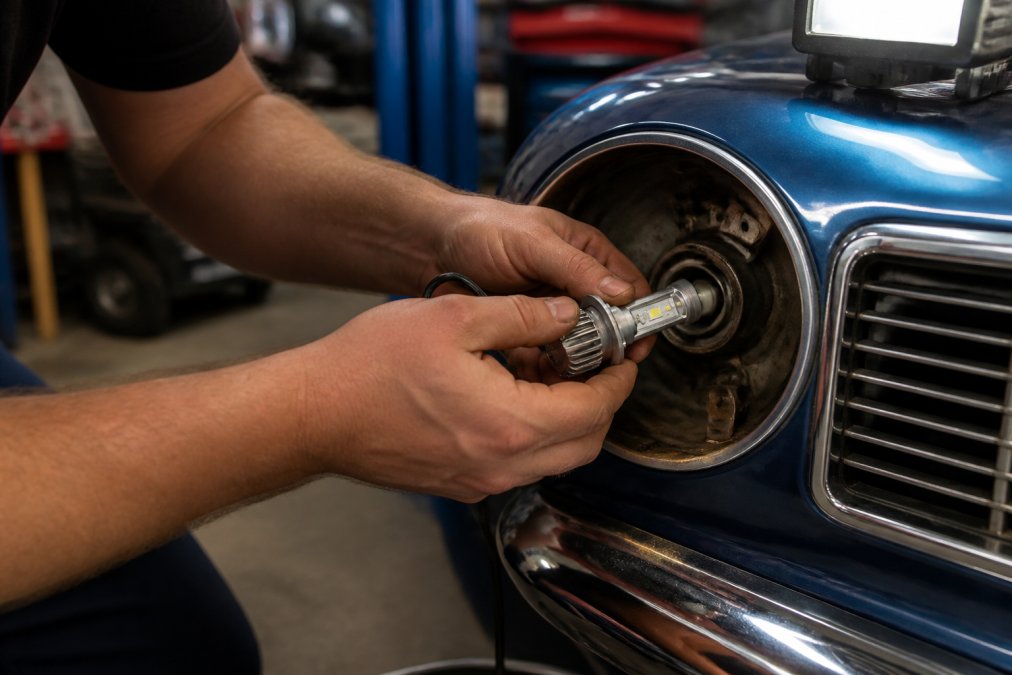
Installing LED headlights in a classic car typically takes 2-4 hours for both headlights. Disconnect your battery's negative terminal to prevent electrical damage. Remove the headlight bezel trim (usually held by a few screws), then unbolt the headlight housing (typically held by three bolts around the perimeter). Disconnect the wiring harness from the back.
Inspect the mounting surface and clean away corrosion or debris. Position the new LED housing, align it with mounting holes, and install bolts hand-tight first, don't over-tighten or you'll crack the housing. Connect the wiring harness to the LED bulb using weatherproof connectors. If your kit includes a relay harness, connect it according to instructions. Secure loose wiring with zip ties, away from heat and moving parts. Reinstall the bezel trim and reconnect the battery. Verify both low and high beams work and check the beam pattern by aiming at a wall, you should see a sharp cut-off line and even illumination.
Wiring Requirements and Plug-and-Play Setup
Most LED conversion kits claim to be "plug-and-play," but this term means different things depending on your vehicle's electrical system. A true plug-and-play kit uses the factory headlight connector without modification. However, many classic cars have aging wiring with corroded connections and voltage drops that prevent reliable LED operation.
A relay harness routes power directly from the battery to LED headlights, bypassing the factory headlight switch and wiring. This eliminates voltage drop issues and ensures consistent power. If your classic car has original wiring and a weak alternator, a relay harness is strongly recommended.
Common Installation Mistakes to Avoid
Don't force components into place, LED housings are precision-engineered and should fit smoothly. Before installing LEDs, verify your battery is in good condition, your alternator charges properly, and wiring connections are clean and tight. Don't skip the relay harness if your vehicle has factory wiring; classic cars often experience voltage drop across long wire runs. Finally, don't skip the beam pattern check. After installation, aim headlights at a wall and verify the cut-off line is sharp and horizontal.
Classic Car Headlight Relay Harness Installation
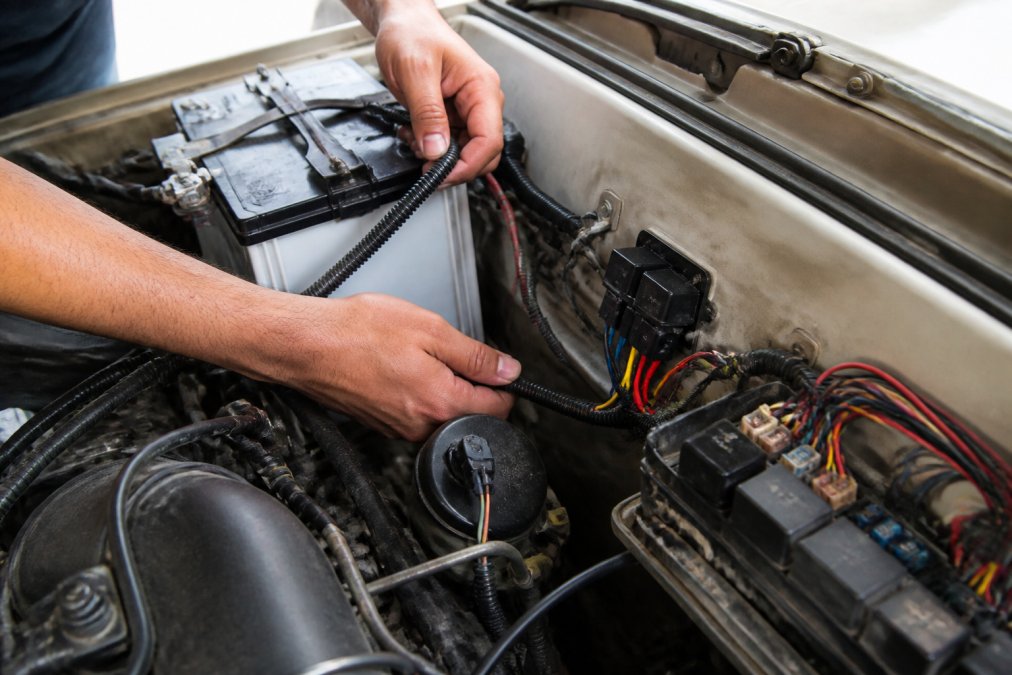
A relay harness is highly recommended for any LED headlight upgrade in a classic car. The factory headlight circuit runs from the battery through the headlight switch to the headlights using long, thin wiring. Voltage drops across this path, especially under load. A relay harness intercepts this circuit and reroutes power directly from the battery to a relay. The factory headlight switch triggers the relay (requiring minimal current), and the relay supplies full battery voltage directly to the LED headlights. The result: stable, consistent power with no flickering.
Installing a relay harness takes an additional 1-2 hours. Run a new power wire from the battery to the relay (usually mounted near the engine bay), connect the relay to the LED headlights, and connect the relay's trigger wire to the factory headlight switch.
Voltage Drop and Electrical System Load Balancing
Voltage drop is the decrease in electrical potential across a wire or connection. In a classic car with factory wiring, voltage drop can be significant. A 12-volt system at the battery might deliver only 10.5 volts to the headlights after traveling through corroded connections and thin wiring. LEDs are sensitive to this drop and may dim, flicker, or fail to turn on.
Clean all battery connections and ground points (corrosion is the primary cause of voltage drop), and use appropriately sized wire in your relay harness. Use 10-gauge or heavier wire from the battery to the relay, and 12-gauge wire from the relay to the headlights. LED headlights reduce demand dramatically by drawing only 15-20 amps instead of 40-50 amps, freeing up capacity for other systems.
Preventing Flicker and Dashboard Error Codes
Flicker is the most common complaint from LED headlight retrofits. The lights pulse instead of staying steady, usually caused by voltage instability or incompatible wiring. A relay harness almost always fixes this by supplying stable power directly from the battery.
Dashboard error codes occur when on-board diagnostics monitor headlight circuits. When you install LEDs drawing significantly less current than factory halogen bulbs, diagnostics might interpret this as a burned-out bulb and trigger a warning light. Install load resistors (dummy loads or resistor boxes) that simulate the power draw of halogen bulbs. Quality LED conversion kits often include load resistors or provide them as optional accessories.
Maintaining Vintage Appearance While Upgrading to LED
The whole point of upgrading classic car headlights to LED is getting modern performance without losing the classic look. A precision-engineered kit uses OE-style glass housings that match the original sealed beam appearance, lens pattern, chrome ring, proportions all match what was there originally. From the outside, your headlights look exactly like they did 40 years ago.
Direct-Fit Conversion Kits and OE-Style Glass Housings
A direct-fit conversion kit bolts into your factory headlight mounting location without modification. Housing dimensions, bolt hole locations, and connector positions all match the original sealed beam specification. This means no cutting, grinding, or re-drilling, your vehicle remains completely reversible.
OE-style glass housings replicate the appearance of the original sealed beam. The front lens has the same Fresnel pattern, chrome trim ring, and overall shape. The glass lens must be shaped exactly right to work with the LED bulb's light output. The housing must be sealed properly to prevent moisture intrusion. The reflector surface must have correct curvature to produce the proper beam pattern.
Daytime Running Lights and Heat Sink Design
Daytime running lights (DRLs) are a modern safety feature some classic car owners want to add. Some LED conversion kits include DRL functionality, with LED bulbs producing lower light output during the day and full output at night.
Heat sink design is crucial for LED reliability. Even though LEDs are much more efficient than halogen bulbs, they still generate some heat that must be dissipated or the LED will overheat and fail prematurely. Quality LED bulbs include aluminum heat sinks that draw heat away from the LED semiconductor and radiate it into surrounding air.
LED Headlight Options and Comparison
The LED conversion kit market ranges from cheap imports to precision-engineered kits. Understanding the differences helps you make a decision that won't leave you frustrated.
| Option | Lumen Output | Color Temperature | Price Range | Best For |
|---|---|---|---|---|
| Budget Import Kits | 8,000-12,000 LM | 6000K | $80-150 | Budget-conscious, non-critical use |
| Mid-Range Kits | 15,000-20,000 LM | 5500-6500K | $150-250 | Most classic car owners |
| High-Output Kits | 25,000-30,000 LM | 6500K | $200-300 | Performance-focused, frequent night driving |
| Premium Professional Kits | 30,000+ LM | 6500K | $250-350+ | Show vehicles, serious restoration projects |
7-Inch Round Sealed Beam Conversion Kits
The 7-inch round is the most common size for American classics from the 1950s through 1980s, used in Chevrolet, Ford, Mopar, and Pontiac vehicles. The Gen2 7" Round with 10,000-lumen H4 LED bulbs ($179.00) delivers solid performance for everyday driving, roughly 8-10x brighter than factory halogen while maintaining excellent beam pattern control. The Gen2 7" Round with 30,000-lumen H4 LED bulbs ($239.00) is for owners wanting maximum visibility. For most 7-inch round classic car owners, the 30,000-lumen kit represents the sweet spot between cost and performance.

5x7-Inch and 4x6-Inch Square Headlight Kits
Some classic vehicles use rectangular headlight formats. The Gen2 5x7" Large Square kit ($239.00) uses 30,000-lumen H4 LED bulbs, delivering the same performance as the 7-inch round kit in a different shape. The Gen2 4x6" Small Square kit ($299.00) is engineered for vehicles with quad headlights. The 10,000-lumen version ($269.00) provides solid performance, while the 15,000-lumen version ($299.00) offers higher output.


Lumen Output and Long-Term Durability in Extreme Weather
The practical range for classic car headlights is 10,000-30,000 lumens. Below 10,000 lumens, you're not gaining much over good halogen bulbs. Above 30,000 lumens, diminishing returns set in, improvement in visibility is modest while cost and heat generation increase.
Quality kits use sealed glass housings with weatherproof connectors and gaskets designed to shed water and prevent moisture accumulation. Budget kits often use plastic housings that crack in cold weather or warp in heat, with exposed connectors leading to corrosion.
Upgrading your classic car's headlights to LED is one of the most practical improvements you can make. You'll drive safer, your vehicle's electrical system will run cooler, and you'll maintain the original appearance that makes your classic car special. Precision-engineered conversion kits deliver all these benefits with a 3-year warranty backing every LED bulb. Start with the headlight size that matches your vehicle, choose your lumen output based on your driving needs, and experience the difference that modern LED technology makes when it's done right.
=== FAQ ANSWERS (audit these too, same rules) ===
Frequently Asked Questions
Can I legally upgrade my classic car headlights to LED under DOT regulations?
Yes, you can upgrade to LED headlights if your conversion kit meets DOT standards. The key is using a properly engineered sealed beam conversion kit with the correct cut-off line and beam pattern. Direct-fit kits with OE-style glass housings are designed to maintain DOT compliance while delivering modern LED performance. Always verify that your specific kit is DOT compliant before installation.
Do I need a relay harness when upgrading to LED headlights in a vintage vehicle?
Most classic cars with original electrical systems benefit from a relay harness installation. LED bulbs draw less amperage than halogen bulbs, which can cause voltage drop issues in older wiring. A relay harness bypasses the factory switch and sends power directly from the battery, preventing flicker, dashboard error codes, and premature LED failure. This is especially important for vehicles with 50+ year old wiring.
What's the difference between 7-inch round and 5.75-inch round LED headlights for classic cars?
The 7-inch round sealed beam is the most common size for vintage American vehicles from the 1960s through 1980s. The 5.75-inch round is typically found on some European classics and specific model years. Check your vehicle's factory headlight housing to determine which size you need. Both sizes are available in modern LED conversion kits that maintain the original appearance while delivering high lumen output.
Will LED headlight conversion cause dashboard error codes or hyper-flashing in my classic car?
Dashboard errors and hyper-flashing occur when the electrical system doesn't recognize the LED bulb or when voltage drops across old wiring. A proper relay harness installation eliminates this by providing dedicated power directly from the battery. Additionally, using a conversion kit engineered for classic vehicles (not generic LED bulbs) ensures compatibility with your vintage electrical system. Quality kits include harness adapters designed to prevent these common issues.
How do I know if an LED headlight kit will fit my specific classic car without modification?
Direct-fit conversion kits are engineered to replace factory sealed beam housings without modification. Check that the kit matches your headlight size (7-inch round, 5x7-inch square, or 4x6-inch square) and that it includes OE-style glass housings. Most modern LED conversion kits are designed as plug-and-play replacements for 1960s-1980s vehicles. Before purchasing, confirm your vehicle's original sealed beam size and the kit's compatibility with your model year.
What's the actual benefit of upgrading from halogen to LED headlights on a vintage vehicle?
LED headlights deliver 2-3 times more lumens than halogen bulbs, dramatically improving night visibility and safety. They also run cooler, last 25,000+ hours versus 1,000 hours for halogen, and consume less electrical power. For classic cars, this means better illumination without overtaxing aging electrical systems. LED bulbs also provide a crisper beam pattern with proper cut-off lines, reducing glare for oncoming drivers while improving your ability to see the road.
This article was written using GrandRanker