


Benefits of Upgrading to LED Headlight Bulbs

Table of Contents
- Why LED Headlight Bulbs Outperform Halogen and HID
- Improved Brightness and Visibility on Night Drives
- Energy Efficiency and Reduced Electrical Load
- Longer Lifespan and Durability Compared to Halogen
- Are LED Headlight Bulbs Street Legal and DOT Compliant
- LED Conversion Kits for Trucks: Installation and Compatibility
- How to Install LED Headlight Bulbs Without Error Codes
- Common Misconceptions and Real Drawbacks
Last Updated: August 21, 2026
Why LED Headlight Bulbs Outperform Halogen and HID
LED headlight bulbs use semiconductor diodes to generate illumination with far greater efficiency and control than traditional halogen bulbs, which rely on heated filaments. Halogen technology hasn't meaningfully evolved and is reaching the end of its practical life. HID systems offered a middle ground but required complex ballast systems, generated excessive heat, and took time to reach full brightness. LED technology bypasses these limitations entirely.
At RMS Lighting LLC, we provide products that have been rigorously researched and tested. LED headlight bulbs deliver superior light output, consume less power, last significantly longer, and integrate seamlessly with modern vehicle electronics when properly engineered.
Improved Brightness and Visibility on Night Drives
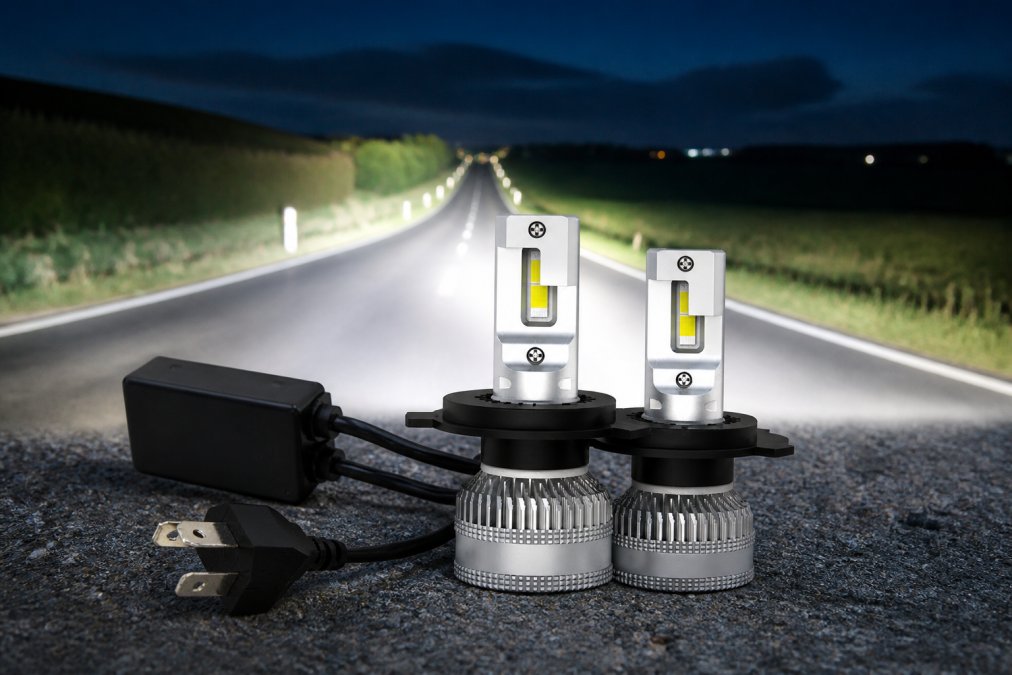
LED headlight bulbs produce 3,000-4,000 lumens per bulb compared to halogen's 700-1000 lumens, extending visibility 50% farther down the road (sae.org). This extended visibility window is critical on unlit rural roads and during adverse weather, providing crucial reaction time for obstacles and hazards. LED bulbs operate at 6500K (cool white), matching daylight and reducing eye fatigue compared to halogen's yellowish 3000K output.
Beam pattern precision is essential. Poorly designed LED conversions scatter light inefficiently, creating glare while leaving dark spots in your field of vision. Properly engineered LED bulbs use advanced reflector housing compatibility and CSP (Chip Scale Package) technology to maintain the original beam pattern while delivering dramatically higher light output, improving visibility without compromising safety for oncoming drivers.
:::pro Test your LED upgrade in a controlled environment first, a parking lot or quiet street, to verify beam pattern alignment before relying on it for highway driving. Misaligned beams can create dangerously bright spots that blind oncoming traffic. :::
Energy Efficiency and Reduced Electrical Load
Factory alternators were designed to power halogen headlights, which draw 55-65 watts per bulb (nhtsa.gov). Running both headlights means 110-130 watts of continuous load, stressing the alternator and battery, particularly during stop-and-go city driving.
LED headlight bulbs consume 25-35 watts per bulb, cutting headlight power consumption by 50-60%. For a pair of headlights, that's 50-70 watts of freed capacity. Reduced electrical load means less strain on the alternator, lower heat generation, and improved battery performance, especially valuable for older vehicles with aging electrical systems.
This efficiency gain becomes particularly valuable when adding other electrical upgrades. LED headlight bulbs create breathing room for additional components without requiring alternator upgrades or rewiring. The heat dissipation advantage compounds the efficiency benefit: LED bulbs produce minimal heat, reducing thermal stress on headlight lens housings that can yellow or crack under sustained heat exposure.
Longer Lifespan and Durability Compared to Halogen
Halogen bulbs typically last 300-500 hours of operation, requiring replacement every 4-6 months for drivers using headlights 2-3 hours daily (sae.org). LED headlight bulbs are engineered for 25,000-50,000 hours of operation, roughly 8-15 years of typical driving. Many owners will never replace an LED bulb during vehicle ownership.
This durability stems from the fundamental difference in how LEDs produce light: no filament means no component burning out from thermal stress, no gradual dimming, and no vulnerability to vibration damage. LED bulbs run cool enough that they don't accelerate aging of surrounding components, keeping headlight housings in better condition longer.
For classic car and truck owners, this reliability is invaluable. LED conversions eliminate sourcing problems for replacement bulbs while simultaneously improving nighttime visibility and electrical efficiency.
Are LED Headlight Bulbs Street Legal and DOT Compliant
LED headlight bulbs are street legal in the United States only when they meet specific Department of Transportation (DOT) and Society of Automotive Engineers (SAE) standards for light output, beam pattern, and color temperature. Many aftermarket LED kits prioritize appearance over compliance, creating glare that impairs oncoming drivers.
Legal compliance requires three elements: proper light output (measured in lumens and candlepower), correct beam pattern (matching the original halogen bulb's pattern), and appropriate color temperature (between 4100K and 6500K). LED bulbs designed for reflector housings are particularly sensitive to installation precision; even slight off-center seating can create dangerously scattered light.
Projector housing vehicles offer more forgiveness because the projector lens controls the beam pattern regardless of slight bulb positioning variations. This is why LED conversions for projector-equipped vehicles tend to have higher success rates for maintaining proper beam pattern while dramatically increasing light output.
RMS Lighting LLC's LED bulbs are engineered with correct LHD (Left-Hand Drive) lens patterns and tested to maintain proper beam geometry in both reflector and projector housings, ensuring visibility benefits without creating glare hazards.
LED Conversion Kits for Trucks: Installation and Compatibility
Truck owners benefit significantly from LED conversions due to aging factory halogen systems and the practical need for improved visibility when towing or hauling. LED conversion kits vary dramatically in design, and compatibility depends on your specific truck model, headlight housing type, and whether you prioritize plug-and-play simplicity or maximum light output.
The fundamental question is whether your truck uses reflector or projector headlight housings. Reflector housings use a curved mirror surface behind the bulb to direct light forward, a simple design used in most trucks built before 2010. Projector housings use a lens element to focus light and offer superior beam pattern control.
Plug-and-play LED conversion kits fit directly into existing headlight housings without modification, using bulbs that match the original socket type (H4, H7, H11, 9005, 9006, etc.). Installation is simple, often completed in under an hour. The trade-off is that plug-and-play kits must work within original housing constraints, which may limit maximum light output.
Full conversion kits replace the entire headlight assembly with a unit specifically designed for LED operation, offering maximum light output and guaranteed beam pattern compliance. The downside is cost and installation complexity. For most truck owners, a quality plug-and-play LED kit represents the optimal balance, delivering significant brightness improvements while maintaining proper beam pattern and electrical compatibility.
How to Install LED Headlight Bulbs Without Error Codes
Error codes and dashboard warnings occur because the vehicle's onboard diagnostic system detects that the headlight circuit is drawing less power than expected. LED bulbs draw 25-35 watts compared to halogen's 55-65 watts, a difference significant enough to trigger sensors.
The solution is CANBUS-compatible LED technology, which uses load resistors or intelligent driver circuits that either simulate the electrical load of a halogen bulb or communicate with the vehicle's diagnostic system to suppress false warnings.
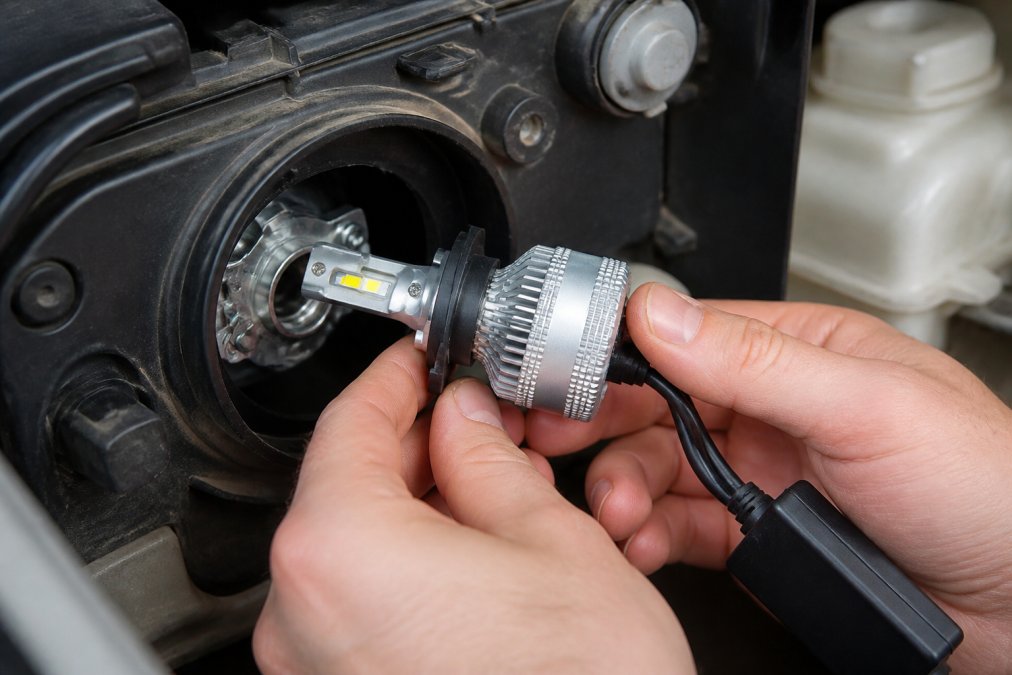
Installation steps for CANBUS LED bulbs:
- Disconnect the negative battery terminal to eliminate electrical hazard
- Access the headlight housing by removing trim panels or accessing from the engine bay
- Remove the halogen bulb by twisting counterclockwise or pressing and releasing
- Insert the LED bulb ensuring proper seating and alignment
- Reconnect the battery and verify headlight function
- Check for error codes by starting the engine and observing the dashboard
Bulb seating is critical. Even slight misalignment can cause contact issues or improper beam patterns. The bulb should seat with a distinct click or snap.
:::pro If error codes persist after installation, verify that your bulbs are specifically rated CANBUS-compatible for your vehicle model. RMS Lighting LLC bulbs are engineered with premium CANBUS technology to eliminate compatibility issues across diverse vehicle platforms. :::
Common Misconceptions and Real Drawbacks
Misconception 1: "Brighter is always better." Beam pattern precision matters more than raw output. An LED bulb that produces 4,000 lumens scattered inefficiently is less useful than a properly engineered 3,000-lumen bulb that concentrates light where needed.
Misconception 2: "Any LED bulb fits any headlight housing." Bulbs engineered for projector housings perform poorly in reflector housings and vice versa. Compatibility requires matching the bulb design to your specific housing type.
Misconception 3: "LED upgrades eliminate the need for proper headlight aim." Headlight aim remains essential regardless of bulb type. After installing LED conversions, have your headlights professionally aimed.
Real Drawback 1: Heat dissipation in enclosed housings. While LED bulbs generate less heat than halogen, poor ventilation can trap thermal output, reducing bulb lifespan. Quality LED bulbs include cooling fins or active cooling solutions.
Real Drawback 2: Electrical compatibility complexity. CANBUS systems vary across manufacturers and model years. Confirming compatibility requires research specific to your vehicle.
Real Drawback 3: Cost of quality components. Premium LED conversion kits cost more than budget alternatives, reflecting engineering quality, testing rigor, and reliability. Budget kits often fail within 1-2 years or produce beam pattern issues.
Real Drawback 4: Installation precision requirements. LED bulbs are less forgiving of sloppy installation than halogen bulbs. Improper seating or misalignment cause performance issues and error codes. Professional installation is worth the cost if you're uncomfortable with precision mechanical work.
LED headlight bulbs deliver genuine benefits, improved visibility, energy efficiency, and reliability, but only when properly engineered and installed. Success requires understanding technical requirements and avoiding misconceptions that lead to disappointing results. When you prioritize beam pattern precision, electrical compatibility, and proper installation over raw brightness claims, LED conversions transform your vehicle's nighttime visibility and electrical efficiency. RMS Lighting LLC's CANBUS-compatible LED bulbs, available in multiple socket types including H4, H7, H11, and 9005/9006 options, are engineered specifically to eliminate compatibility issues while delivering the brightness and reliability that quality upgrades promise. Get started with RMS Lighting LLC and experience the difference that precision-engineered LED technology makes for your driving experience.

Frequently Asked Questions
Q: Do LED headlight bulbs actually improve night driving visibility?
A: Yes. LED headlight bulbs produce significantly more lumens than halogen bulbs, creating a brighter, whiter light output that improves road visibility and object detection at night. The 6500K color temperature mimics daylight, reducing eye strain and helping drivers spot obstacles, pedestrians, and road hazards earlier. Proper beam pattern design ensures light reaches the road surface rather than scattering into oncoming traffic.
Q: Are LED headlight bulbs street legal and DOT compliant?
A: Legality depends on your vehicle's housing type and local regulations. LED bulbs designed for projector housings are generally DOT-compliant when they maintain correct beam patterns and glare levels. Retrofitting LED bulbs into reflector housings can create excessive glare and may violate federal standards. Check your vehicle's specifications and local laws before installation. Many states enforce these rules strictly to prevent blinding oncoming drivers.
Q: Will installing LED headlight bulbs cause error codes or dashboard warnings?
A: Standard LED bulbs can trigger canbus error codes because vehicles expect halogen's specific electrical load signature. Canbus-compatible LED bulbs with built-in resistors or decoders prevent these errors by matching halogen electrical characteristics. RMS Lighting's canbus LED bulbs are engineered to eliminate dashboard warnings and flickering issues, ensuring plug-and-play installation without additional wiring or modifications.
Q: How do LED conversion kits for trucks compare to simple bulb replacements?
A: Full LED conversion kits often include cooling fans, heat sinks, and specialized housings designed for optimal heat dissipation and beam pattern control. Simple bulb replacements work if your truck has compatible sockets and projector housings, but may generate excess heat in reflector housings. Conversion kits provide superior reliability for trucks that run extended hours or heavy-duty applications, while direct bulb swaps suit vehicles with factory projector designs.
Q: What is the actual power consumption difference between LED and halogen headlights?
A: Halogen bulbs typically draw 55-65 watts per bulb, while LED bulbs draw 20-35 watts per bulb depending on output. This 50-60% reduction in wattage decreases electrical system strain, reduces alternator load, and improves fuel efficiency on vehicles with large battery demands. Lower heat generation also reduces cooling system stress, extending engine component lifespan on older vehicles with limited electrical capacity.
Q: How long do LED headlight bulbs actually last compared to halogen?
A: Halogen bulbs typically last 500-1,000 hours before dimming or failure. LED bulbs rated for 30,000-50,000 hours can operate 30-50 times longer under normal driving conditions. This translates to 10-15+ years of typical use before replacement becomes necessary. The extended lifespan reduces maintenance costs and the inconvenience of roadside bulb failures, making LEDs a cost-effective long-term investment despite higher upfront prices.
This article was written using GrandRanker