

Benefits of LED Light Bars for Off-Road Trucks

Table of Contents
- Why LED Light Bars Matter for Off-Road Driving
- Improved Nighttime Visibility and Hazard Detection
- LED Light Bar Beam Patterns Explained
- Energy Efficiency and Electrical System Benefits
- Durability, Weather Resistance, and Rugged Construction
- Off-Road Lighting Regulations by State
- How to Wire an LED Light Bar Safely
- Conclusion
Last Updated: August 30, 2026
Why LED Light Bars Matter for Off-Road Driving
LED light bars have fundamentally changed nighttime off-road driving, replacing dim halogen lighting with bright, focused illumination that reveals hazards before they become problems. Modern LED light bars deliver superior color temperature, better beam pattern control, and dramatically improved energy efficiency compared to halogen or HID alternatives.
This guide covers the real advantages of switching to LED light bars, from technical benefits to practical considerations affecting installation and daily driving. We'll examine beam patterns, electrical system impacts, durability standards, regulatory requirements, and proper wiring safety.
Improved Nighttime Visibility and Hazard Detection
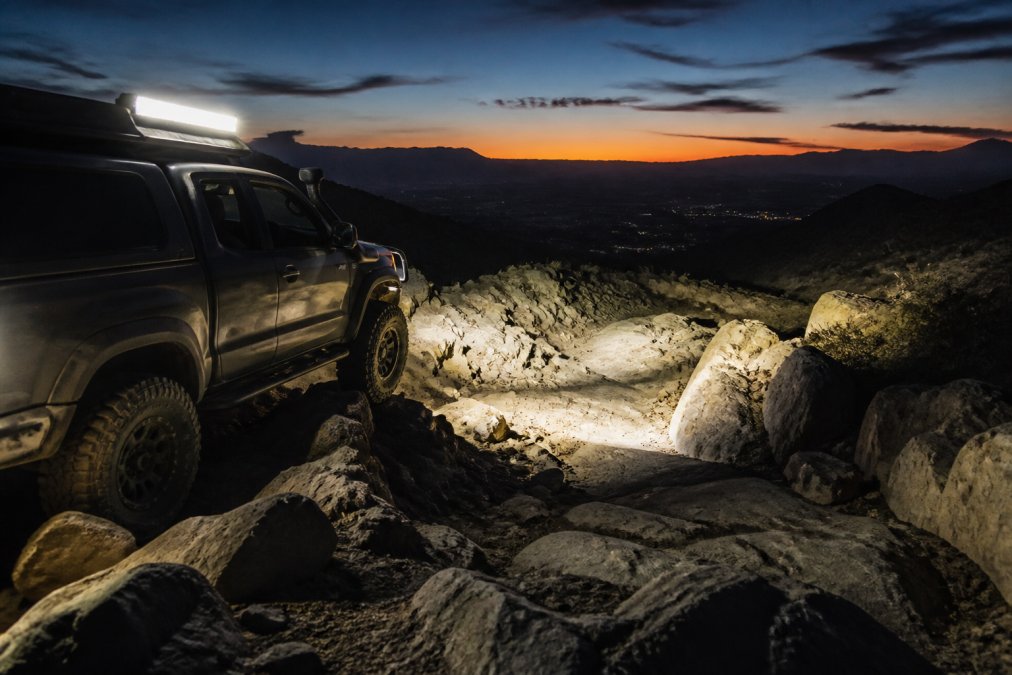
LED light bars deliver dramatically better nighttime visibility than factory halogen bulbs. The high lumens output, typically ranging from 8,000 to 20,000 lumens depending on bar size and wattage, creates a flood of light that reaches far ahead of your vehicle, giving you critical extra seconds to react to obstacles, ruts, or wildlife (sae.org).
A rock outcropping that looks like a shadow under halogen light becomes clearly visible under LED illumination. Gaps in the trail, sudden elevation changes, and debris scatter become apparent at distance rather than surprise you at close range. This extended visibility window is especially valuable when traveling at speed across unfamiliar terrain.
Color temperature plays a significant role in hazard detection. LED light bars typically produce light between 5,000K and 6,500K, daylight simulation that closely matches natural sunlight (cie.co.at). This spectrum helps your eyes distinguish depth, texture, and color variation far better than the warm 3,000K glow of halogen bulbs, reducing eyestrain during extended night driving and improving your ability to spot subtle terrain changes.
Beam pattern consistency also contributes to better hazard detection. LED light bars produce uniform light distribution without the hot spots and dead zones common in halogen setups. A combo beam pattern, which combines a spot beam for distance and a flood beam for width, gives you both the throw distance to see far ahead and the spread width to catch obstacles at the edges of your path.
Many drivers report that their first experience with a quality LED light bar changes how they approach night driving. The confidence that comes from seeing clearly translates directly into safer decision-making.
LED Light Bar Beam Patterns Explained
Understanding beam patterns is essential because the wrong pattern for your use case creates problems. A spot beam concentrates light in a narrow, intense cone that projects far down the trail, typically 150 to 300 meters depending on output. A flood beam spreads light across a wider area closer to the vehicle, illuminating obstacles on either side of your path. A combo beam blends both patterns, giving you distance throw combined with peripheral coverage.
Spot beams excel for high-speed off-road driving where you need maximum throw distance. The concentrated beam creates an intense hotspot that penetrates darkness effectively, though peripheral areas remain poorly lit. Flood beams work better for technical terrain where speed is secondary to precision, providing comprehensive area illumination at the cost of throw distance.
Combo beams represent the practical middle ground for most off-road applications. By combining spot and flood patterns in a single bar or through multiple bars positioned strategically, you get both throw distance for safety and width coverage for situational awareness. Many experienced off-road drivers mount a combo bar centered on the roof rack and add auxiliary flood bars on the bumper or fender for maximum flexibility.
Polycarbonate lens construction affects beam quality significantly. A quality polycarbonate lens provides clear light transmission while withstanding vibration, temperature cycling, and impact. Inferior lenses scatter light inefficiently, reducing both throw distance and clarity.
Energy Efficiency and Electrical System Benefits
LED light bars consume a fraction of the power that halogen or HID systems require. A typical halogen light bar draws 150 to 200 watts per bulb, while a comparable LED light bar delivers similar or superior light output while consuming only 60 to 100 watts (energy.gov). This efficiency difference reduces the load on your alternator, battery, and wiring harness.
Running powerful halogen lights puts stress on vehicles never designed to handle that electrical load. Many classic trucks have alternators rated for 60 to 80 amps, barely sufficient for factory lighting and basic accessories. Adding high-draw halogen bars forces your alternator to work harder, generating heat and accelerating wear. LED bars stay within comfortable electrical margins, extending alternator life and reducing voltage sag that causes dashboard warning lights and dimming headlights.
Battery drain becomes a practical concern if you run lights while the engine is off. LED bars consume power slowly enough that you can run them for extended periods without rapidly depleting your battery. For camp setups, trail-side repairs, or emergency situations where you need light without engine running, LED efficiency is a genuine safety advantage.
Wiring harness requirements differ between technologies. Halogen bars demand heavy-gauge wiring and strong relay switches to handle high amperage safely. LED bars work reliably with lighter-gauge wire, reducing installation complexity and cost.
Heat management is another efficiency advantage. Halogen bulbs convert most of their energy to heat rather than light, creating thermal stress in the light housing and surrounding components. LED bars generate minimal heat, staying cool even during extended use and extending component lifespan.
Durability, Weather Resistance, and Rugged Construction
LED light bars are engineered for the abuse that off-road driving inflicts. Rugged construction means polycarbonate or tempered glass lenses, aluminum or steel housings, and sealed connectors rated for moisture and dust exposure. Quality LED bars carry IP ratings, typically IP67 or IP68, indicating they're dustproof and submersible to specific depths. An IP67 rating means the bar survives full submersion in 1 meter of water for 30 minutes.
Vibration resistance is a critical durability factor. Off-road terrain creates constant vibration that loosens connections and fatigues components. Quality LED bars use potted circuits, internal electronics encased in epoxy resin, that absorb vibration without transmitting it to solder joints.
Moisture resistance protects against corrosion and electrical failure. A sealed housing with gaskets and drain holes prevents water from pooling inside the light. Stainless steel fasteners resist rust better than zinc-plated hardware. The connector design matters too, sealed connectors with positive locking mechanisms stay connected through rough terrain.
Thermal management affects durability through heat cycling. LED bars with proper heat sinks dissipate generated heat efficiently, preventing the thermal stress that cracks lenses and degrades seals.
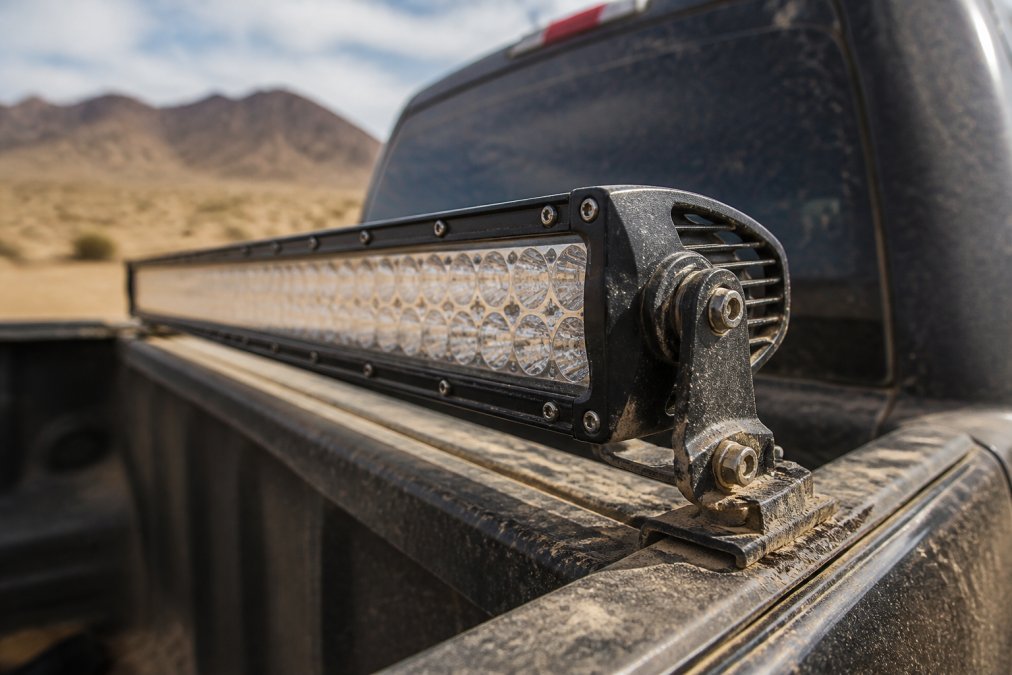
Weather resistance extends to UV protection. Polycarbonate lenses degrade under prolonged UV exposure, becoming cloudy and brittle. Quality LED bars include UV-resistant coatings that maintain clarity and impact resistance over years of outdoor exposure.
RMS Lighting LLC focuses on precision-engineered components that withstand the harshest conditions. Rigorous testing ensures that every light bar meets durability standards before reaching customers.
Off-Road Lighting Regulations by State
LED light bar legality varies by state, and installing lights without understanding local regulations creates liability and inspection failures. Federal regulations prohibit auxiliary lights from being primary forward-facing lights; your factory headlights must remain your primary forward illumination. Roof-mounted light bars are generally permitted as auxiliary lighting in most states, but some states restrict brightness, color, and positioning.
Many states prohibit auxiliary lights from shining forward past the headlight plane. A light bar mounted on your roof that projects light ahead of the bumper may violate regulations in your state. Bumper-mounted bars that sit below the headlight height are often permitted because they don't project forward of factory lighting.
Color temperature regulations exist in some states. Most permit white light (5,000K to 6,500K) for off-road use, but some restrict amber or red auxiliary lights to specific purposes. Blue lights are prohibited in virtually all states except for emergency vehicles.
Brightness regulations focus on lumens output and glare. Some states cap auxiliary light output to prevent blinding oncoming drivers. Off-road-only light bars face fewer restrictions because they're assumed to operate on private property where public road regulations don't apply.
The safest approach is to research your specific state's regulations before purchase. Contact your state's Department of Motor Vehicles or consult your vehicle's inspection station about permitted auxiliary lighting configurations. RMS Lighting LLC can help you select light bars that meet standard regulations, but verifying compliance for your specific state remains your responsibility.
How to Wire an LED Light Bar Safely
Wiring an LED light bar properly requires understanding the components and their functions. A relay switch is non-negotiable; never connect an auxiliary light directly to a factory switch or battery. The relay isolates the high-current auxiliary circuit from the factory electrical system, protecting your vehicle's wiring and preventing voltage sag that dims factory lights.
A basic wiring setup includes five components: the battery (power source), a fused inline connector, a relay switch, a momentary switch (your control), and the LED light bar. The positive battery cable connects through a fused inline holder, typically 30 to 40 amps depending on your light bar's amperage draw, to the relay's power terminal. The relay's output connects to the light bar's positive wire. The light bar's negative wire grounds to the chassis or battery negative terminal. Your control switch connects to the relay's trigger circuit, which is powered by a separate low-current connection from the battery.
Gauge selection depends on amperage. A 60-watt LED light bar drawing 5 amps can use 10-gauge wire for runs under 15 feet. A 130-watt bar drawing 10 amps requires 8-gauge or heavier wire to prevent voltage drop and heat buildup. Longer wire runs demand heavier gauge; a 30-foot run at 10 amps needs 6-gauge wire. Use marine-grade or automotive-rated wire with proper insulation.
Fuse sizing protects against short circuits. Your inline fuse should be rated 10 to 20 percent higher than the light bar's maximum amperage draw. A 10-amp light bar needs a 12-amp fuse; a 5-amp bar needs an 8-amp fuse. The fuse should be located within 18 inches of the battery. Use automotive blade fuses or ANL fuses rated for the amperage.
Relay selection matters. A standard automotive relay rated for 30 to 40 amps handles most LED light bar installations. The relay's trigger circuit should use 14-gauge wire and a separate fuse rated for 10 amps.
Grounding is critical for reliability. Run a dedicated ground cable from the light bar's negative terminal to the vehicle's chassis or battery negative terminal. Don't rely on the mounting bracket or vehicle frame for ground return. Use a ring terminal crimped to 6-gauge or heavier wire, bolted directly to a clean, unpainted chassis point.
Switch placement affects usability and safety. Mount your control switch where you can operate it without taking your eyes off the road. Dashboard-mounted switches work well for roof bars used during highway driving. Push-button switches on the steering wheel are ideal for technical off-road terrain.
Connector quality prevents electrical failures. Sealed connectors with positive locking mechanisms resist vibration loosening better than standard automotive connectors. Weather-Pack or Deutsch connectors designed for harsh environments are worth the extra cost. Crimp connectors properly using a quality crimper.
Testing before final installation catches problems early. With the light bar connected but not yet mounted, activate the switch and verify the light illuminates. Check voltage at the light bar terminals; it should read within 0.5 volts of your battery voltage (typically 13.5 to 14.5 volts with the engine running). If voltage is significantly lower, you have excessive resistance in the wiring or connections.
Conclusion
The benefits of LED light bars for off-road trucks are substantial enough to justify the investment for anyone serious about nighttime off-road driving. Superior visibility, energy efficiency, durability, and regulatory compliance make LED technology the practical choice over older lighting methods. The installation process, while requiring careful attention to electrical safety, is manageable for anyone comfortable working with automotive wiring.
RMS Lighting LLC offers precision-engineered LED light bars that have been rigorously tested to deliver consistent performance in demanding conditions. Our conversion kits are designed for straightforward installation, and our team can help you select the right beam pattern and mounting configuration for your specific truck and driving style. When you're ready to upgrade your off-road lighting, choose a system built to the highest standards, because visibility in darkness is too important to compromise on.
Frequently Asked Questions
What are the primary benefits of installing LED light bars on off-road trucks?
LED light bars provide superior nighttime visibility, allowing drivers to see hazards at greater distances on unlit terrain. They consume significantly less power than halogen or HID alternatives, reducing strain on your truck's electrical system. LED light bars are also more durable, with longer lifespans and better resistance to vibration, moisture, and temperature extremes. The combination of improved illumination, energy efficiency, and reliability makes them essential for serious off-road driving.
Are LED light bars legal for use on public roads?
LED light bar legality varies by state and local jurisdiction. Many states restrict auxiliary lighting on public roads or require it to be turned off while driving. Some states prohibit certain beam patterns or brightness levels. Off-road use on private property is generally permitted, but before installing LED light bars, check your state's specific regulations regarding auxiliary lighting, mounting location, and usage restrictions to avoid fines or equipment violations.
What is the difference between flood and spot beam patterns in light bars?
Flood beams spread light across a wide area, ideal for close-range visibility and illuminating terrain directly in front of your truck. Spot beams concentrate light into a narrow, intense beam that projects much farther down the road, helping you identify distant hazards. Many LED light bars offer combo beams that combine both patterns, giving you wide peripheral visibility plus extended range. Your choice depends on your typical terrain and driving speed.
How do LED light bars improve safety during night-time off-roading?
LED light bars dramatically extend your visibility range, allowing you to spot rocks, ruts, water crossings, and wildlife at safe distances. Better hazard detection means more time to react and adjust your line. The bright, consistent illumination also reduces eyestrain during extended night driving. Combined with proper color temperature (daylight simulation around 5000K-6500K), LED light bars create the visual clarity needed to navigate challenging terrain safely in darkness.
This article was written using GrandRanker